
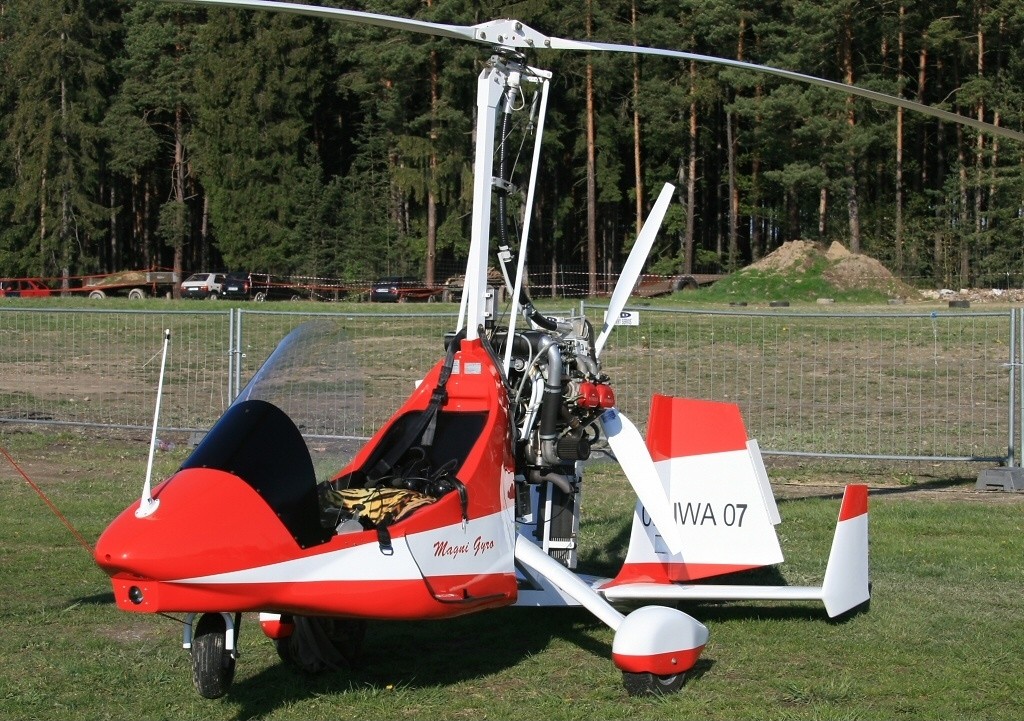
Design Philosophy and Development
Vittorio Magni's vision for the M-14 Scout emerged from decades of rotorcraft experience dating back to 1967, when he constructed one of Italy's first gyrocopters using imported Bensen plans. By the time Magni Gyro srl introduced the Scout in 2000 as their "millennium model," the company had evolved from VPM snc., founded in 1986, into a specialized autogyro manufacturer focused on advancing composite technology and flight performance.
The M-14 Scout addressed a specific market need for a compact sport gyroplane that could deliver exceptional performance while maintaining the simplicity pilots demanded. Magni engineered the aircraft with design objectives emphasizing short takeoff and landing capabilities, three-hour endurance, and responsive control characteristics that would appeal to experienced pilots seeking an aircraft capable of carrying an occasional passenger.
Technical Innovation
The Scout's most significant advancement lies in its proprietary 8.23-meter composite main rotor system, manufactured entirely in-house by Magni Gyro. This 27-foot rotor features a 22-centimeter chord and represents a substantial improvement over earlier metal rotor designs in both performance and durability. The rotor system combines with a TIG-welded 4130 steel tube fuselage structure, providing exceptional strength while maintaining a relatively light empty weight of 244 kilograms.
Powering the M-14 Scout is the proven Rotax 912S engine, delivering 100 horsepower through a four-stroke, dual-ignition design that has become the gold standard for light sport aircraft. The Austrian-manufactured engine enables the Scout to achieve a maximum speed of 185 km/h and a cruise speed of 145 km/h, with an impressive rate of climb reaching 5 meters per second. For pilots requiring additional performance, Magni offers the turbocharged Rotax 914 option, boosting power output to 115 horsepower.
Cockpit and Ergonomics
The tandem cockpit configuration places the pilot in the forward seat with full flight controls, while the rear passenger position features a removable backrest for enhanced comfort during extended flights. Side "cheek" extensions provide wind protection for both occupants in the open cockpit design, addressing one of the primary comfort concerns associated with autogyro flying.
Modern avionics integration includes standard electric trim and a Flydat digital engine monitoring system, allowing pilots to maintain precise control and monitor engine parameters throughout flight. The mechanical pre-rotator system and electric starter eliminate the manual starting procedures that characterized earlier gyroplane designs.
Manufacturing Excellence
Magni Gyro's facility in Besnate, Italy, produces the M-14 Scout as a complete, ready-to-fly aircraft rather than a kit, ensuring consistent quality and certification compliance. This approach differentiates Magni from many competitors who focus on amateur-built market segments. The company's commitment to manufacturing excellence stems from Vittorio Magni's background in aerospace composites, including work with Agusta helicopter components.
The Scout's tricycle landing gear features integrated wheel pants, contributing to the aircraft's clean aerodynamic profile. The three-bladed carbon fiber propeller operates in pusher configuration, eliminating propwash interference with the rotor system and improving overall efficiency.
Operational Capabilities
With a maximum gross weight of 550 kilograms and fuel capacity of 50 liters, the M-14 Scout delivers genuine three-hour endurance for extended cross-country flights. The aircraft's short takeoff and landing performance makes it suitable for operations from small airfields where traditional aircraft might face restrictions.
The Scout's handling characteristics reflect Magni's emphasis on control sensitivity and stability, providing pilots with precise response to control inputs while maintaining inherent autogyro stability in challenging conditions. This balance has made the aircraft popular among sport pilots who appreciate both performance and predictable flight characteristics.
Global Presence and Legacy
Magni Gyro maintains an international dealer network, with representatives in Australia, South Africa, and other markets supporting the M-14 Scout's global operations. The aircraft's continued production more than two decades after its introduction demonstrates the enduring appeal of Magni's design philosophy.
The M-14 Scout represents the evolution of autogyro technology from experimental homebuilt aircraft to sophisticated sport machines capable of reliable transportation and recreational flying. Its success has established Magni Gyro as a leading manufacturer in the modern autogyro renaissance, proving that Italian engineering excellence extends well beyond traditional aviation sectors into specialized rotorcraft applications.