
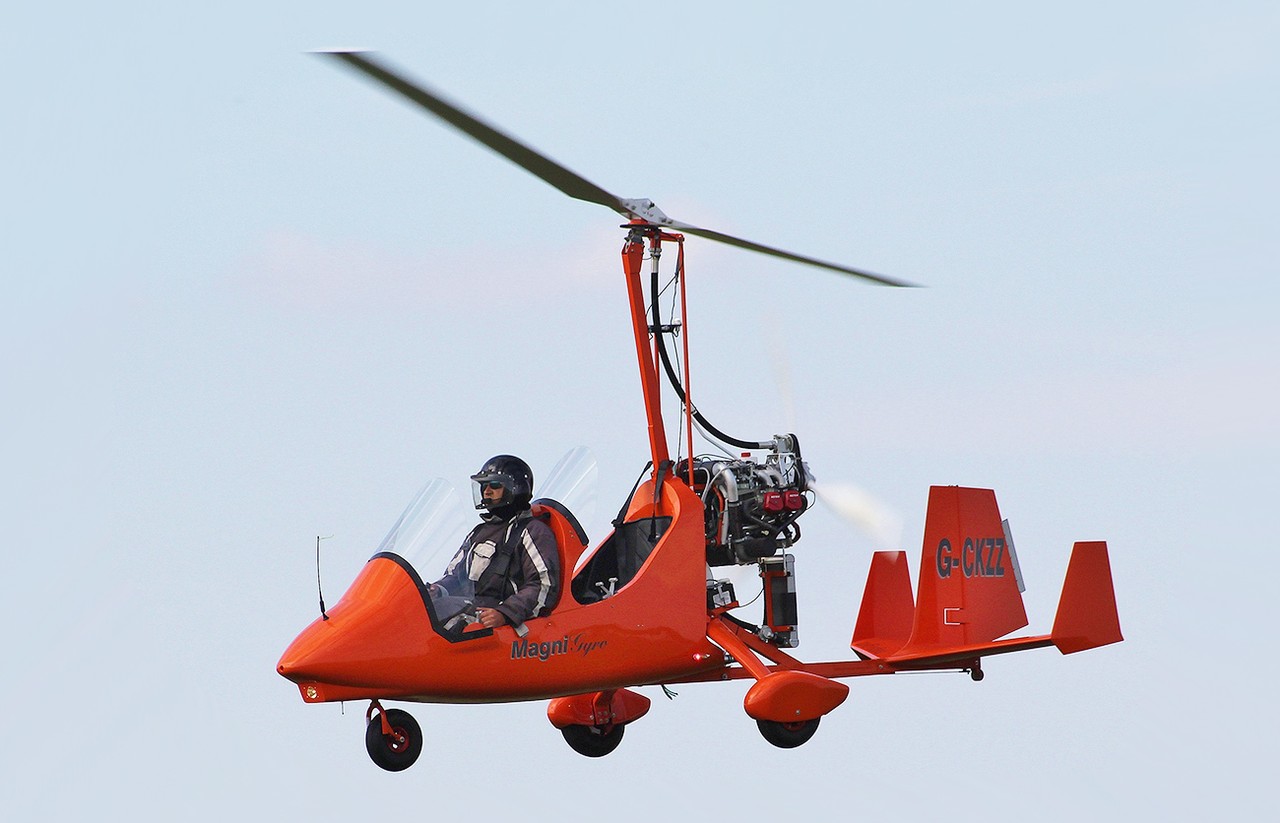
The Italian Gyroplane Pioneer
The story of the M-22 Voyager begins with Vittorio Magni's pioneering work in rotorcraft development. In 1967, Magni imported plans for a Bensen gyroplane from the United States and constructed one of the first gyroplanes to fly in Italy. His aerospace journey continued through collaboration with Silvercraft Spa on helicopter development in 1968, followed by founding VPM snc. in 1986, which manufactured composite components for major Italian aerospace companies including Agusta.
Magni's first commercial breakthrough came in 1987 when he sold patent rights for two gyroplane models to the Spanish company Cemenesa. By 1996, VPM evolved into Magni Gyro, focusing specifically on gyroplane design and manufacturing from their facility in Besnate, Italy.
Engineering Excellence in Composite Construction
The M-22 Voyager represents advanced gyroplane engineering with its comprehensive use of modern materials. The aircraft features a chrome-alloy aeronautical 4130 steel frame, TIG welded for structural integrity, combined with a carbon fiber fuselage incorporating side storage compartments. The 28-foot diameter two-bladed rotor utilizes composite materials for optimal performance and durability.
Powering the M-22 is the Austrian-built Rotax 914 turbo engine, a four-cylinder, four-stroke, water-cooled powerplant producing 115 horsepower. The engine drives a three-bladed carbon fiber propeller with ground-adjustable pitch, while an electric starter and mechanical pre-rotator system enhance operational convenience.
Performance and Operational Capability
The M-22 Voyager achieves cruising speeds between 120-150 kilometers per hour, with a maximum flight endurance of 4 hours supported by an 80-liter fuel capacity. The aircraft's manufacturer empty weight of 285 kilograms allows for substantial payload capacity, complemented by 150 liters of total baggage space distributed throughout the airframe.
The spacious cockpit accommodates comprehensive instrumentation including rotor revolution counter, altimeter, airspeed indicator, vertical compass, engine monitoring system, and fuel level gauge. Modern conveniences include electric trim controls and push-to-talk communications integration, with a large instrument panel designed to accommodate customized avionics installations.
Proving Long-Distance Capability
The M-22 Voyager demonstrated its touring credentials in 1996 when a pilot successfully completed a 3,500-kilometer trans-continental coast-to-coast round-trip flight across the United States. This achievement highlighted the aircraft's reliability and range capabilities, establishing its reputation as a serious cross-country touring machine rather than merely a local recreational aircraft.
The flight proved that modern gyroplanes could undertake ambitious journeys traditionally reserved for fixed-wing aircraft, opening new possibilities for rotorcraft tourism and personal transportation.
Manufacturing Growth and Market Position
Magni Gyro expanded significantly by 2008, operating from a 2,000-square-meter facility in Besnate with annual production capacity of 60-70 gyroplanes. The M-22 Voyager joined a comprehensive product lineup including the M-14 Scout, M-16 Tandem Trainer, M-18 Spartan, M-24 Orion, and M-26 Enclosed Tandem, positioning Magni as a significant player in the international gyroplane market.
The company's focus on composite construction and advanced design features distinguished their aircraft from simpler recreational gyroplanes, targeting pilots seeking sophisticated touring capabilities with modern avionics integration.
Pilot Appeal and Market Niche
The M-22 Voyager appeals to recreational pilots who prioritize comfort and capability for extended cross-country flights. The aircraft's enclosed cockpit configuration with side-by-side seating provides weather protection and passenger comfort unavailable in open-cockpit designs, while maintaining the unique flight characteristics that distinguish gyroplanes from conventional aircraft.
The substantial baggage capacity and 4-hour endurance make weekend trips and extended touring practical, supported by the aircraft's stability and relatively simple single-control flying characteristics. These features position the M-22 as an ideal platform for pilots transitioning from fixed-wing aircraft to rotorcraft, or those seeking a unique touring experience.
Legacy in Modern Aviation
The M-22 Voyager represents the evolution of gyroplane design from basic recreational aircraft to sophisticated touring machines capable of serious cross-country travel. Its successful trans-continental demonstration flight and continued production reflect the growing acceptance of gyroplanes as viable personal aircraft for pilots seeking alternatives to conventional aviation.
Magni Gyro's emphasis on quality construction, modern materials, and comprehensive equipment establishes the M-22 as a benchmark for contemporary gyroplane design, influencing industry standards for touring rotorcraft worldwide.