
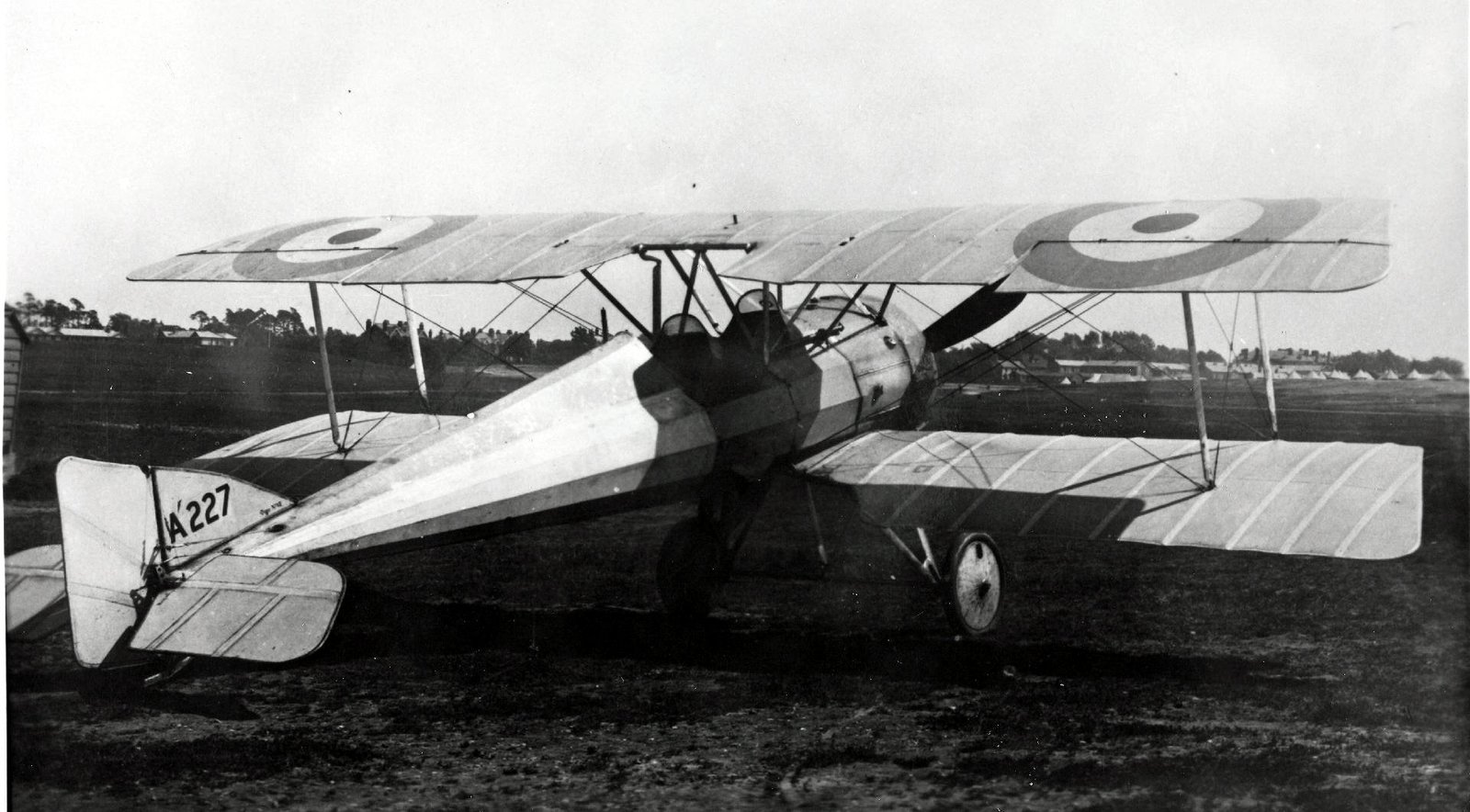
Production and Manufacturer History
The Morane-Saulnier Type BB was produced in France by Aéroplanes Morane-Saulnier, a firm established in October 1911 by Raymond Saulnier and brothers Léon and Robert Morane. Developed in 1915, the aircraft was intended primarily for British service, and notably, no examples were purchased by French units. Production totals remain uncertain due to conflicting records; some sources indicate a joint Royal Naval Air Service (RNAS) and Royal Flying Corps (RFC) order of at least 28 aircraft, while other reports suggest a total production run of up to 90 aircraft.
Design and Technical Specifications
Under the technical direction of Raymond Saulnier, the Type BB was developed as a biplane evolution of the Morane-Saulnier Type P. While it adopted a single-bay biplane configuration to align with contemporary aviation trends, it retained many characteristics of the Type P parasol monoplanes in its landing gear, tail, and equipment. The aircraft featured an all-wood construction and was designed as a two-seat reconnaissance and escort fighter.
Power was provided by a Le Rhône rotary piston engine, with variants utilizing 80 hp, 110 hp, or 120 hp powerplants. The 110 hp version allowed for a maximum level speed of 91 mph at sea level, though other technical data lists a maximum speed of 160 km/h. The aircraft had a length of 7.1 meters, a wing area of 23.0 m², and a maximum take-off weight of 625 kg, with an empty weight of 440 kg. For defense and escort duties, the observer operated one to two .303-inch Lewis machine guns.
Military Service
The Type BB saw operational service during World War I, primarily on the Western Front between late 1915 and 1916. The Royal Flying Corps was the primary operator, with aircraft serving in Nos. 1, 3, 4, and 60 Squadrons; the latter was still utilizing the type as late as June 1916. A small number of aircraft were also operated by No. 4 Squadron of the RNAS, and the type saw service with the air force of Tsarist Russia. Despite its production, the aircraft had a limited front-line career due to a small operational range, insufficient speed for fighter combat, and weight issues that hindered maneuverability.
Legacy
Historically, the Morane-Saulnier Type BB is significant as an illustration of the paucity of British aircraft manufacturing capabilities in the early years of the Great War. While the manufacturer, Morane-Saulnier, continued to operate until its purchase by Potez in 1962 and the subsequent spin-off of SOCATA in 1966, the Type BB itself left little technical legacy. There are no documented surviving original airframes or flying replicas in existence today.