
Design Philosophy and Innovation
John Monnett revolutionized the homebuilt aircraft market in the early 1980s with his vision of creating what he termed an "air recreation vehicle." His design goals were ambitious yet practical: construct an aircraft that remained simple to build and fly, could be transported by road, delivered exceptional fuel efficiency without requiring aviation gasoline, and possessed limited aerobatic capabilities. The prototype's debut at the 1981 EAA Oshkosh fly-in immediately following its first flight demonstrated Monnett's commitment to the experimental aircraft community.
Construction and Assembly
The Moni represented a breakthrough in homebuilder accessibility. Constructors required only basic tools—an electric drill, sheet metal shears, and pop-rivet gun—to complete most assembly work. Monnett estimated construction time between 350 and 400 hours, making it one of the quickest homebuilt projects available. The aircraft's all-aluminum construction, except for the Plexiglas canopy, ensured durability while maintaining light weight. However, early production experienced critical safety issues when several wings failed in flight due to glued wing skin construction, prompting Monnett to redesign the wings for riveted assembly.
Performance Characteristics
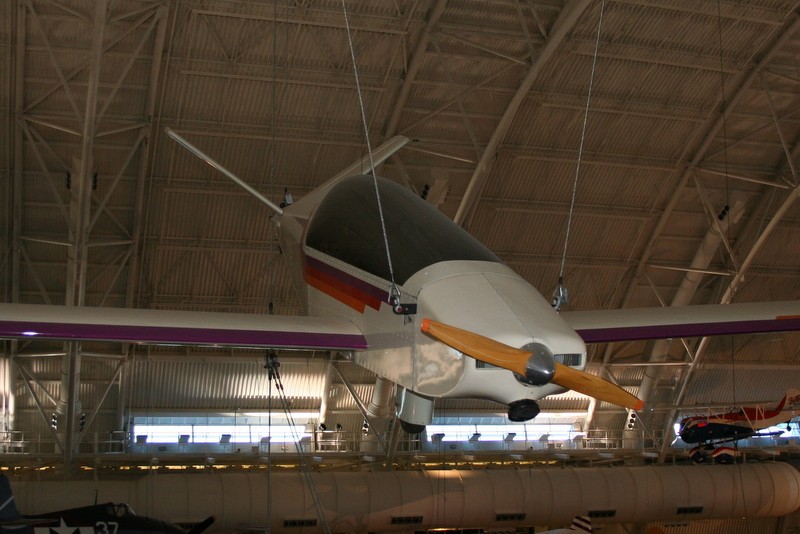
With its unique monowheel main landing gear housed in a streamlined fuselage fairing and steerable tailwheel, the Moni achieved remarkable performance figures for its diminutive size. The aircraft's 193 km/h maximum speed made it approximately twice as fast as legal ultralight aircraft, despite exceeding the ultralight weight limit by merely 1.8 kilograms. Builders could choose between two wing configurations: a standard 75-square-foot wing or a shorter 44-square-foot version, each offering different performance characteristics.
The motorglider's dual nature became apparent during flight operations. With its modest 3.3-imperial-gallon fuel capacity, pilots enjoyed approximately two hours of powered flight. However, shutting down the engine transformed the Moni into a self-launched glider capable of nearly indefinite flight duration, thanks to its exceptional 20:1 glide ratio and 13,000-foot service ceiling.
Production Challenges
Despite innovative design concepts, the Moni encountered significant operational difficulties that ultimately limited its market success. The KFM 107 engine, included with all kit sales, proved problematic alongside propeller issues that tarnished the aircraft's reputation. These mechanical troubles, combined with early structural failures, created challenges that many builders addressed through individual modifications and safety improvements during construction.
Monnett's company operated from Oshkosh, Wisconsin, strategically located near the annual EAA convention that served as experimental aviation's premier marketplace. From 1982 through 1986, the company distributed 380 kits before ceasing operations, representing a relatively modest production run compared to other successful homebuilt designs.
International Reach
The Moni's appeal extended beyond American borders, with several examples imported to Australasia in kit form. Australian and Tasmanian builders completed aircraft that received local registration, while others operated under Recreation Aviation Australia's ultralight category regulations. This international interest demonstrated the design's universal appeal despite its operational challenges.
Legacy and Museum Preservation
At least one Moni, construction number 62 registered as N321EW, found permanent preservation at the Santa Maria Museum of Flight in Santa Maria, California. Completed in 1989, three years after production ended, this aircraft was donated to the museum in December 1991, ensuring future generations could examine Monnett's innovative approach to recreational aviation.
Designer's Continuing Influence
John Monnett's design philosophy, exemplified through the Moni's emphasis on affordability and construction simplicity, established him as a significant figure in homebuilt aviation circles. His eventual induction into the EAA Homebuilt Hall of Fame recognized contributions that extended far beyond the Moni program. The principles he developed during the early 1980s ultimately led to founding Sonex Aircraft, which continues producing aircraft designs that reflect his original vision of accessible recreational aviation.
FAA registry records indicate at least one Moni remains in active registration as of 2024, with certification extending through July 31, 2029. This surviving example represents the enduring appeal of Monnett's concept, despite the production challenges that limited the design's commercial success during its brief four-year manufacturing period.