
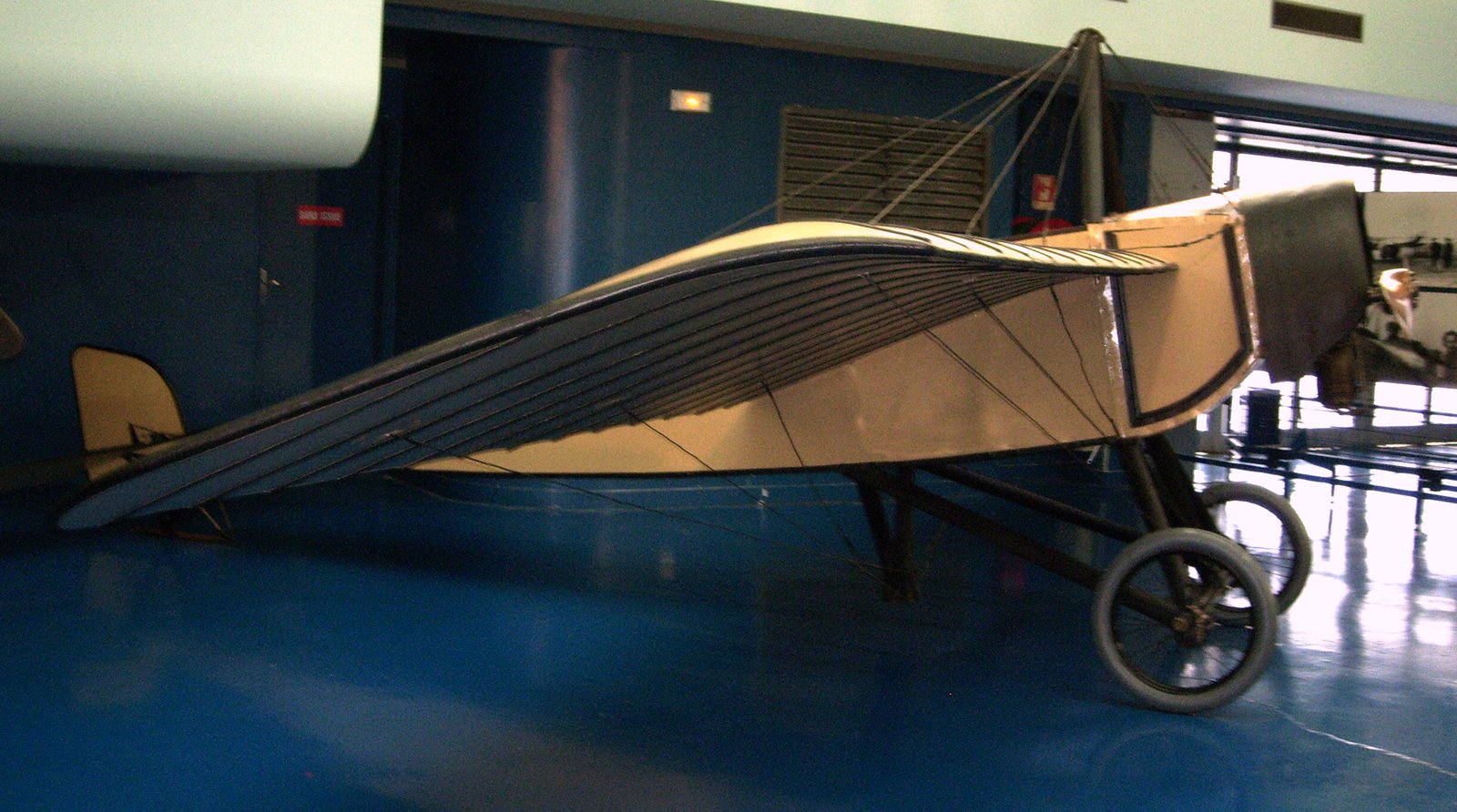
The Morane-Saulnier H, also known as the Type H or MoS.1, was developed in France as a reduced, single-seat derivative of the two-seat Type G. Designed by the team at Aéroplanes Morane-Saulnier—led by engineer Raymond Saulnier and founders Léon and Robert Morane—the aircraft first flew in 1913. It was characterized by a compact, lightweight wooden airframe with fabric covering, a shoulder-wing monoplane configuration, and a fixed tailskid undercarriage. Lateral control was achieved through wing warping, a common feature of the era. The aircraft was optimized for agility and portability, making it a popular choice for pre-war racing and sporting enthusiasts.
Technical specifications for the standard Type H included a wingspan of 9.12 meters and a length of 5.84 meters, with an empty weight of 188 kg. It was primarily powered by a 9-cylinder air-cooled Le Rhône 9C rotary piston engine producing 80 hp, though some export or training versions utilized 45 hp Anzani or other Gnome rotary engines. In its standard configuration, the aircraft reached a maximum speed of 120 km/h with a range of 177 km and a service ceiling of 1,000 meters.
Production was modest in France, with approximately 26 aircraft built for the Aviation Militaire. However, license production expanded the type's reach: the Grahame-White Aviation Company in the UK produced roughly 24 Type Hs, and the V.V. Slyusarenko Aviation Company in Petrograd, Russia, manufactured 28 examples. German Pfalz Flugzeugwerke also produced licensed copies, which evolved into the armed Pfalz E.I–E.VI series.
During the opening phases of World War I, the Type H served in limited reconnaissance and artillery spotting roles. In France, Escadrille MS 31 operated the type starting in September 1914 before being superseded by the Type L parasol by November. The Imperial Russian Air Service utilized the aircraft for reconnaissance and training into 1917, while the Royal Flying Corps used them primarily as trainers. Because the original French service lacked synchronized armament, pilots often relied on carbines, revolvers, or flechettes.
Beyond military use, the Type H achieved early sporting success; notably, Roland Garros won a precision landing prize with the aircraft at the June 1913 international aero meet in Wiener Neustadt. The design's legacy is substantial, as it served as the basis for the Fokker M.5 and the subsequent Eindecker fighters, which introduced synchronized forward-firing guns to combat. Today, two original aircraft survive in static display at the Musée de l’Air et de l’Espace in Paris and the Fantasy of Flight museum in Florida, while a flyable replica (F-AZMS) remains active at historic airshows.