
Design Philosophy and Development
John Monnett, a Wisconsin schoolteacher and aircraft designer, developed the Monerai family in the late 1970s as part of his vision for affordable "air recreation vehicles." Following his success with the Sonerai series, which could be built for just $1,200 in the 1970s, Monnett sought to create a simple motorglider that amateur builders could construct in their garages using basic tools. The Monerai P represented his powered sailplane concept, designed for 350 to 600 hours of build time using pre-shaped aluminum parts and pop-rivets.
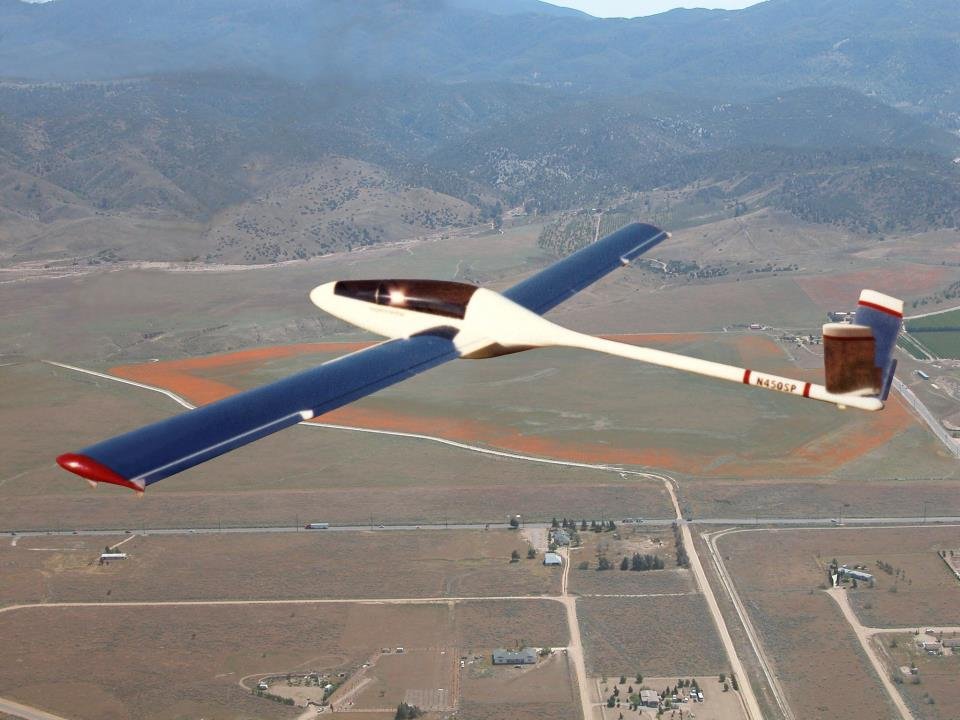
The first related prototype, called the Moni, took flight in July 1981, establishing the viability of Monnett's innovative design approach. The Monerai P featured a distinctive pod-and-boom fuselage constructed with a welded steel tube truss enclosed in fiberglass, topped by a mid-mounted constant-chord cantilever wing. The aircraft's most recognizable feature was its V-tail configuration, combined with 90-degree flaps that provided exceptional glide control.
Technical Innovation and Powerplant
The Monerai P's engine installation represented one of its most unusual design elements. Rather than a conventional nose or pusher configuration, the aircraft mounted either a 22-horsepower Zenoah G-25 or 25-horsepower KFM 107 two-stroke engine on a pylon above the wings. The KFM 107, produced by Italian firm Komet Flight Motors, was specifically developed through multiple iterations in collaboration with Monnett for the Moni and Monerai aircraft.
This unconventional powerplant arrangement allowed the aircraft to maintain its sailplane characteristics while providing powered flight capability. However, the small two-stroke engines proved problematic in service, with reports of propeller failures and general reliability issues that contributed to operational difficulties and accidents.
Manufacturing and Production
Monnett Aircraft, based in Oshkosh, Wisconsin, manufactured and sold Monerai kits from 1982 until the company ceased operations in 1986. During this four-year production run, approximately 380 Monerai kits of all variants were distributed to homebuilders across the United States. The company offered three main variants: the unpowered Monerai S sailplane, the powered Monerai P, and the Monerai Max, which featured extended wingtips that increased the span to 39 feet.
The kit approach allowed Monnett to keep costs down while transferring much of the construction work to builders. However, this also created quality control challenges, particularly with early wing assemblies that initially used bonded aluminum skins. After several bond failures, the design was revised to use riveted construction, but not before some accidents occurred due to structural issues.
Performance and Operational Experience
With its 36-foot wingspan and 78 square feet of wing area, the Monerai P achieved impressive sailplane performance characteristics. The unpowered versions demonstrated a maximum glide ratio of 28:1 at 60 miles per hour, while the extended-span Monerai Max exceeded 30:1. The aircraft's rate of sink measured just 167 feet per minute at 55 mph, providing respectable soaring capability.
In powered configuration, the Monerai P could achieve a maximum speed of 120 mph, though actual cruise performance varied significantly based on engine reliability. The aircraft's 220-pound empty weight and 450-pound gross weight provided a useful load of 230 pounds, limiting the pilot weight but contributing to the aircraft's efficiency. At least one pilot successfully completed a 700-statute-mile round trip, demonstrating the aircraft's potential for cross-country recreational flying.
Legacy and Preservation
John Monnett's contributions to homebuilt aviation earned him induction into the EAA Homebuilt Hall of Fame, and he continued his design philosophy after founding Sonex Aircraft following Monnett Aircraft's closure. However, the Monerai P's legacy remains mixed due to the reliability challenges that plagued the design.
The combination of structural issues with early wing construction, engine reliability problems, and propeller failures resulted in several accidents that limited the aircraft's acceptance in the homebuilt community. While the design showed promise and at least one example had accumulated more than 40 hours of flight time by 1992, the exact number of completed aircraft remains unknown due to the kit nature of the program.
Today, examples of the Monerai family are preserved in notable institutions including the National Air and Space Museum, which acquired aircraft NASM A19920066000 through donation by Harold C. Weston in April 1992. The Museum of Flying displays sailplane N450SP, ensuring that Monnett's ambitious attempt to democratize recreational aviation remains visible to future generations. While the Monerai P never achieved widespread success, it represents an important chapter in the evolution of affordable homebuilt aircraft and the ongoing quest to make flight accessible to amateur builders.