
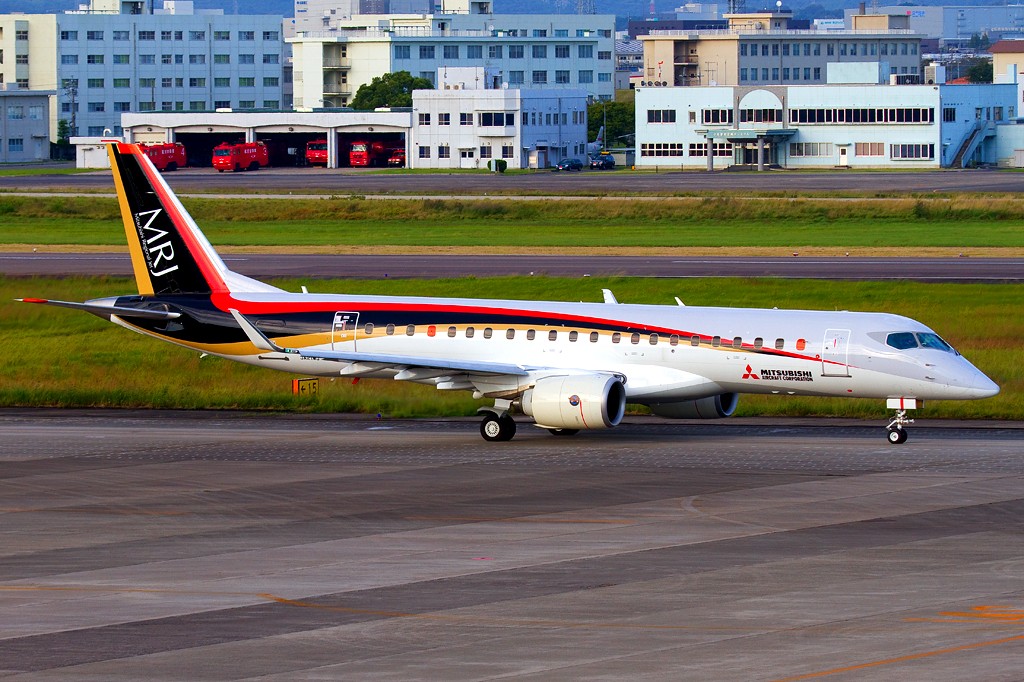
Development Genesis
Mitsubishi Heavy Industries launched the MRJ program in June 2007 with extraordinary ambitions: create Japan's first domestically produced airliner in over four decades while revolutionizing regional aviation through superior fuel efficiency and passenger comfort. The MRJ-70 emerged as the smaller sibling to the 90-seat MRJ90, approved for development in May 2018 with planned service entry in 2022.
The project targeted a market dominated by aging Bombardier and Embraer designs, promising substantially lower operating costs through advanced aerodynamics and next-generation powerplants. Initial projections called for certification by 2012, but the complex reality of modern airliner development would prove far more challenging than Mitsubishi's engineers anticipated.
Manufacturing Infrastructure
Mitsubishi constructed a dedicated production facility at Komaki Airport in Nagoya, purchasing government land for 60 billion yen to establish their airliner manufacturing base. The location carried historical significance as the former development site of the legendary A6M Zero fighter aircraft, symbolically linking Japan's aviation past with its commercial future.
By February 2014, Mitsubishi Heavy Industries announced comprehensive production base expansion schemes to prepare for volume manufacturing of the entire MRJ family. The facility was designed to accommodate both the MRJ-70 and MRJ90 variants on the same production line, maximizing manufacturing efficiency and reducing unit costs.
Engine Selection and Performance
The MRJ-70's performance advantage centered on its Pratt & Whitney PW1217G geared turbofan engines, making it the first aircraft program to select from the revolutionary PW1000G series. These engines delivered a 12 percent reduction in fuel consumption compared to conventional powerplants while significantly reducing noise emissions and environmental impact.
The geared turbofan technology allowed the engine's fan to operate at optimal speeds independently from the turbine, dramatically improving efficiency across the regional jet's typical flight profile. This engineering advancement positioned the MRJ-70 to offer airlines substantial operating cost reductions on short-haul routes where fuel efficiency directly impacts profitability.
Market Reception and Orders
By April 2015, the broader MRJ family had accumulated 407 total commitments, including 223 firm orders and 184 options from airlines worldwide. However, specific breakdowns between MRJ-70 and MRJ90 variants remained confidential as Mitsubishi focused initial development efforts on the larger model.
The order book reflected significant interest from Asian carriers seeking to replace aging regional fleets, though major Western airlines remained cautious about committing to an unproven manufacturer. Launch customers took calculated risks on Mitsubishi's promises of superior economics and passenger comfort in the competitive 70-90 seat market segment.
Development Challenges
The MRJ program encountered severe delays as certification requirements proved more complex than initially anticipated. The MRJ90's maiden flight occurred on November 11, 2015, three years behind schedule, while the MRJ-70 remained in design refinement phases.
Test aircraft number 8 and 9 were in final assembly by May 2018, with expected delivery pushed to late 2021. The certification process required extensive flight testing to demonstrate compliance with both Japanese and international airworthiness standards, a process that consumed far more time and resources than projected.
Program Transformation and Uncertainty
Mitsubishi rebranded the entire program as "SpaceJet" in June 2019, attempting to revitalize market perception and distance the aircraft from mounting development delays. The MRJ-70 became the SpaceJet M70, though fundamental design characteristics remained unchanged.
Budget constraints eventually forced dramatic program restructuring. The larger M90 variant saw its budget cut by half, while launch decisions for the MRJ-70 were indefinitely postponed. These financial pressures reflected the enormous costs associated with modern airliner certification and the competitive pressure from established manufacturers.
Current Status and Future Prospects
As of recent assessments, no MRJ-70 aircraft have entered commercial service, and the program's future remains uncertain. Mitsubishi's ambitious timeline for 2022 service entry proved unattainable as regulatory certification and flight testing requirements exceeded all projections.
The aircraft represents both Japan's technological capabilities and the immense challenges facing new entrants in commercial aviation. While the MRJ-70's advanced design promised significant operational improvements, translating those advantages into certified, production-ready aircraft proved far more complex than Mitsubishi's initial assessments suggested. The program stands as a testament to the extraordinary barriers facing any company attempting to challenge Boeing and Airbus in the global airliner market.