
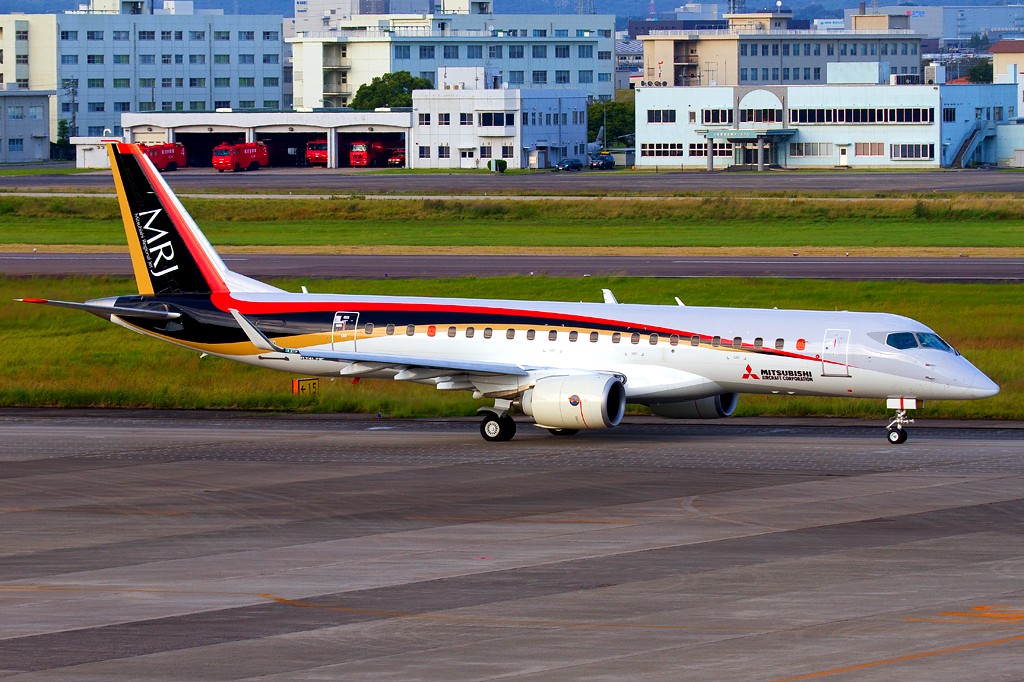
A Program That Never Was
The MRJ-90 stands as one of aviation's most expensive failures, consuming nearly a decade of development without ever entering commercial service. All Nippon Airways placed the launch order for 15 aircraft in 2008, followed by Trans States Holdings with 50 units around 2010. SkyWest Airlines and Republic Airways accumulated nearly 200 conditional orders, but these hinged on changes to US scope clauses that never materialized. The aircraft's maximum takeoff weight exceeded limits set by pilot union agreements, effectively blocking it from the crucial American regional market.
The Manufacturer's Rise and Fall
Mitsubishi Heavy Industries established Mitsubishi Aircraft Corporation in 2008 specifically to develop the MRJ program. MHI brought significant aviation heritage, having produced the legendary A6M Zero fighter during World War II before focusing on military and space projects in the post-war era. The company assembled prototypes at its Nagoya facilities, where exactly five flight test aircraft rolled off the production line between April 2011 and the program's suspension.
When the SpaceJet program effectively ended in 2020, MHI closed its US and Canadian operations, cut budgets by 95 percent, and reassigned engineers to other projects. In May 2020, the company acquired Bombardier's CRJ program for $550 million, absorbing the remaining regional jet orders that might have competed with their own aircraft. MITAC ceased to exist as a standalone entity, marking the end of Japan's commercial aviation ambitions.
Engineering Innovation and Challenges
The MRJ-90 served as the launch platform for Pratt & Whitney's revolutionary PW1200G geared turbofan engines, each producing 17,600 pounds of thrust. These powerplants promised 20 percent better fuel efficiency compared to conventional turbofans, representing a significant technological leap for regional aviation. The aircraft's cabin stood 80.5 inches tall, providing 1.5 inches more headroom than competitors, while the overall fuselage height reached 116.5 inches.
Development proved more challenging than anticipated for the inexperienced team. Engineers implemented 963 design changes after 2016 in attempts to achieve certification, but fundamental issues persisted. Western aviation experts from Bombardier, Embraer, and Boeing joined the program starting in 2016, bringing crucial experience to address mounting technical and regulatory hurdles.
Technical Specifications and Performance
The twin-engine regional jet featured Collins Aerospace Pro Line Fusion avionics and accommodated two crew members alongside 70 to 96 passengers depending on configuration. The MRJ-90 variant specifically targeted 88 seats in typical airline layouts. Performance projections included a maximum cruise speed of 447 knots (828 km/h) and an approach speed of 136 knots, competitive with established regional jets from Embraer and Bombardier.
The low-wing configuration incorporated advanced materials, though initial plans for extensive carbon fiber composite construction were later scaled back due to cost and complexity concerns. This reduction in composite materials contributed to weight increases that ultimately pushed the aircraft beyond US scope clause limitations.
The Path to Cancellation
Assembly of the first prototype began in April 2011, but the maiden flight didn't occur until November 11, 2015 – a delay that foreshadowed future problems. Certification proved elusive as MITAC struggled with regulatory requirements across multiple jurisdictions. The program underwent rebranding as SpaceJet in June 2019 at the Paris Air Show, introducing M90 and M100 variants, but this cosmetic change couldn't address fundamental technical and market challenges.
COVID-19 delivered the final blow in March 2020, as airline demand collapsed and the program faced an additional $3.5 billion funding requirement. With total costs reaching $8.5 billion and no clear path to profitability, MHI suspended development permanently. All five prototypes, including static test airframe 3XP428, remain in storage with no prospects for completion.
Legacy of Ambition
The MRJ-90 program serves as a cautionary tale about the barriers facing new entrants in commercial aviation. Despite significant financial resources and engineering talent, Mitsubishi discovered that challenging the Embraer-Bombardier duopoly required more than technological innovation. The failure highlighted the importance of regulatory experience, market timing, and understanding complex labor agreements that govern regional airline operations.
No MRJ-90 aircraft remain flying today because none ever entered service. The prototypes represent the physical remnants of Japan's $8.5 billion attempt to reclaim a position in commercial aviation, joining a select group of ambitious programs that consumed enormous resources while delivering zero operational aircraft. The program's collapse ensured that the 1960s YS-11 remains Japan's last successful commercial airliner, a distinction likely to persist for the foreseeable future.