
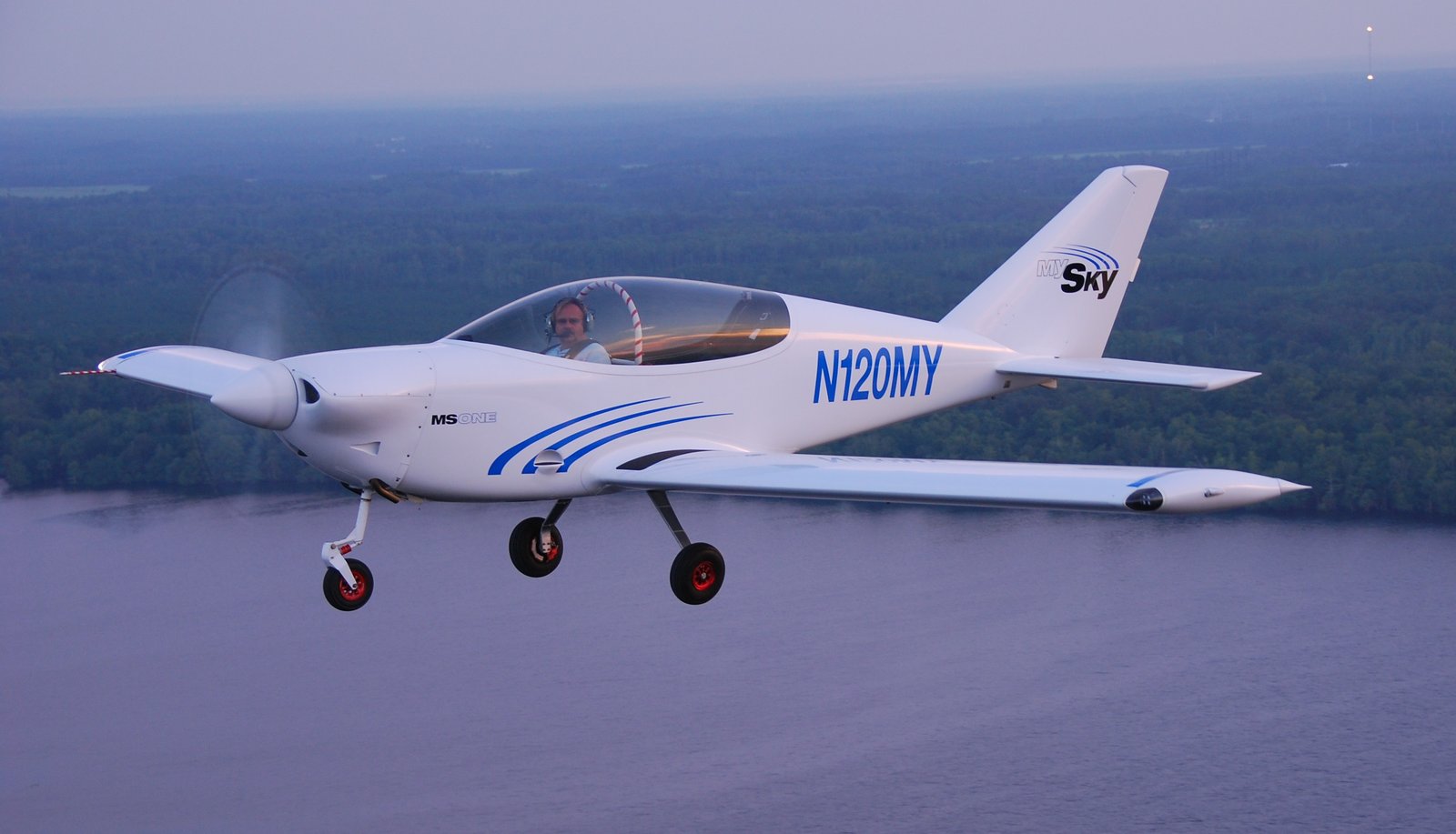
Design Philosophy and Development
The MS-1 emerged from a collaboration between MySky Aircraft and California designer Martin Hollmann, who conceived the original design concept. Company President Dieter Canje and Vice President Captain Timothy Plunkett guided the development with a specific vision: creating what Plunkett described as "a little military fighter in the design and maneuverability of the tandem-seat MySky." The team deliberately incorporated vintage aerodynamic principles, including a wingtip design based on the Horner NACA shape from the 1930s, demonstrating how historical aerodynamic knowledge could enhance modern composite aircraft design.
The airframe engineering exceeded light-sport aircraft requirements significantly, with structural certification for +/-10g loads despite the category's more modest demands. This robust construction philosophy reflected the designers' intention to create an aircraft that could deliver genuine fighter-like handling characteristics while remaining within regulatory boundaries.
Manufacturing and Certification Challenges
MySky Aircraft Inc. operates from the Spruce Creek Fly-in community near Daytona Beach, Florida, where the company has maintained operations since the aircraft's introduction at AirVenture in 2009. Unlike many light-sport aircraft that achieve Federal Aviation Administration approval, the MS-1 had not appeared on the FAA's list of approved special light-sport aircraft as of February 2017, indicating ongoing certification challenges despite years of development.
The company supplies the MS-1 as a complete ready-to-fly aircraft rather than as a kit, positioning it in the premium segment of the light-sport market. Aircraft N120MY, bearing serial number 0001, received FAA registration with a certificate issued on September 21, 2022, and valid through September 30, 2029, demonstrating that individual aircraft have achieved regulatory approval for operation.
Technical Configuration and Performance
The MS-1's all-composite construction centers around a cantilever low-wing design that houses a 24-gallon fuel system and supports a maximum gross weight of 1,323 pounds. The 710-pound empty weight provides approximately 600 pounds of useful load, typical for the light-sport category but optimized for the aircraft's performance mission.
Powering the MS-1 is the Australian-built Jabiru 3300, a six-cylinder air-cooled engine producing 120 horsepower at 3,300 rpm, though the approved continuous rating is 107 horsepower at 2,750 rpm. The direct-drive powerplant drives a two-bladed Sensenich composite propeller with ground-adjustable pitch. The engine installation includes electric elevator pitch trim and electric flaps, modernizing the pilot's workload management.
Performance figures reflect the aircraft's sporting intentions: a maximum speed of 140 mph, cruise speed of 120 mph, and stall speed of 52 mph. The 125-square-foot wing area produces a wing loading of 10.6 pounds per square foot, contributing to the responsive handling characteristics that distinguish the MS-1 from more conventional light-sport designs.
Cockpit Design and Pilot Experience
The MS-1's most distinctive feature is its large single-piece bubble canopy, hinged at the rear in the manner of military fighters like the F/A-18 Super Hornet or F-14 Tomcat. This design choice extends beyond aesthetics, providing exceptional visibility for both pilot and passenger in the tandem seating arrangement. The cockpit design emphasizes the "luxury fighter jet" experience, with systems and ergonomics reflecting this philosophy.
Ground handling incorporates differential braking and a castering nosewheel in fixed tricycle landing gear configuration, providing maneuverability during taxi operations that complements the aircraft's aerial handling characteristics.
Future Development and Variants
MySky Aircraft has announced ambitious expansion plans beyond the current light-sport aircraft limitations. The company plans Experimental/Amateur-Built versions that would escape LSA restrictions, including turboprop-powered variants and turbo-jet powered versions featuring dual 45-pound-thrust engines producing 250 pounds of total thrust each, with projected speeds reaching 240 knots.
The MySky MS-1L represents the company's environmental initiative, designed as what the company terms "the first step toward net-zero emission aviation." This eco-friendly variant demonstrates how the basic MS-1 airframe could adapt to emerging propulsion technologies.
The original airframe's engineering for engines up to 250 horsepower provides substantial capability for these future variants, suggesting the initial design team anticipated growth beyond the light-sport category's 120-horsepower limitation.
Market Position and Legacy
The MS-1 occupies a unique position in light-sport aviation by prioritizing military-inspired aesthetics and handling over the utilitarian approach of most LSA designs. While production numbers remain limited and FAA certification challenges have constrained market penetration, the aircraft demonstrates how modern composite construction techniques can realize ambitious design concepts within regulatory frameworks.
The MS-1's significance lies not in production volume or widespread adoption, but in proving that light-sport aircraft could transcend basic transportation roles to deliver genuine sporting performance and aesthetic appeal to recreational pilots seeking fighter-like experiences in civilian aviation.