
Service History
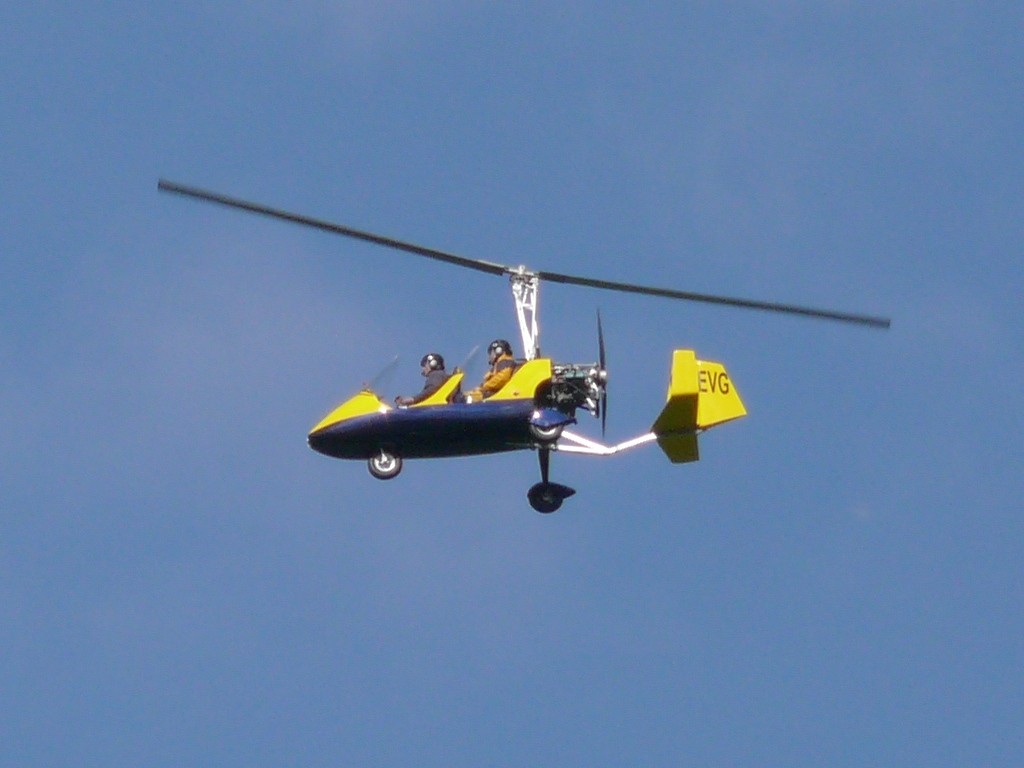
The MT-03 established itself as the first factory-built autogyro to meet stringent UK Section T regulations, fundamentally changing sport aviation in Britain. RotorSport UK Limited became the pioneering company to achieve this regulatory milestone, importing German-built airframes and completing modifications at their Shropshire facility. The aircraft's introduction around 2006 created unprecedented access to safe, compliant autogyro flying for private pilots and gyro clubs across Europe.
The MT-03's operational significance extended far beyond regulatory compliance. Norman Surplus achieved the first autogyro circumnavigation of the globe using this type, completing his nine-year journey in 2019. Australian pilots set a world distance record of 1,263 kilometers (785 miles) in an MT-03, demonstrating the aircraft's long-range capabilities. Multiple aircraft remain active on the UK register, including G-RTIN from 2008, G-YROX, G-CFCL, and G-CGGP.
The Manufacturer
AutoGyro GmbH of Hildesheim, Germany designed and produced the original MT-03 as a complete ready-to-fly rotorcraft. The German manufacturer continues operations today, focusing on evolved models like the MTOsport while the original MT-03 variant is no longer in production. RotorSport UK Limited served as the critical partner for British market entry, with engineer Gerry Speich playing a key role in the design team that adapted the aircraft for UK compliance.
The collaboration between AutoGyro GmbH and RotorSport UK represented a significant shift in autogyro manufacturing philosophy. Previous gyrocopters were largely kit-built or experimental aircraft, but the MT-03 arrived as a certified, factory-completed machine meeting commercial aviation standards. This approach influenced the entire light rotorcraft industry and paved the way for successor models including the enclosed MTOsport and Calidus variants.
Engine & Technical Details
The MT-03 utilized proven Rotax powerplants in pusher configuration, with the 100-horsepower Rotax 912 ULS as standard equipment. The four-stroke, four-cylinder engine featured both air and liquid cooling systems plus dual ignition for enhanced reliability. Operators could specify the turbocharged 115-horsepower Rotax 914 UL for improved performance, as installed in the 2008 example G-RTIN.
BRP-Rotax of Austria manufactured these engines specifically for ultralight and sport aircraft applications. The MT-03's propulsion system drove a three-bladed HTC composite propeller measuring 1.72 meters (5 feet 8 inches) in diameter. Ground-adjustable pitch allowed operators to optimize performance for different flight profiles and operating conditions.
The aircraft's rotor system featured an 8.4-meter (27 feet 7 inches) main rotor with 20-centimeter chord blades providing 55.4 square meters of rotor disc area. Engineers selected the NACA 8-H-12 airfoil for the rotor blades, contributing to the aircraft's efficient lift-to-drag ratio of 4:1. Disk loading calculated to 8.1 kilograms per square meter, enabling gentle autorotation characteristics essential for safe autogyro operations.
Pilot Perspective
Pilots appreciated the MT-03's straightforward handling and robust performance envelope. The aircraft achieved climb rates between 980 and 1,100 feet per minute with its standard powerplant, while never-exceed speed reached 100 mph. Cruising speed settled at 99 mph, providing reasonable cross-country capability with the standard 34-liter fuel capacity, expandable to 68 liters for extended range missions.
The open cockpit configuration with optional fairing offered pilots an unobstructed flying experience reminiscent of early aviation. Tandem seating placed the pilot in front with passenger behind, maintaining proper weight and balance throughout the operational envelope. Tricycle landing gear with wheel pants provided stable ground handling characteristics, while composite fairings reduced drag and enhanced the aircraft's modern appearance.
Production & Legacy
Exact production numbers remain undocumented, but the MT-03's influence on sport aviation far exceeded its manufacturing quantity. The aircraft succeeded by proving that factory-built autogyros could meet rigorous safety standards while remaining accessible to private operators. Its regulatory approval in 2007 opened British airspace to a new generation of rotorcraft enthusiasts.
The MT-03's legacy lives on through its evolutionary descendants and the operational precedents it established. AutoGyro GmbH continues refining the basic design in models like the MTOsport, while the original aircraft's world records and circumnavigation achievements demonstrated autogyro capabilities previously thought impossible. Multiple examples remain airworthy with ongoing support through RotorSport's technical network, ensuring this pioneering design continues serving the sport aviation community it helped create.