
Development and Production
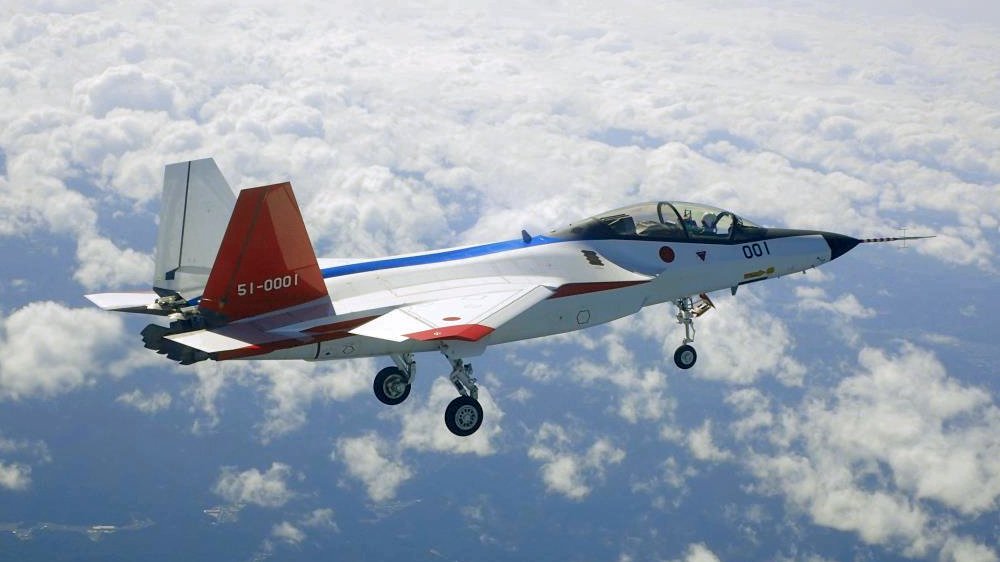
The Mitsubishi X-2 Shinshin, also known as the ATD-X (Advanced Technology Demonstrator – X), is a one-off experimental aircraft developed by Mitsubishi Heavy Industries (MHI) under contract for Japan's Ministry of Defense and the Technical Research and Development Institute (TRDI). Rather than a series-produced fighter, the X-2 was designed as a technology incubator to validate systems for an indigenous fifth-generation fighter, later designated as the F-3. The aircraft was manufactured by MHI, with final assembly and its maiden flight occurring at Nagoya Airfield (Komaki Airport) in Aichi Prefecture. Following its initial tests, the prototype operated out of the JASDF Gifu Air Base in Kakamigahara.
Design and Technical Innovations
The X-2 is characterized by a single-seat cockpit with a bubble canopy and a twin-engine canard-delta wing configuration. Its primary purpose was to test stealth shaping and materials to reduce radar cross-section. One of the most notable technical advancements is the "fly-by-optics" flight-control architecture, which utilizes optical fibers instead of traditional electrical wiring to increase data bandwidth and minimize electromagnetic interference. Additionally, the aircraft incorporates a self-repairing flight-control system capable of detecting damage and reconfiguring control-law allocation to maintain stability. Research also extended to active stealth through multifunction RF sensors and distributed antennas used for signal analysis and jamming.
Propulsion and Performance
The aircraft is powered by two IHI Corporation XF5-1 low-bypass afterburning turbofan engines. These engines provide a combined maximum thrust of approximately 49 kN and enable the X-2 to achieve a maximum speed of Mach 2.25. A key design goal was supercruise capability, with the aircraft able to maintain supersonic speeds of approximately Mach 1.82 without the use of afterburners. Performance estimates indicate a service ceiling of 65,000 ft, a ferry range of 3,200 km, and an operational range of 2,900 km when equipped with two external fuel tanks. For combat-simulated missions, the estimated radius is approximately 761 km.
Service and Legacy
The X-2 made its first flight on April 22, 2016. As a research asset, it has never seen operational combat service or been deployed in any conflict. Its legacy lies in the advancement of Japan's strategic aerospace capabilities, proving MHI's ability to act as a prime contractor for complex stealth platforms. By integrating 3D thrust-vectoring via movable nozzle paddles and advanced low-observable research, the X-2 provided the foundational data necessary for the development of the JASDF's next-generation fighter aircraft.