
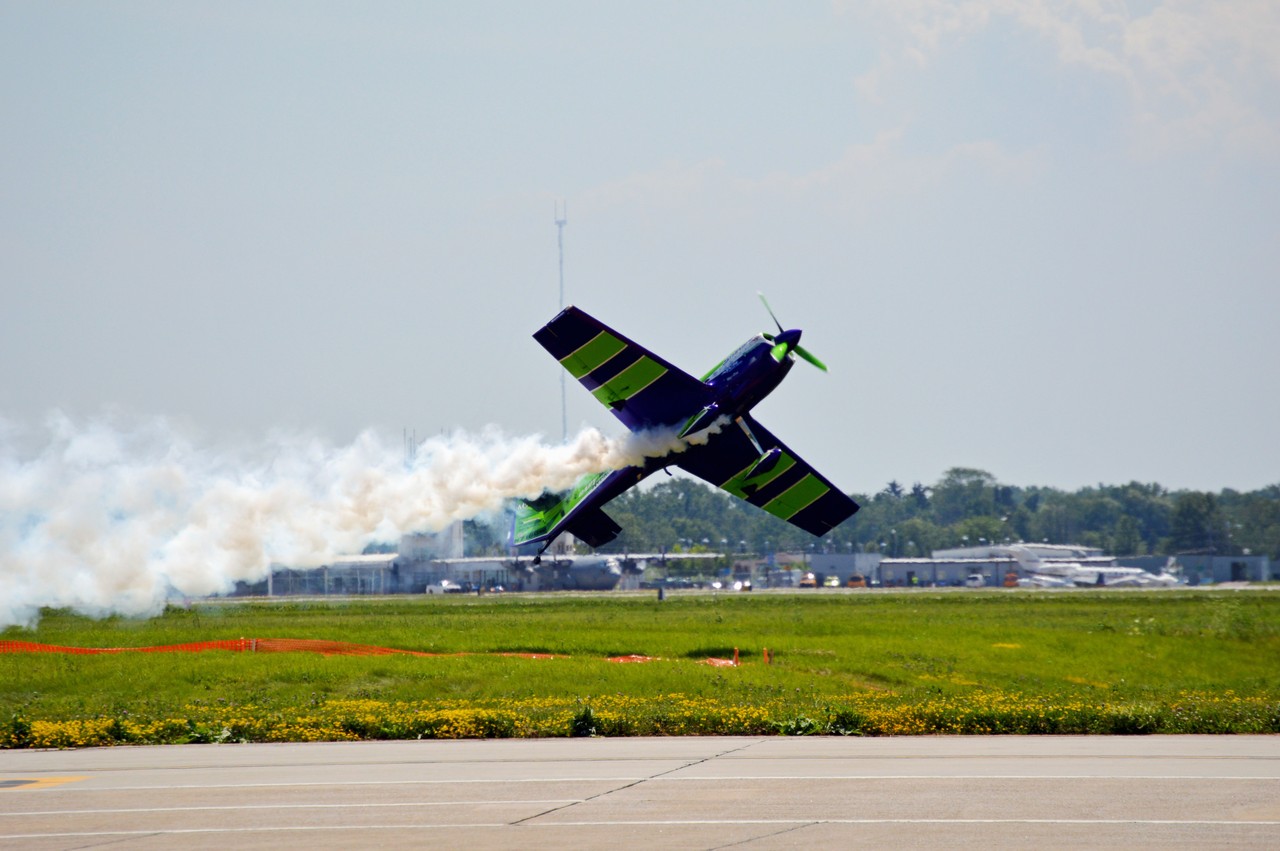
Service History
The MX-2 revolutionized competitive aerobatics through its dominance in the Red Bull Air Race World Championship from 2008 to 2019. Notable pilots including Matthew Hall flew VH-CQE (ex-N19MX) from 2014-2016, while Nigel Lamb and Mikaël Brageot achieved championship success with MX2 and MXS variants. Rob Holland, the 2008 World Aerobatic Advanced Champion, demonstrated the aircraft's capabilities in unlimited competition, including a second-place finish at the 51st Sebring Aerobatic Competition in 2005. By early 2008, eight production aircraft had been delivered to customers worldwide, with total production ultimately reaching 25 units.
The Manufacturer
MXR Technologies Inc. of Boynton Beach, Florida originally developed the MX-2 in 2001, working with Composite Universal for construction. The project's origins trace to the acquisition of Giles Aircraft in 2001, a kit-built aerobatic specialist that provided the foundation design through the Giles G-202. MX Aircraft was subsequently established in Perth, Western Australia at Jandakot Airport, taking over production and development of both the MX2 and its successor, the MXS. The Australian company continues operations today, specializing in high-performance sport, aerobatic, and racing aircraft available as both kits and ready-to-fly machines.
Engine & Technical Details
Chris Meyer designed the MX-2 around the proven Lycoming AEIO-540 six-cylinder horizontally-opposed engine, typically producing 340 horsepower through a three-blade tractor propeller from manufacturers like MT Propeller or Hartzell. The fuel-injected powerplant enables inverted flight operations essential for unlimited aerobatics. The aircraft's revolutionary all-carbon-fiber construction achieves an empty weight of just 584 kilograms (1,287 pounds) while maintaining structural integrity for extreme G-loads. Full-span ailerons contribute to the exceptional 400-420 degrees per second roll rate, while reclining tandem seats beneath a single-piece canopy optimize both aerobatic performance and cross-country comfort.
Pilot Perspective
Pilots praise the MX-2's exceptional agility and precise control response, with its 420-degree-per-second roll rate setting new benchmarks for aerobatic aircraft. The design combines extreme performance capabilities—including ±14G limits and a maximum speed of 220 knots (407 km/h)—with surprising cross-country utility. Its 58-knot stall speed and impressive 3,500 feet-per-minute climb rate provide versatility beyond pure aerobatics. The tandem seating arrangement accommodates both solo aerobatic flying and dual instruction, while the 220-liter fuel capacity (expandable to 295 liters) enables ranges up to 1,669 kilometers. The short 68-meter takeoff run makes the aircraft accessible from smaller airfields.
Production & Legacy
Production commenced in 2005 with the first aircraft (N262MX, construction number 0001) flying on May 1, 2005, exactly three years after the prototype's maiden flight. A production run of six aircraft began in 2006, with the first production machine publicly unveiled at Abu Dhabi in March 2006. Manufacturing initially occurred in the United States before shifting to Australia, with one notable Queensland-built example in 2008 featuring a unique eight-cylinder engine installation. Total production reached 25 aircraft before ending, with at least eight confirmed flying by 2008.
The MX-2's legacy extends beyond its production numbers through its influence on modern aerobatic aircraft design and competitive flying. Its success in Red Bull Air Racing elevated public awareness of unlimited aerobatics and influenced the development of the subsequent MXS series. The aircraft's pioneering use of carbon-fiber construction for extreme aerobatic loads established new engineering standards that continue to influence high-performance aircraft design. While some examples have been lost to accidents—including N263MX (construction number 3) which crashed in August 2022 after 467 flight hours—surviving aircraft like VH-CQE continue to represent the type's capabilities in competitive and demonstration flying worldwide.