
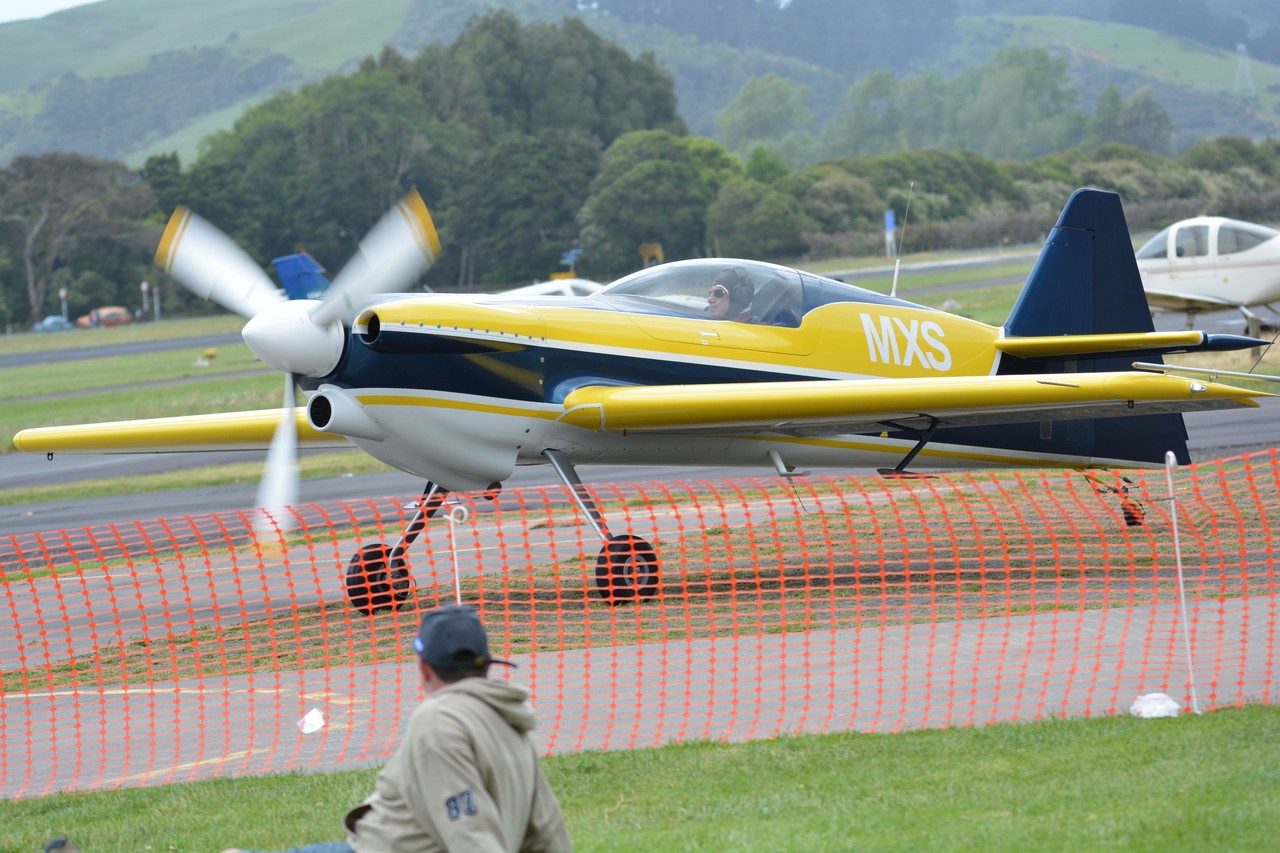
Racing Dominance
The MXS achieved unprecedented success in competitive aerobatics, particularly in the Red Bull Air Race where it became the dominant force after the series restarted in 2014. Pilots flying the MXS claimed victory in multiple seasons from 2014 through 2019, with notable champions including Matt Hall, Nigel Lamb, and Mikaël Brageot. The aircraft's supremacy in air racing stemmed from its exceptional power-to-weight ratio and aerodynamic efficiency, making it the lightest unlimited single-seat aerobatic aircraft with the highest thrust-to-weight ratio in its class.
The Manufacturer
MX Aircraft emerged from the acquisition of Giles Aircraft in 2001, transforming from MXR Technologies into a specialized manufacturer of high-performance aerobatic aircraft. Based at Jandakot Airport in Perth, Western Australia, the company built upon Giles Aircraft's foundation in kit-built aerobatic designs, particularly the G-202. Under the MX Aircraft banner, the company developed the MX2 prototype that first flew in May 2002, which served as the foundation for the more advanced MXS design. The company continues operations today, focusing exclusively on the production of MX2 and MXS aircraft for sport, aerobatic, and racing applications.
Engine and Technical Innovation
The MXS represents a revolutionary approach to aerobatic aircraft construction, featuring a full carbon-fiber monocoque fuselage that replaced traditional steel-tube designs used in competitors like the Edge 540. This construction method utilizes Toray aerospace-grade carbon fiber, enabling the aircraft to achieve speeds exceeding 250 mph while maintaining structural integrity under extreme G-forces. The powerplant consists of variants of the Lycoming AEIO-540 six-cylinder horizontally-opposed engine, producing between 250 and 380 horsepower depending on configuration, with fuel injection systems designed for reliable inverted flight operations.
The aircraft's design team employed advanced computer solid modeling to optimize aerodynamic efficiency, resulting in a maximum speed of 265 mph and a never-exceed speed of 260 mph. The engine typically pairs with either Hartzell 3-blade "Claw" counterweighted propellers or MT MTV9 propellers, contributing to the aircraft's exceptional performance characteristics.
Pilot Perspective
Pilots praise the MXS for its extraordinary agility and responsiveness, with roll rates reaching 420 to 450 degrees per second and the ability to withstand loads between ±12 and ±14G. The cockpit accommodates pilots up to 6 feet 4 inches tall and 290 pounds, featuring a reclining seat positioned at a 45-degree angle for optimal G-force management. The aircraft's handling characteristics make it particularly suitable for precision aerobatic maneuvers required in competitive flying.
Operational specifications include a cruise speed of 180 to 207 mph, a stall speed ranging from 58 to 67 mph, and a climb rate of 3,500 feet per minute. The standard fuel capacity of 58 gallons provides a range of 860 miles, with an optional long-range fuel system increasing capacity to 78 gallons. These performance figures, combined with the aircraft's structural capabilities, make it ideal for both competition and recreational aerobatic flying.
Development History
The MXS prototype, registered as N65MX, was specifically developed in 2007 for pilot Nigel Lamb's entry into the 2008 Red Bull Air Race season. This single-seat variant evolved from the two-seat MX2 design, with the development team focusing on meeting the stringent requirements of air racing while maximizing aerobatic performance. The prototype first flew approximately one year before May 30, 2008, indicating an initial flight date around mid-2007.
Design objectives prioritized unlimited aerobatic capability, with engineers emphasizing the aircraft's suitability for the demanding maneuvers required in competitive air racing. The redesigned fuselage incorporated lessons learned from the MX2 program while introducing innovations specific to single-seat racing applications.
Production and Legacy
Production of the MXS began around 2007-2008 and continues today in both kit and factory-built configurations. Known examples include construction numbers 2 (N540XS), 010 (VH-CQE), 012 (VH-WMX), and 013 (ZK-MXS), with aircraft registered in Australia, New Zealand, and the United States. Notable operators include Rob Holland flying the specialized MXS-RH variant, Richard Wiltshire operating VH-WMX since 2011, and Peter Ring-Shambler flying VH-CQE from 2010.
The MXS established new benchmarks in aerobatic aircraft design, advancing the use of carbon composite construction in high-performance aviation. Its success in the Red Bull Air Race series from 2014 to 2019 demonstrated the effectiveness of its design philosophy, influencing subsequent developments in competitive aerobatic aircraft. The aircraft's cultural significance extends beyond racing victories, as it represents a technological leap forward in lightweight, high-strength construction methods that continue to influence modern aerobatic aircraft design.