
Design Genesis
The MY-102 Tornado emerged from the experienced hands of Hermann Mylius, who had previously served as chief designer on the MBB Bo 209 Monsun project. Drawing upon his extensive background with the Monsun design, Mylius embarked on creating the MY-102 at his home workshop with the specific objective of developing a low-cost aerobatic airplane featuring enhanced handling characteristics superior to the Bo 209. The design represented a significant evolution in single-seat aerobatic trainers, incorporating lessons learned from the earlier Monsun program while addressing its limitations.
Technical Specifications
The MY-102 Tornado featured a robust 200-horsepower Lycoming AEIO-360 engine, representing a substantial power increase over the Bo 209's 150-160 horsepower powerplants. This air-cooled, fuel-injected, horizontally-opposed piston engine included inverted flight oil supply systems, enabling sustained inverted flight operations essential for advanced aerobatic training. The aircraft was structurally rated for ±8g aerobatic loads, allowing pilots to perform the full spectrum of aerobatic maneuvers with confidence in the airframe's integrity.
Limited Production History
Production of the MY-102 Tornado remained extremely limited, with only two aircraft constructed over an eleven-year span. The first prototype was completed in 1973, demonstrating the viability of Mylius's design concepts and remaining airworthy for decades following its initial construction. An eleven-year gap preceded the construction of the second aircraft in 1984, though this example unfortunately sustained shock loading damage and required extensive repair work.
The Mylius Company
Mylius Flugzeugwerk GmbH & Co KG was established during the late 1990s in Bitburg, Germany, by Albert Mylius, son of designer Hermann Mylius, working alongside industry colleagues. However, the original 1973 MY-102 prototype predated this formal company establishment by more than two decades, having been constructed by Hermann Mylius as a personal project at his residence. The company later focused on developing improved variants while seeking certification for commercial production.
Certification Struggles
The MY-102 v.2, featuring an improved cockpit design and representing the production-ready variant, achieved its first flight in July 2001. This revised version incorporated refinements based on operational experience with the original prototype, addressing pilot feedback and regulatory requirements. Despite completing approximately 95 percent of the certification process, financial difficulties intervened when banks forced Mylius Flugzeugwerk into bankruptcy, preventing the aircraft from achieving full type certification and commercial production status.
Operational Experience
Pilots who flew the MY-102 Tornado praised its docile yet responsive handling characteristics, inherited from the successful Bo 209 design lineage. The aircraft's enhanced power-to-weight ratio, courtesy of the 200-horsepower Lycoming engine, provided superior climb performance and energy retention during aerobatic sequences compared to its predecessors. The single-seat configuration allowed for optimized cockpit ergonomics and reduced structural weight, contributing to the aircraft's aerobatic capabilities.
Current Status
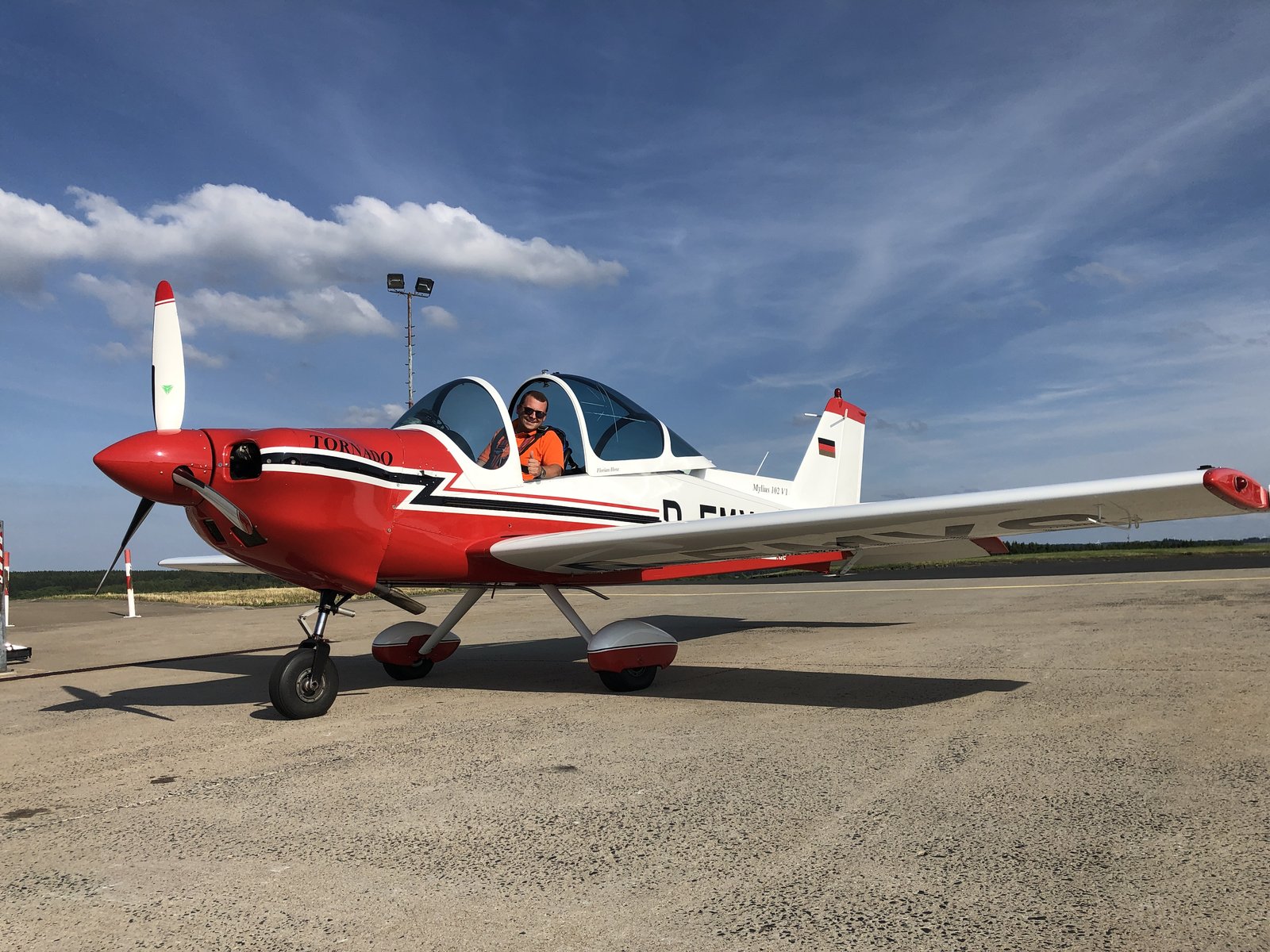
At least one MY-102 Tornado, registered as D-EMYS, remained in active private operation as documented in photographs from August 17, 2009. This aircraft represents one of only two examples of Hermann Mylius's personal aerobatic design work, making it a rare specimen within the specialized community of Mylius aircraft enthusiasts. The extremely limited production run of two aircraft contrasts sharply with the more commercially successful My-103 Mistral trainer variant, of which four examples were constructed.
Legacy and Comparison
The MY-102 Tornado never achieved the commercial success of Hermann Mylius's earlier work on the MBB Bo 209 Monsun, which saw 100 aircraft produced before production termination in 1972. Despite its superior performance characteristics and advanced design features, the MY-102 remained a specialized aircraft serving a niche market of aerobatic enthusiasts and professional pilots seeking high-performance training platforms. The aircraft's legacy lies in its demonstration of advanced aerobatic design principles and its role in the evolution of single-seat aerobatic trainers during the 1970s and beyond.