
Service Dominance
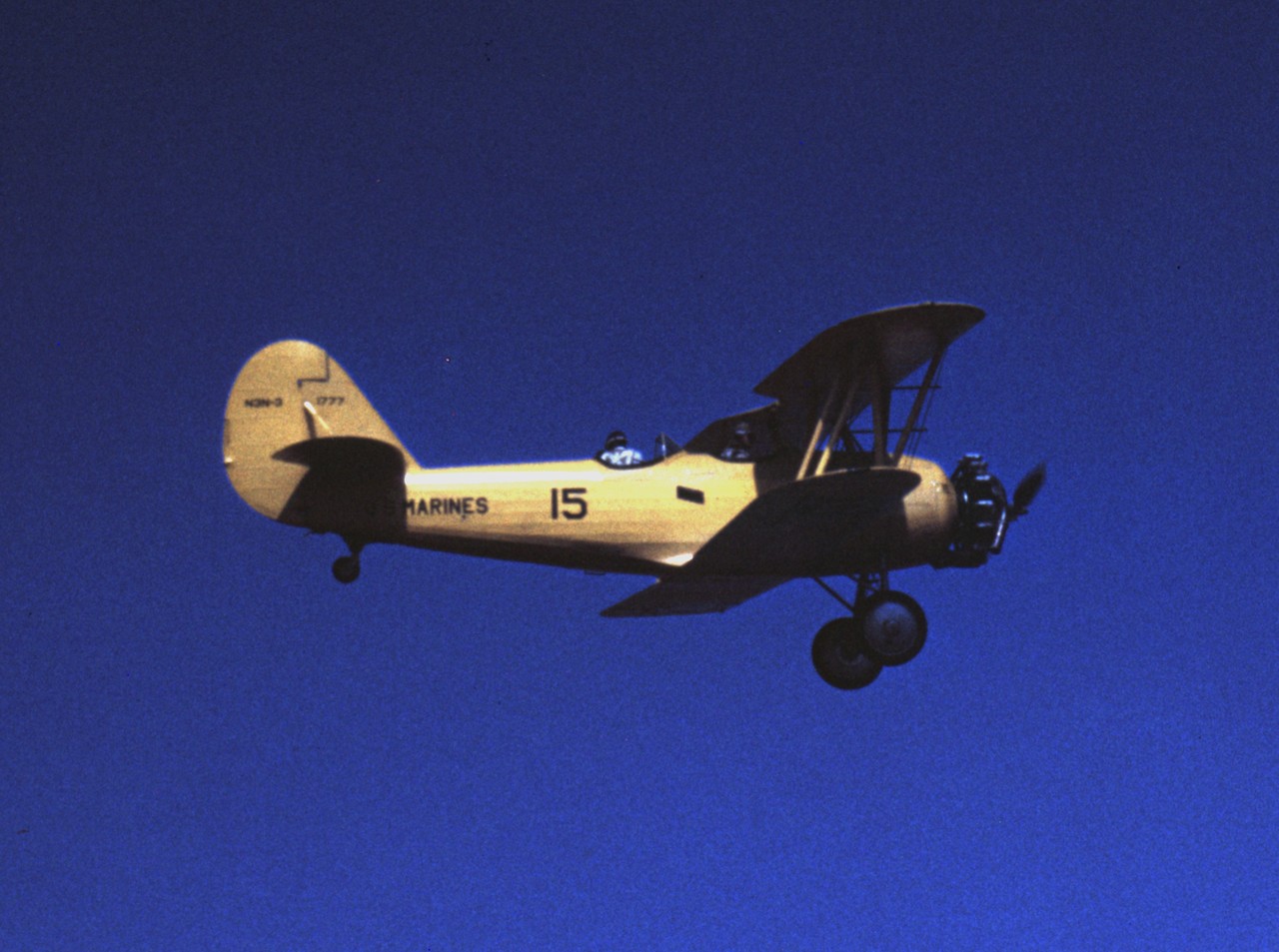
The N3N established itself as the backbone of U.S. Navy primary flight training from 1936 through the end of World War II. Beginning service at Naval Air Station Pensacola and other primary training facilities, the aircraft trained the vast majority of naval aviation cadets who would later fly combat missions in the Pacific Theater. The N3N's distinctive bright yellow paint scheme earned it the enduring nickname "Yellow Peril," a moniker that became synonymous with naval flight training during the war years.
Operational History
Deliveries began in 1936 with 179 N3N-1 aircraft powered by Wright R-790-8 engines, though the final 70 of this variant received the more reliable seven-cylinder Wright J6-7 engine (Navy designation R-760-2). Production shifted to the improved N3N-3 model in 1938, with 816 examples delivered through January 23, 1942. The U.S. Coast Guard acquired four N3Ns in December 1940 through a direct trade with the Navy for four Grumman JF-2 Duck amphibians.
The aircraft served not only at major naval training bases but also supported the War Training Service program between 1943 and 1945, a civilian contract training initiative that supplemented military flight instruction. N3N-3 Bureau Number 2831, typical of the type's service record, was accepted by the Navy on April 17, 1941, assigned to Naval Air Station Grosse Ile, Michigan, transferred to NAS Squantum, Massachusetts in February 1943, and struck from inventory that September.
The Naval Aircraft Factory
Established in 1917 at the Philadelphia Navy Yard, the Naval Aircraft Factory represented the U.S. Navy's attempt to maintain indigenous aircraft production capability independent of private industry. Following substantial World War I production, the facility largely ceased aircraft manufacturing in 1922 until the Vinson-Trammell Act of March 1934 authorized the Navy to produce 10 percent of its aircraft requirements in-house.
The Philadelphia facility employed an innovative approach to N3N construction, utilizing aluminum stringers salvaged from the Navy's abandoned rigid airship program that had produced the USS Akron and USS Macon. This materials recycling reflected both economic efficiency and the Navy's systematic approach to resource management during the Depression era. Beyond the N3N, the factory produced 155 PBN Nomad flying boats before ending all aircraft production in early 1945.
Engine and Technical Innovation
The N3N's Wright radial engines provided reliable power for primary training operations, with the later R-760-2 proving particularly robust in service. The Navy purchased manufacturing rights for the R-760 Whirlwind series and produced these engines in-house, ensuring supply chain security for the training fleet. This engine's seven-cylinder configuration delivered adequate power while maintaining the simplicity essential for student pilot operations.
The aircraft's all-metal internal structure represented advanced construction for a 1930s trainer, contrasting favorably with competitors like the Boeing-Stearman Kaydet's welded steel fuselage and wooden wings. Available in both landplane and seaplane configurations, the N3N provided training flexibility that proved invaluable as the Navy expanded its aviation training pipeline during wartime mobilization.
Training Aircraft Excellence
Instructors praised the N3N for its forgiving flight characteristics and robust construction that withstood the rigors of primary training operations. The tandem seating arrangement provided optimal communication between instructor and student, while the aircraft's stability margins allowed safe recovery from typical training errors. Unlike high-performance combat aircraft, the N3N's predictable handling characteristics built student confidence while teaching fundamental flying skills.
The type's operational ceiling exceeded requirements for primary training, while its moderate cruise speed provided adequate cross-country capability for navigation training without overwhelming novice pilots. Maintenance crews appreciated the aircraft's straightforward systems and robust construction that minimized downtime between training flights.
Production Legacy and Survival
The N3N achieved one of the highest survival rates of any World War II aircraft, with over 20 percent of production remaining on civil registers across five nations as of recent counts. This remarkable preservation rate reflects both the aircraft's robust construction and its continued appeal to vintage aircraft enthusiasts.
Notable survivors include N3N-3 Bureau Number 2892 at the Military Aviation Museum in Virginia, complete with seaplane floats for static display. The National Air and Space Museum preserves an N3N-3 in its collection, while the Pima Air and Space Museum displays a former fire-fighting example nicknamed "Yellow Peril." The Warhawk Air Museum operates a flying N3N, demonstrating the type's continued airworthiness nearly eight decades after first flight.
Today's warbird community values the N3N as an authentic link to World War II naval aviation training, with flying examples regularly appearing at airshows and commemorative events. The aircraft's distinctive yellow paint scheme and classic biplane proportions make it an instantly recognizable symbol of the era when America built the world's largest naval air force.