
Development and Design Philosophy
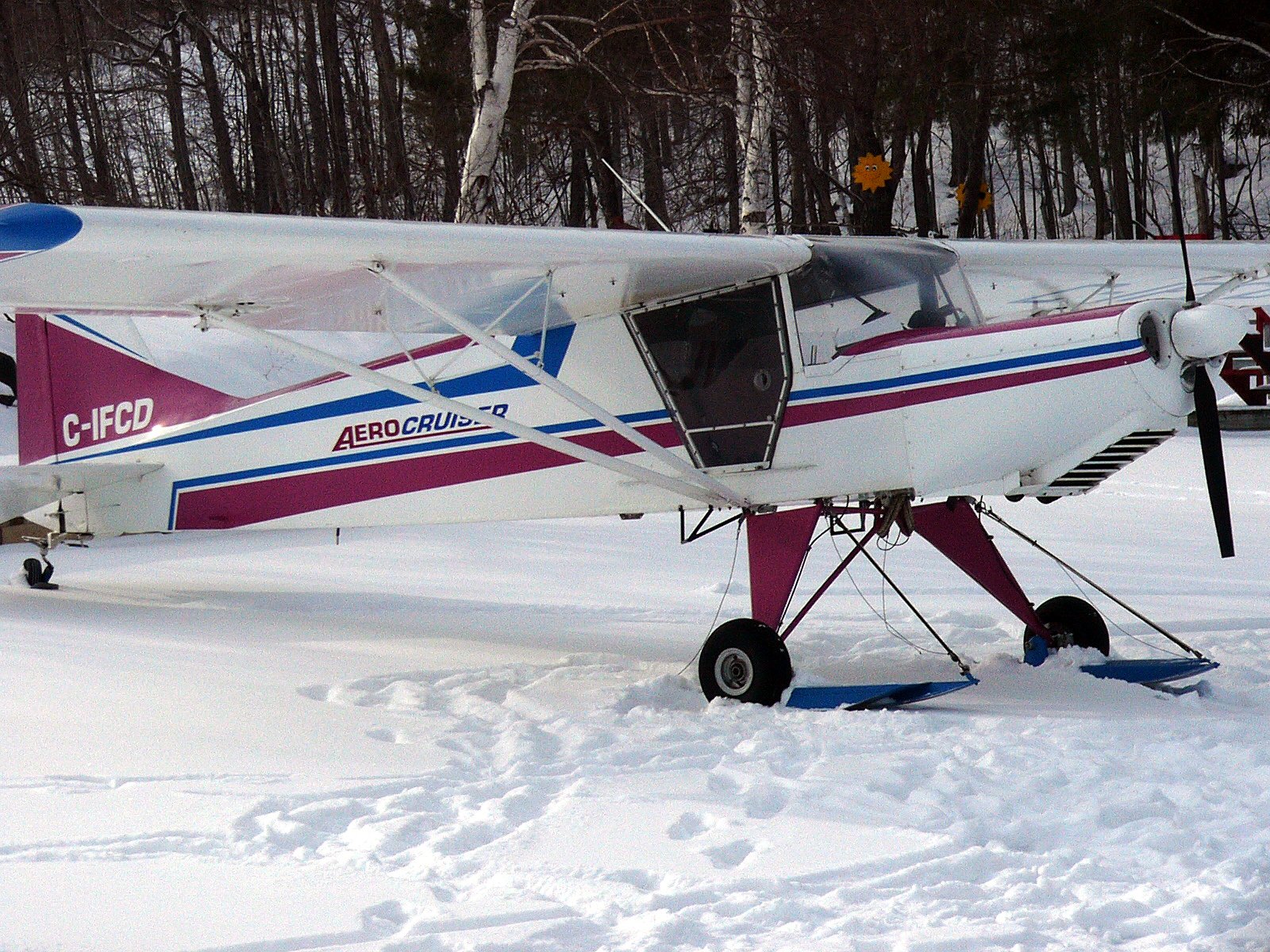
The Aerocruiser emerged from designer Normand Dube's vision to create practical, robust aircraft suited for Canada's demanding wilderness operations. Founded in 1982 as a machine shop and metal fabricator, Aviation Normand Dube evolved into an aircraft manufacturer by 1985 when the original two-seat Aerocruiser entered production. Dube's design philosophy centered on creating accessible kit aircraft that amateur builders could construct while maintaining the rugged performance characteristics essential for bush flying operations.
The aircraft's aluminum tube construction covered in standard aircraft materials provided durability without excessive complexity. The high-wing configuration and taildragger landing gear arrangement offered the ground clearance and short-field performance crucial for operations from unprepared strips. Side-by-side seating with dual stick and rudder controls became standard features across the family.
Production Evolution and Variants
The success of the original Aerocruiser prompted Aviation Normand Dube to expand the line systematically. In 1988, three years after the initial model's introduction, the company launched the four-seat Aerocruiser Plus to address demand for larger capacity aircraft. This variant featured a 180-horsepower Lycoming O-360 engine and increased gross weight to 2,200 pounds, targeting operators requiring additional passenger or cargo capacity.
The ambitious six-seat Aerocruiser 450 Turbo followed in 1997, representing a significant engineering advancement. This variant incorporated a welded 4130 steel tubing fuselage and riveted 2024 aluminum wing construction, departing from the simpler tube-and-fabric approach of earlier models. The 450-horsepower Lycoming TIGO-541 turbocharged engine delivered impressive performance specifications: cruise speeds of 200 knots at 25,000 feet, service ceiling of 35,000 feet, and range exceeding 1,400 nautical miles.
Engine Options and Performance
The Aerocruiser family's flexibility extended to powerplant choices, particularly in the two-seat variant. Operators could select from multiple Rotax engines including the 503, 582, and popular 912ULS producing 100 horsepower. The Austrian-manufactured Rotax powerplants provided reliable, economical operation suited to recreational and training applications. Aircraft equipped with the 503 engine achieved cruise speeds around 75 knots with climb rates of 600 feet per minute and gentle stall characteristics at approximately 35 knots.
The larger variants utilized traditional aircraft engines from Lycoming, offering greater power and proven reliability for commercial operations. The Aerocruiser Plus's 180-horsepower O-360 provided substantial performance increases over the ultralight variants, while the 450 Turbo's sophisticated powerplant delivered airliner-class capabilities in a general aviation package.
Market Reception and Pilot Experience
Aviation publications and pilots consistently praised the Aerocruiser's spacious cabin and excellent visibility characteristics. Reviewers described it as "one of the roomiest aircraft" in its category, with light control pressures that reduced pilot fatigue during extended operations. The aircraft earned recognition as "a great rugged, bushplane" well-suited to the demanding conditions of northern Canadian operations.
By March 2017, Transport Canada had registered 56 examples with one additional aircraft registered in the United States, representing strong adoption within the Canadian homebuilt community. The manufacturer reported delivering over 100 kits since 1985, indicating continued demand for the design across its production run.
Company Expansion and Current Status
Aviation Normand Dube diversified its operations in 2011 by establishing a Robinson Helicopter Company dealership and repair center in Grand Falls, New Brunswick. This expansion included sales of Robinson R44 helicopters and maintenance services for both R44 and R22 models, broadening the company's aviation market presence beyond fixed-wing aircraft manufacturing.
The company continues operating under its original name, maintaining production of the Aerocruiser family while supporting existing operators through parts and technical assistance. The design's longevity demonstrates its successful adaptation to the Canadian homebuilt market's requirements.
Notable Incident and Legal Consequences
The Aerocruiser gained unwanted notoriety in December 2014 when designer Normand Dube used his personal Aerocruiser 450 Turbo prototype to deliberately damage two Hydro-Quebec high-tension power lines. The attack caused electrical outages affecting over 180,000 customers across the region. Quebec courts convicted Dube in November 2018, sentencing him to seven years imprisonment for the sabotage. He fled while on bail in December 2020 and remained at large. Authorities seized the prototype aircraft as evidence in the criminal proceedings.
Legacy and Continued Impact
Despite the controversy surrounding its designer's criminal actions, the Aerocruiser family maintains its position as a significant contribution to Canadian homebuilt aviation. The aircraft's combination of practical design, construction accessibility, and operational versatility established a template for successful kit aircraft development. Its continued production and operator satisfaction demonstrate the enduring appeal of Dube's original design philosophy, even as legal proceedings overshadowed the company's reputation.