
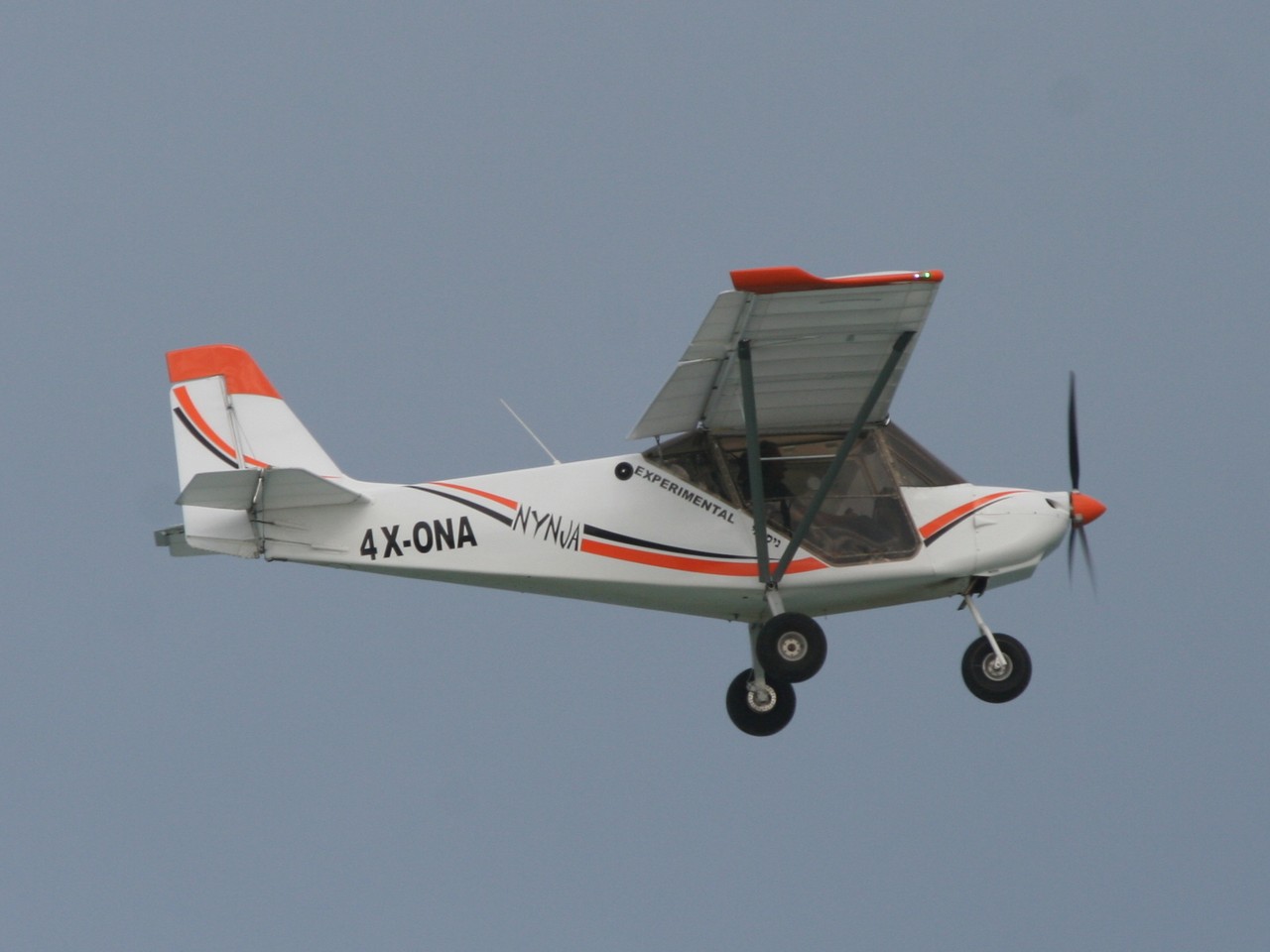
Design Philosophy and Development
The Nynja emerged from Best Off Aviation's goal to create a microlight aircraft that would comply with Fédération Aéronautique Internationale regulations while delivering enhanced aerodynamics, structural strength, and payload capacity compared to earlier designs. The aircraft incorporates a modular composite fuselage combined with an aluminum tube structure, a design approach that prioritizes both aerodynamic efficiency and ease of repair. This hybrid construction method allows owners to maintain their aircraft with standard tools while benefiting from the performance advantages of composite materials.
Engineers at Best Off Aviation focused heavily on wind tunnel testing during the development process, resulting in innovations such as winglets and profile stabilization blocks that reduce drag and improve stall characteristics. The wing design prevents profile deformation under load, maintaining consistent aerodynamic properties throughout the flight envelope. A notable safety feature is the counter-sprung throttle system, which prevents unintended advancement to full power during flight.
Engine and Performance Specifications
The Nynja utilizes Rotax 912 series engines, specifically the 80-horsepower 912UL or the 100-horsepower 912ULS variant. These four-stroke, four-cylinder engines feature a combination of air and liquid cooling systems and have established themselves as the standard powerplant for microlight aviation since their introduction in 1994. With tens of thousands of Rotax 912 engines produced across all variants, the engine selection provides operators with extensive parts availability and service network support.
Performance figures demonstrate the aircraft's versatility, with a maximum speed of 210 kilometers per hour and a cruise speed of 175 kilometers per hour at 70-80 percent power settings. The stall speed of 64 kilometers per hour without flaps contributes to the aircraft's short takeoff and landing capabilities, requiring approximately 280 meters for both takeoff and landing over a 50-foot obstacle. The 9:1 glide ratio provides additional safety margin during emergency situations.
Operational Characteristics
The Nynja accommodates one pilot and one passenger in a side-by-side seating arrangement that maximizes visibility through its high-wing configuration. Fuel capacity ranges from 50 to 60 liters, providing adequate endurance for training flights and recreational flying. The aircraft features fixed tricycle landing gear with oleo-pneumatic nose gear and optional hydraulic disc brakes on the main wheels.
Control systems include conventional three-axis flight controls with dual control sticks providing shared pitch and roll inputs, while each seat position has individual throttle controls. Manual trim and three-position flaps allow pilots to optimize the aircraft for various phases of flight. Wing loading varies from 33.75 to 36.91 kilograms per square meter depending on configuration, contributing to the docile handling characteristics.
Manufacturing and Market Presence
Best Off Aviation produces the Nynja through a network that includes European manufacturing facilities and distribution partnerships with organizations such as Skyranger UK and Skyranger US. The company markets the aircraft both as a complete ready-to-fly aircraft and as a kit for builder-pilots, with 2023 pricing positioned at approximately $59,985 for kit versions.
The Nynja benefits from the success of the broader Skyranger family, with more than 1,600 aircraft of related designs flying worldwide. This production volume provides a substantial user base for parts support, technical knowledge sharing, and resale value retention.
Training and Certification Applications
Flight training schools have adopted the Nynja for pilot instruction, with documented examples including UK-registered G-CGWL, which received certification modifications in March 2016 for training operations. The aircraft's forgiving handling characteristics and excellent visibility make it suitable for introducing new pilots to microlight aviation while providing experienced pilots with an efficient platform for recreational flying.
Optional equipment includes ballistic parachute systems that increase the maximum takeoff weight to 472.5 kilograms in microlight category, while light sport versions can operate up to 600 kilograms maximum weight. These configuration options allow operators to match the aircraft specification to their specific mission requirements and regulatory environment.
Current Status and Legacy
The Nynja remains in active production as of 2023, representing Best Off Aviation's commitment to the microlight market segment. The aircraft demonstrates how modern materials and manufacturing techniques can be applied to create affordable aircraft that maintain the accessibility that defines microlight aviation while incorporating safety and performance improvements.
The design's emphasis on repairability using standard tools and materials ensures that operators worldwide can maintain their aircraft without specialized facilities, a crucial consideration for the owner-operator market that forms the core of microlight aviation. This practical approach to aircraft design reflects the continuing evolution of kit-built aviation in the 21st century.