
Service History
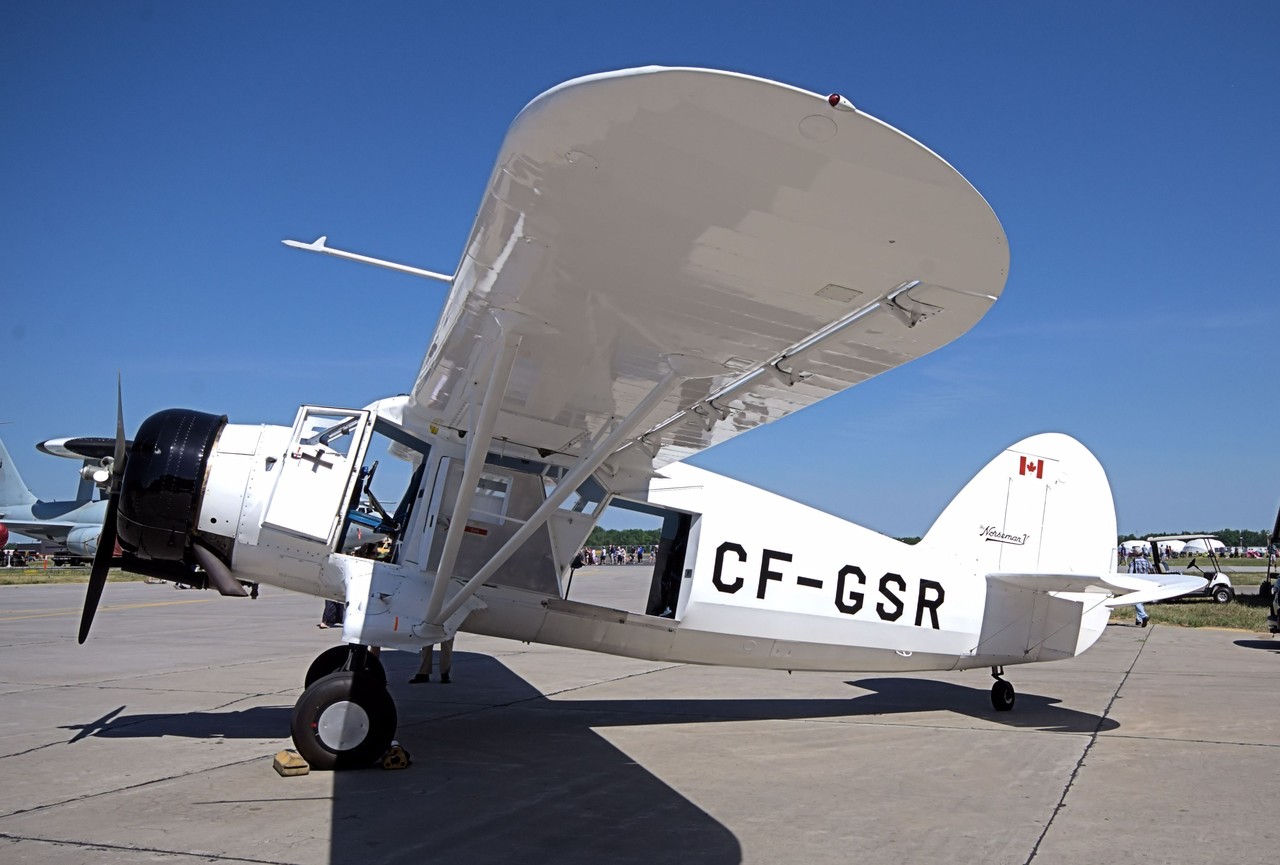
The Norseman dominated bush flying operations throughout its production run from 1935 to 1959, setting the standard for utility aircraft in remote regions. Of the 904 total aircraft built, 749 served with the U.S. Army Air Forces as UC-64A transports during World War II, while 69 operated with the Royal Canadian Air Force. The type's versatility enabled operations across 68 nations, from Arctic exploration to Antarctic expeditions, fundamentally changing how remote areas were accessed and supplied.
Wartime Service
During World War II, the Norseman proved invaluable as a light utility transport and communications aircraft. The U.S. Army Air Forces initially ordered seven YC-64 aircraft for evaluation, accepting them on September 21, 1942. Serial number 42-5046 was assigned to the 29th Ferrying Squadron at Goose Bay, Labrador, where Arctic aviation pioneer Bernt Balchen praised its cold-weather capabilities. The type served in Alaska, Europe, and Australia, handling missions that larger transports could not accomplish due to primitive airfield conditions.
The aircraft's most famous wartime mission ended in tragedy when bandleader Major Glenn Miller departed England aboard UC-64A on December 15, 1944, piloted by Flight Officer John R.S. Morgan. The aircraft vanished over the English Channel en route to Villacoublay, France, and was never recovered.
The Manufacturer
Robert B.C. Noorduyn, a Dutch-born engineer who had previously worked for Anthony Fokker, founded Noorduyn Aviation Ltd. in Montreal during the mid-1930s. Operating from a former Curtiss-Reid factory near Montreal, Quebec, the company focused exclusively on the Norseman design. In early 1946, Canadian Car and Foundry (CCF) acquired manufacturing and sales rights, producing 53 civilian Norseman V aircraft and developing the prototype Norseman VII, which first flew in 1951 but never entered production.
In May 1953, CCF transferred all rights to the newly formed Noorduyn Norseman Aircraft Limited, which provided product support until delivering the 904th and final Norseman in December 1959. The company ceased operations shortly thereafter, marking the end of nearly 25 years of continuous production.
Engine & Technical Innovation
Early Norseman variants suffered from inadequate power, with the prototype using a 420-horsepower Wright R-975-E3 radial engine that proved insufficient for the aircraft's intended mission. The breakthrough came with the Norseman IV, which incorporated the reliable Pratt & Whitney R-1340 Wasp series engine producing 550 to 600 horsepower. This nine-cylinder air-cooled radial, operating at 2,200 rpm, provided the performance necessary for bush operations.
Noordуyn's design emphasized modularity and ruggedness over speed. The aircraft featured stubby, fixed landing gear protruding from the lower fuselage for rough-field operations, while the gear could be quickly exchanged for floats or skis depending on seasonal requirements. The enclosed, heated cabin provided 20 cubic feet of underfloor baggage space, accommodating two crew members and up to eight passengers.
Performance Characteristics
With the R-1340 powerplant, the UC-64A achieved a maximum speed of 162 mph, cruised at 148 mph, and had a service ceiling of 17,000 feet. More importantly for bush operations, the aircraft demonstrated a range of 1,150 miles and exceptional short-field performance. Pilots praised the Norseman's predictable handling characteristics and ability to operate from unprepared surfaces that would ground other aircraft of similar size.
The high-wing configuration provided excellent ground clearance and stability during loading operations, while the robust construction withstood the punishment of repeated operations from rough terrain. These characteristics made the Norseman particularly valuable for accessing remote mining camps, survey operations, and emergency medical evacuations.
Production Legacy
Noordуyn's production spanned six main variants, beginning with the underpowered Norseman I and II models, followed by three Norseman III aircraft with 450-horsepower Wasp SC engines. The definitive Norseman IV became the UC-64A military variant, representing the majority of production. Post-war civilian models included the Norseman V and the experimental all-metal Norseman VII prototype.
Today, a handful of Norseman aircraft remain airworthy in private and commercial service worldwide. Notable museum examples include UC-64A displays at the U.S. Air Force Museum, acquired in March 1981, and YC-64 serial 42-5046 at the National Air and Space Museum, personally selected by General Henry H. "Hap" Arnold for the national collection. The Norseman's influence on subsequent bush aircraft designs remains evident in modern utility aircraft that continue to serve remote regions using similar operational concepts pioneered by Noordуyn's wilderness workhorse.