
Design and Development
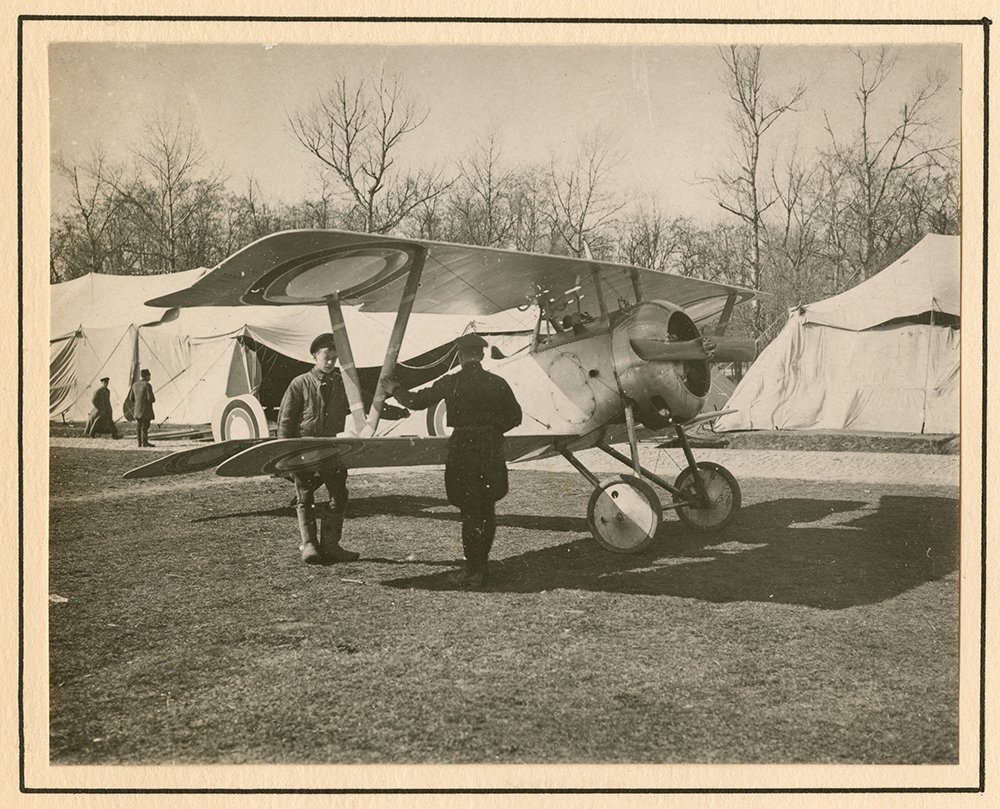
The Nieuport 23 was developed by Gustave Delage as a direct evolution of the Nieuport 17, rather than as a completely new aircraft. The design maintained the hallmark sesquiplane configuration—a single-bay arrangement consisting of a full-chord upper wing and a significantly narrower lower wing—which provided the aircraft with light weight and high maneuverability. The primary objective of the Nieuport 23 was to address structural weaknesses found in the lower wings of earlier sesquiplanes while increasing overall power. Structurally, the aircraft was nearly identical to the Nieuport 17, though it was slightly heavier to accommodate its upgraded powerplant.
Technical Specifications
At the heart of the Nieuport 23 was a 120-hp Le Rhône air-cooled rotary piston engine, a notable increase over the 110-hp engine used in the Nieuport 17. While exact performance tables for the 23 are sparse, representative figures for the Nieuport 17/23 family indicate a service ceiling of approximately 17,390 feet, a range of 155 miles, and a rate of climb reaching 9,840 feet in 11.5 minutes. The airframe measured 19 feet in length and was designed as a single-seat scout, typically armed with a single gun.
Production and Manufacturer
The aircraft was produced by the French firm Société Anonyme des Établissements Nieuport, which later became known as Nieuport-Delage. While exact factory production totals are not securely documented, the type was introduced between 1916 and 1917. Production extended beyond France; the Dux company in Russia built the Nieuport 23 under license. The original manufacturer, Nieuport, was a prominent name in early aviation, known for racing aircraft and WWI fighters, but the company no longer exists as an independent entity, having been absorbed into larger French aerospace groups.
Military Service
The Nieuport 23 served extensively across several Allied air arms during World War I. The Belgian Air Service began receiving Nieuport 23 C.1 fighters in May 1917, deploying an estimated 36 aircraft with No. 1 (Chardon) and No. 5 Squadrons. The United States purchased 50 units, though these were utilized specifically as advanced trainers rather than front-line combat aircraft. In Russia, the license-built Dux aircraft saw prolonged service, remaining in use with the Red Army into the mid-1920s, encompassing the period of the Russian Civil War.
Legacy
The Nieuport 23's influence extended to enemy forces, as the Germans copied the Nieuport 17/23 lineage to create the Siemens-Schuckert D.I. While the Nieuport 17 is more frequently cited in accounts of famous aces like Albert Ball and Billy Bishop, the 23 was a critical part of the core Allied fighter force of 1916–1917. Today, while several Nieuport 17-series reproductions fly—including a 1962 build in Canada and a 2011 build at the Military Aviation Museum—there are no confirmed surviving original factory-built Nieuport 23s.