
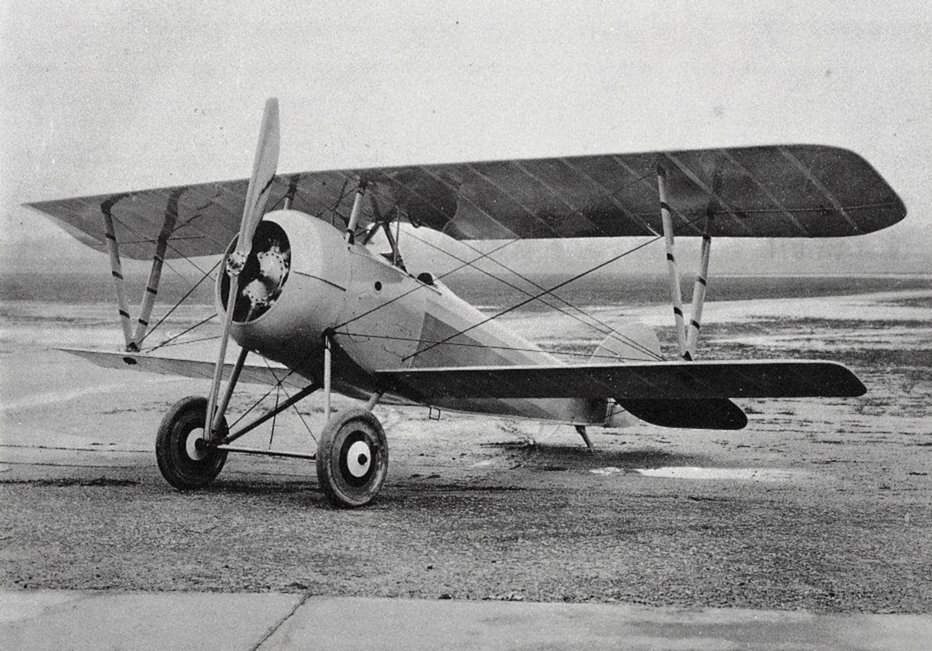
Designed by Gustave Delage, the Nieuport 27 C.1 represented the culmination of the Nieuport "V-strut" single-seat fighter series, a lineage that began with the Nieuport 10. Produced between 1917 and 1918, the aircraft was intended to maintain the tradition of lightweight and agile combat aircraft. However, by the time it entered active service, the Nieuport 27 was already considered obsolescent when compared to newer, more capable fighters such as the SPAD XIII.
Manufacturing was primarily handled by Société Anonyme des Établissements Nieuport in France, though the aircraft was also produced in Italy by the Nieuport-Macchi Company at Varese to support Italian operations. While the total global production number is not recorded in available records, specific procurement figures exist for certain Allied nations. For example, the British Royal Flying Corps acquired 71 units in 1917, and the U.S. Army Air Service purchased approximately 120 aircraft in 1918 for use as trainers.
In terms of performance, the Nieuport 27 C.1 reached a maximum speed of 172 km/h (107 mph) at sea level, with a service ceiling of 6,850 meters. It possessed an endurance of 2.25 hours and a maximum range of 250 kilometers. The aircraft was powered by a single piston engine, though specific model details and horsepower were not documented in the provided research.
Military service was extensive across the Western and Italian fronts. The French Aéronautique Militaire utilized the type in numerous units while awaiting the arrival of the SPAD S.XIII. In French and Italian service, the aircraft typically carried one synchronized Vickers machine gun, sometimes augmented by a Lewis gun mounted above the wing. British variants differed, utilizing a single Lewis gun on a Foster mounting above the top wing. Beyond front-line combat, the aircraft was relegated to secondary roles, including trials and training. Notable pilots, such as Charles Nungesser, are associated with the type.
Today, no original surviving airframes have been identified. The legacy of the Nieuport 27 persists through reproductions, such as a 7/8-scale flying replica built by Lanny Turner, which is housed at the Combat Air Museum.