
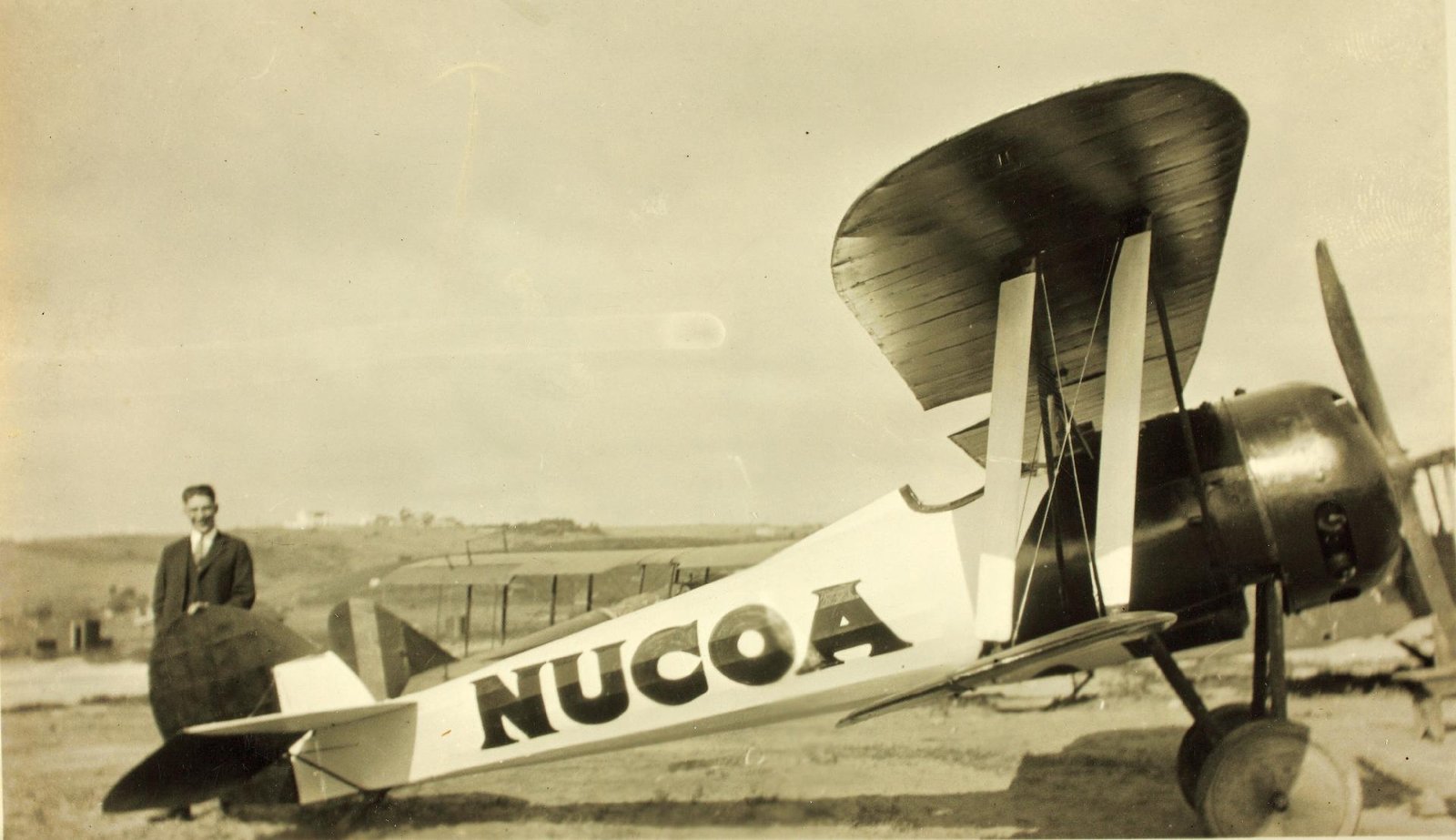
The Nieuport 28 C.1 was a single-engine, single-seat biplane fighter designed by Gustave Delage and manufactured in France by Société Anonyme des Établissements Nieuport. Appearing in mid-1917, the aircraft represented the final evolution of the Nieuport fighter line used during World War I. Departing from the earlier sesquiplane layouts associated with the brand, the Nieuport 28 introduced a more conventional two-spar wing structure and was equipped with a more powerful engine to improve performance.
Technically, the aircraft was powered by a Gnome Monosoupape 9N rotary piston engine producing 160 horsepower. This powerplant enabled a maximum speed of between 196 km/h (122 mph) and 198 km/h (123 mph) at an altitude of 2,000 meters. Its service ceiling is recorded between 5,200 and 5,300 meters, and it could climb to 3,000 meters in 11 minutes and 30 seconds. The aircraft's endurance varied by source, cited as either 1 hour 30 minutes or 1 hour 45 minutes at full power, with a range of 290 km. For armament, the fighter typically carried two .303 in Vickers machine guns.
Despite its design, the French Air Service rejected the Nieuport 28 in favor of the SPAD XIII. However, the United States adopted the type as a stop-gap measure due to a lack of suitable domestic fighters. The American Expeditionary Force purchased and received 297 aircraft, with deliveries beginning in March 1918. From April through July 1918, the Nieuport 28 equipped the 1st Pursuit Group, which included the 27th, 94th, 95th, and 147th Pursuit Squadrons. It holds the distinction of being the first aircraft to see operational service with an American fighter squadron and the first to score an aerial victory for an American unit. On 14 April 1918, Lt. Douglas Campbell and Lt. Alan Winslow of the 94th Aero Squadron each destroyed German aircraft, marking the first enemy aircraft destroyed by American airmen in combat. The type was used extensively by Eddie Rickenbacker, who scored many of his victories in the aircraft (with sources attributing either 12 of 16 or a significant portion of 26 victories to the type). Other notable pilots included Raoul Lufbery and Quentin Roosevelt, both of whom were killed while flying the Nieuport 28 in May and July 1918, respectively.
Following the war, 88 units were shipped to the U.S. to serve as pursuit trainers. The U.S. Navy utilized several aircraft for shipboard launching trials between 1919 and 1921, while others remained with the U.S. Army into the 1920s or entered the private sector for use in films, air racing, and sporting flight. Today, the aircraft is preserved in the collection of the National Air and Space Museum.