
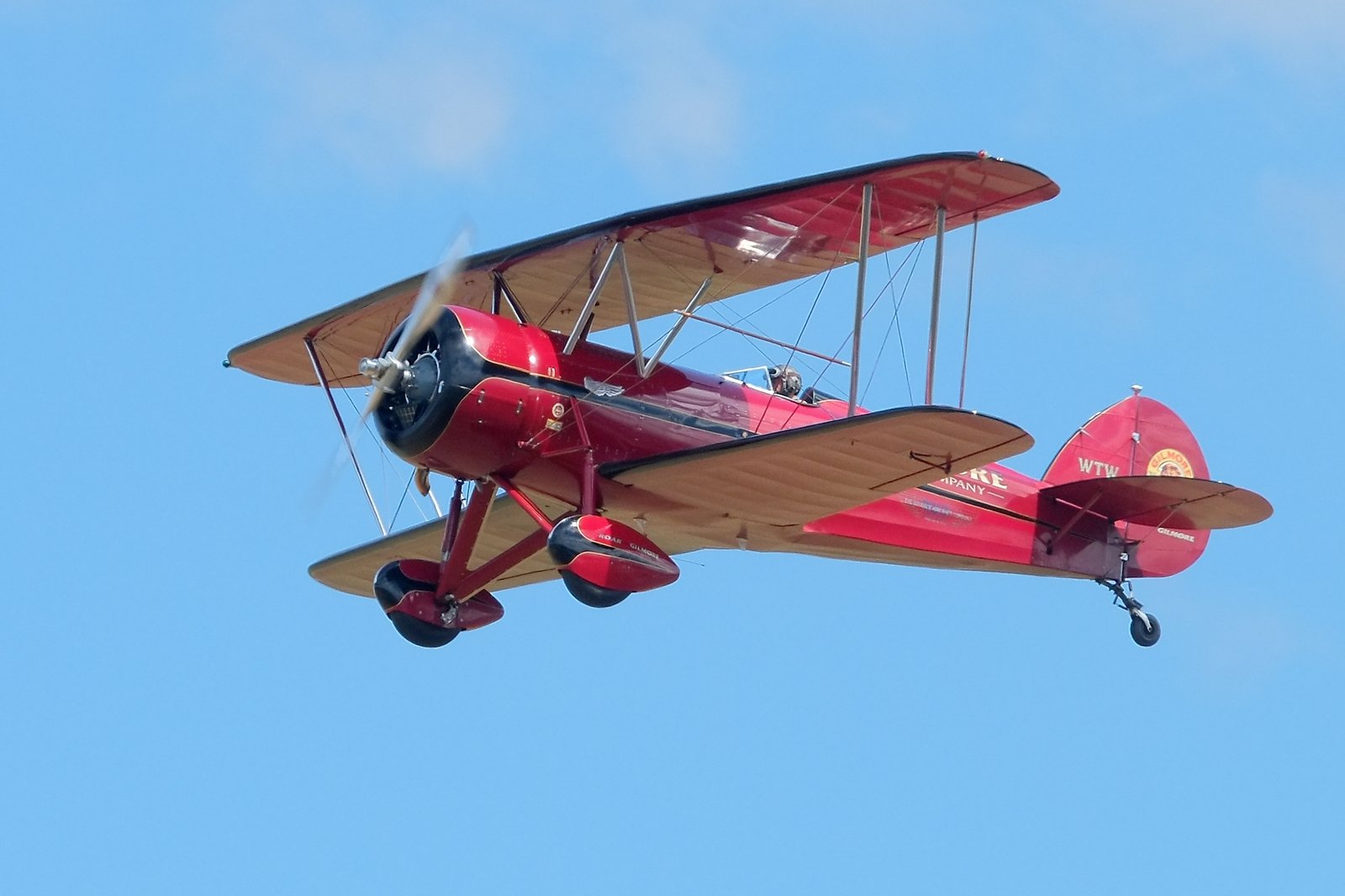
The Revival of a Classic
The NUWACO T-10 emerged during the 1980s homebuilt aircraft boom as enthusiasts sought to recreate the romance of 1920s aviation. NuWaco Aircraft Company of Littleton, Colorado, undertook the ambitious project of producing kit versions of the legendary Waco ATO Taperwing, one of the most elegant biplanes of the Golden Age. The prototype made its debut flight to Oshkosh in 1985, marking the successful resurrection of a design that had captivated aviators nearly six decades earlier.
Limited Production Run
Unlike the original Waco 10 series, which saw over 1,600 aircraft built between 1927 and 1933, the NUWACO T-10 remained a rare bird. NuWaco produced only a small series of kits during the 1980s, with exact production numbers remaining undocumented but described as "not many." One confirmed example, construction number 21 registered as N275TW, was completed and registered to David Allen of Monument, Colorado in August 1992, illustrating the extended build times typical of amateur construction projects.
Engineering the Modern Taperwing
The T-10 faithfully reproduced the distinctive tapered wing configuration that had made the original Waco Taperwing so visually striking. The aircraft maintained the classic biplane proportions with a length of 22 feet 6 inches, wingspan of 30 feet 2 inches, and wing area of 227 square feet. However, NuWaco upgraded the powerplant significantly, installing the robust Jacobs R-755B seven-cylinder radial engine producing 275 horsepower—considerably more powerful than the 90-horsepower Curtiss OX-5 or 220-horsepower Wright J-5 engines that had powered most original Taperwings.
Performance and Handling
The additional power of the Jacobs engine enhanced the T-10's performance envelope while maintaining the gentle handling characteristics that had made the original Waco 10 series popular with pilots of varying experience levels. The aircraft achieved a cruise speed of 115 mph with a stall speed of just 57 mph, providing a comfortable margin for recreational flying. The maximum gross weight reached 2,769 pounds, allowing for substantial fuel and payload capacity for extended cross-country flights.
The Original Legacy
The T-10 drew its heritage from the revolutionary Waco 10 series designed by Charles Meyers and Edward E. Green in the mid-1920s. The original Taperwing variant, introduced in 1928, had represented a significant advancement over straight-wing predecessors, incorporating tapered wing panels that improved both aerodynamic efficiency and aesthetic appeal. These aircraft had dominated American general aviation, capturing over 40 percent of small aircraft sales by 1927 and establishing Waco as a premier manufacturer.
Manufacturing Challenges
The transition from mass production to kit manufacturing presented unique challenges for the T-10 program. While the original Advance Aircraft Company (later Waco Aircraft Corporation) had achieved production rates of one aircraft per day in 1927 at their Troy, Ohio facility, NuWaco's kit approach required extensive documentation, pre-fabrication of complex components, and comprehensive builder support. The complexity of recreating the chrome-molybdenum steel fuselage structure and fabric-covered wooden wings likely contributed to the limited production numbers.
Corporate Succession
NuWaco's brief production run ended in the late 1980s, but the legacy continued when Rare Aircraft Ltd of Minnesota acquired the company's assets in the 1990s. However, Rare Aircraft focused on other Waco reproductions and did not continue Taperwing kit production, making the T-10 an even rarer commodity among warbird enthusiasts.
Modern Rarity
Today, the NUWACO T-10 represents one of the most exclusive entries in the experimental aircraft registry. With fewer than a dozen believed completed, encountering a T-10 at fly-ins or airshows remains an exceptional experience. The aircraft serves as a bridge between the barnstorming era and modern recreational aviation, offering pilots the opportunity to experience authentic 1920s flying characteristics enhanced by modern materials and construction techniques.
Museum Recognition
While original Waco Taperwings hold places of honor in prestigious collections—including the 1928 NC5814 at the EAA AirVenture Museum in Wisconsin—no T-10 reproductions are known to reside in major aviation museums. This absence reflects both the limited production numbers and the aircraft's status as a modern interpretation rather than a historical artifact, though their rarity may eventually earn them recognition as significant examples of 1980s kit aircraft development.