
Transforming Twin-Engine Training
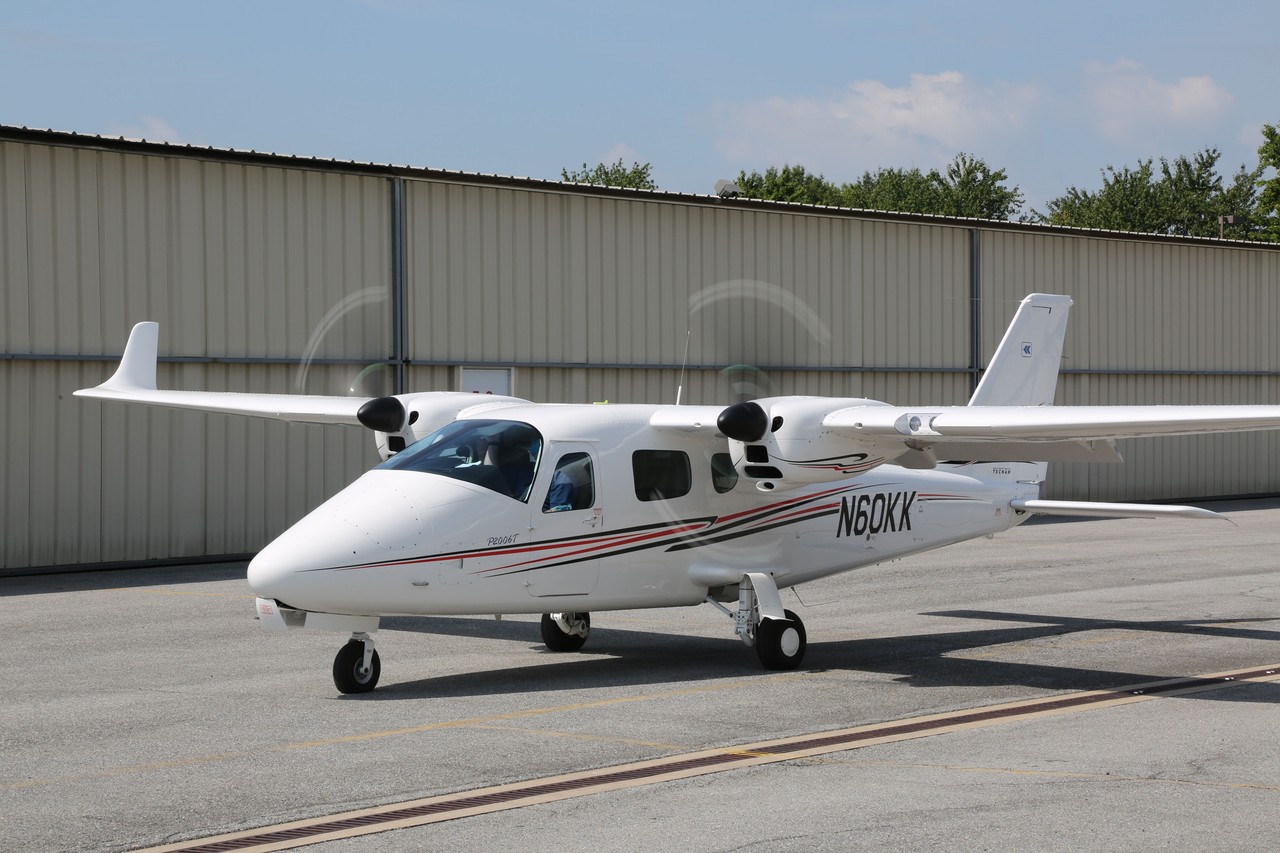
The P-2006T fundamentally altered the economics of multi-engine pilot training worldwide. By early 2017, Tecnam had delivered 200 examples, escalating to over 400 aircraft in service by the time the milestone 400th unit reached Bartolini Air in Poland. The Polish flight school exemplified the aircraft's training revolution, operating 15 P-2006T aircraft since 2010, accumulating 26,000 flight hours while training more than 2,000 students. This operational intensity demonstrated the type's reliability and cost-effectiveness compared to traditional training twins.
Manufacturing Heritage
Construzioni Aeronautiche Tecnam, founded in 1948 by brothers Luigi and Giovanni Pascale, developed the P-2006T as their first foray into twin-engine aircraft manufacturing. The company's aviation legacy began immediately after World War II with models like the P57 Fachiro for aero clubs, achieving notable success in air racing with a first-place victory in 1967. After weathering challenges in the 1970s, the second generation led by Paolo Pascale revived the company in the 1980s, eventually producing over 2,600 P92 Echo ultralights since 1993. By 2023, Tecnam marked its 75th anniversary, now operating under the name Tecnam Aerospace.
Development and Design Innovation
The P-2006T prototype, registered I-TETW, made its maiden flight in September 2007, followed by the second prototype on June 9, 2008. The aircraft debuted publicly at Aero 2007 in Friedrichshafen, Germany, in November 2007, already garnering 32 orders. European certification followed in late 2008, with market introduction beginning in 2007. Tecnam's design team, guided by the Pascale family's vision, created the aircraft specifically as a low-cost alternative to existing twin-engine trainers, emphasizing automotive fuel compatibility—a unique feature among FAR 33 certified twins.
Powerplant and Performance
Twin Rotax 912 S3 four-stroke engines, each producing 100 horsepower, power the P-2006T. These Austrian-manufactured inline piston engines enable the aircraft's exceptional fuel economy and environmental credentials through reduced emissions and noise levels. The powerplant combination provides sufficient performance for a service ceiling of 15,000 feet while maintaining the operational simplicity that made the aircraft attractive to flight schools. The engines' automotive fuel compatibility significantly reduced operating costs compared to traditional aviation gasoline-dependent twins.
Global Operations and Military Adoption
While primarily serving civilian markets, the P-2006T achieved limited military recognition when the Italian Air Force accepted three aircraft in July 2016, assigned serials 7Q-40, 7Q-41, and 7Q-42. Special variants like the P2006T SMP were developed for aerial operations supporting air forces, though the aircraft never saw combat service.
Civilian operations spread across more than 30 countries early in the program, with particularly strong adoption in Europe, New Zealand, and Australia. New Zealand's first example, ZK-TZY, arrived at Izard Pacific Aviation in Taupo in early 2010, followed by ZK-TTW (later sold to Australia as VH-OWW) and ZK-OBZ for Hong Kong's Ardmore Aviation in 2014 for multi-mission operations.
Production and Manufacturing
Tecnam manufactures all P-2006T aircraft at their facilities in Capua, Italy, near Naples, constructing a new facility adjacent to their original plant specifically for this model. Current production maintains a steady pace of 50-60 aircraft annually, with early program success generating approximately 100 pending orders after delivering 75 units to the initial customer base. The high-wing configuration features retractable tricycle landing gear and all-metal construction, providing durability for intensive training operations.
Performance Specifications
The P-2006T achieves a maximum cruise speed of 150 knots (278 km/h) with normal cruise operations at 147 knots (272 km/h). Range varies from 669 nautical miles (1,239 km) to a maximum of 940 nautical miles (1,741 km) depending on configuration and loading. The aircraft's robust payload-to-weight ratio made it particularly attractive for training operations requiring frequent loading cycles and varied passenger configurations.
Continuing Evolution
Tecnam's commitment to the twin-engine market culminated in early 2025 with certification of the P2006T NG, representing continued development of the original concept. The aircraft's legacy rests on democratizing twin-engine training by making multi-engine flight hours accessible to a broader range of pilots and flight schools, fundamentally changing the economics of professional pilot development worldwide.