
Service History
The Neptune dominated maritime patrol operations for three decades, serving as the primary anti-submarine warfare aircraft for the U.S. Navy and allied nations during the height of the Cold War. VP-ML-2 became the first operational squadron in March 1947, marking the beginning of an era where Neptunes patrolled the world's oceans hunting Soviet submarines. By the peak of its service, the aircraft equipped dozens of patrol squadrons across multiple nations, with 287 P2V-7 variants alone delivered to various operators.
Wartime and Operational History
During the Vietnam War, the Neptune proved its versatility beyond traditional maritime patrol roles. Observation Squadron 67 (VO-67), with the call sign "Lindy," became the only P-2 squadron ever to receive the Presidential Unit Citation for their Igloo White missions. These highly classified operations involved dropping seismic and acoustic sensors along the Ho Chi Minh Trail, transforming the anti-submarine hunter into an electronic warfare platform. The U.S. Army operated P-2s from 1967 to 1972, accumulating 42,500 flight hours with a perfect safety record.
The aircraft's combat capabilities extended to carrier operations, where specially modified P2V-3C variants demonstrated the feasibility of launching nuclear-armed bombers from aircraft carriers. Eleven P2V-3Cs were converted for this role, representing an innovative solution to extend nuclear deterrent capabilities during the early Cold War period.
The Manufacturer
Lockheed Aircraft Corporation built the Neptune at its Burbank, California facility, continuing an unbroken production run from 1946 through April 1962. This 15-year manufacturing span represented one of the longest continuous production runs in military aviation history. Lockheed's design philosophy emphasized ease of manufacture and maintenance, a decision that proved instrumental in the aircraft's longevity and worldwide adoption. The company merged with Martin Marietta in 1995 to form Lockheed Martin Corporation, which continues as a major aerospace contractor today.
Engine and Technical Details
The Neptune's primary powerplant consisted of two Pratt & Whitney R-3350 radial engines, with variants using different models including the R-3350-8A in early P2V-1s and the more powerful R-3350-32W in later versions. The P2V-7, first flown on April 26, 1954, introduced auxiliary Westinghouse J34 turbojet engines mounted under the wings, significantly improving takeoff performance and high-altitude capabilities. This hybrid powerplant configuration became standard for final production aircraft, with even the 25 Canadian aircraft initially delivered without jets later receiving the auxiliary engines.
The standard crew of seven included a pilot, copilot, bombardier-navigator, radio operator, and gunners to operate three defensive turrets. The aircraft's design prioritized range and endurance over speed, with massive fuel capacity enabling missions lasting more than 15 hours.
Record-Setting Performance
The Neptune's most famous achievement came with "Truculent Turtle," a specially modified P2V-1 that shattered long-distance records. Stripped of armament and loaded with additional fuel tanks in every available space, this aircraft flew 11,235 miles nonstop in 55 hours and 17 minutes, obliterating the previous record of 7,916 miles set by a B-29. This record stood as the absolute unrefueled distance record until 1962 and remained the piston-engine record until the Rutan Voyager's 1986 circumnavigation.
International Service
Beyond U.S. service, the Neptune equipped maritime patrol forces worldwide. The Royal Australian Air Force operated SP-2H variants, with aircraft like A89-273 delivered in March 1962 serving for decades. Japan's Maritime Self-Defense Force received 82 specially modified P2V-Kai aircraft built by Kawasaki, featuring Rolls-Royce Dart turboprop engines replacing the original radials. These aircraft represented a significant evolution of the basic design, demonstrating the platform's adaptability.
Production and Legacy
Total Neptune production reached 1,188 aircraft across seven major variants and dozens of sub-variants. The P2V-5 became the most numerous single variant with 424 aircraft built, while the final P2V-7 series totaled 287 aircraft including those assembled in Japan. Production numbers reflected the aircraft's success: the 15-year manufacturing run exceeded that of most military aircraft programs.
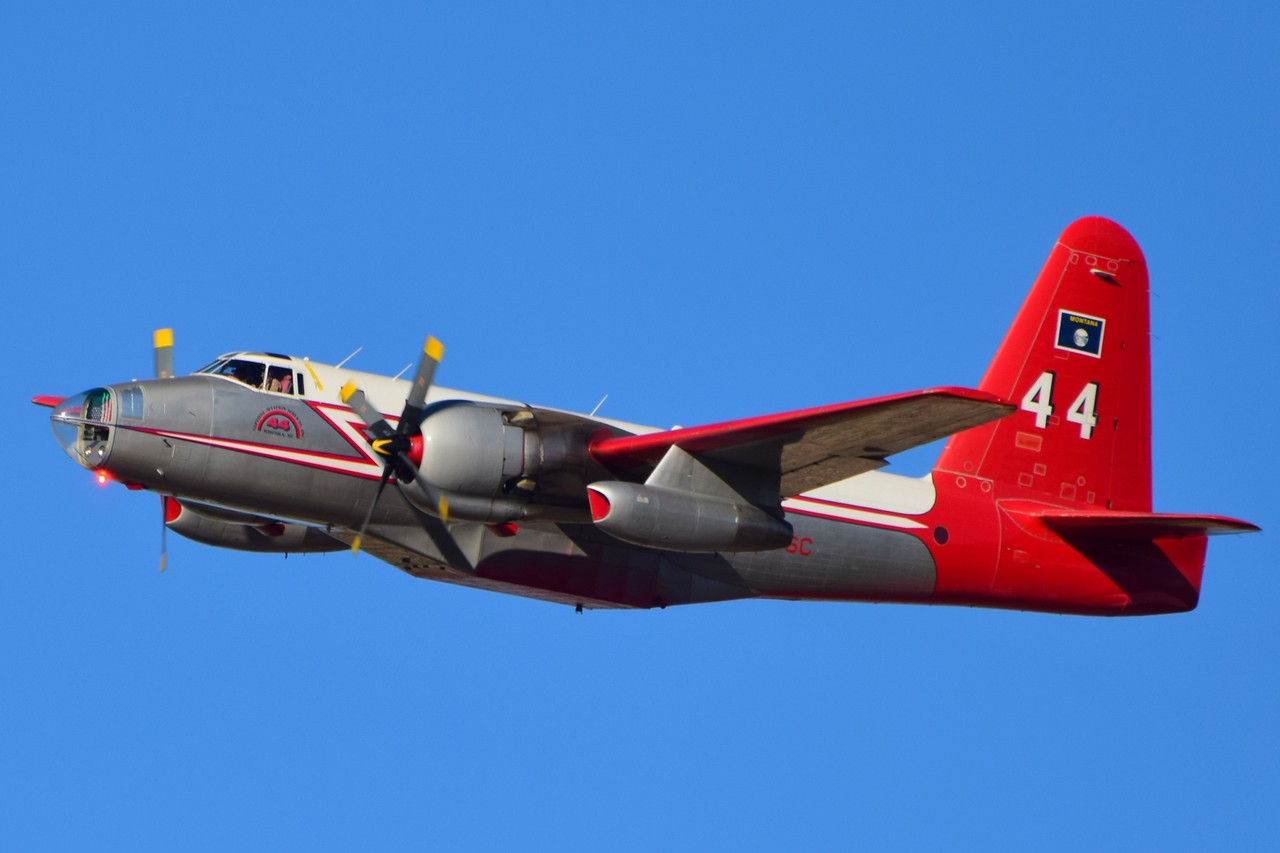
After military retirement, many Neptunes found new life as aerial firefighters, fitted with retardant tanks for combating forest fires. These converted aircraft served well into the 21st century, extending the type's operational career to over 60 years. Today, "Truculent Turtle" resides at the National Museum of Naval Aviation in Pensacola, Florida, while other examples are preserved at museums including the Pima Air & Space Museum and RAF Museum.
Aviation historian Walter J. Boyne captured the Neptune's significance: "The Neptune signaled a new era in which aircraft became platforms for other technology and as such had a far greater longevity than ever before. Few aircraft have succeeded so well in doing so many tasks over such a long period of time." This assessment reflects the aircraft's transformation from a simple patrol plane into a sophisticated electronics platform, setting the template for modern maritime surveillance aircraft.