
Development and Design Philosophy
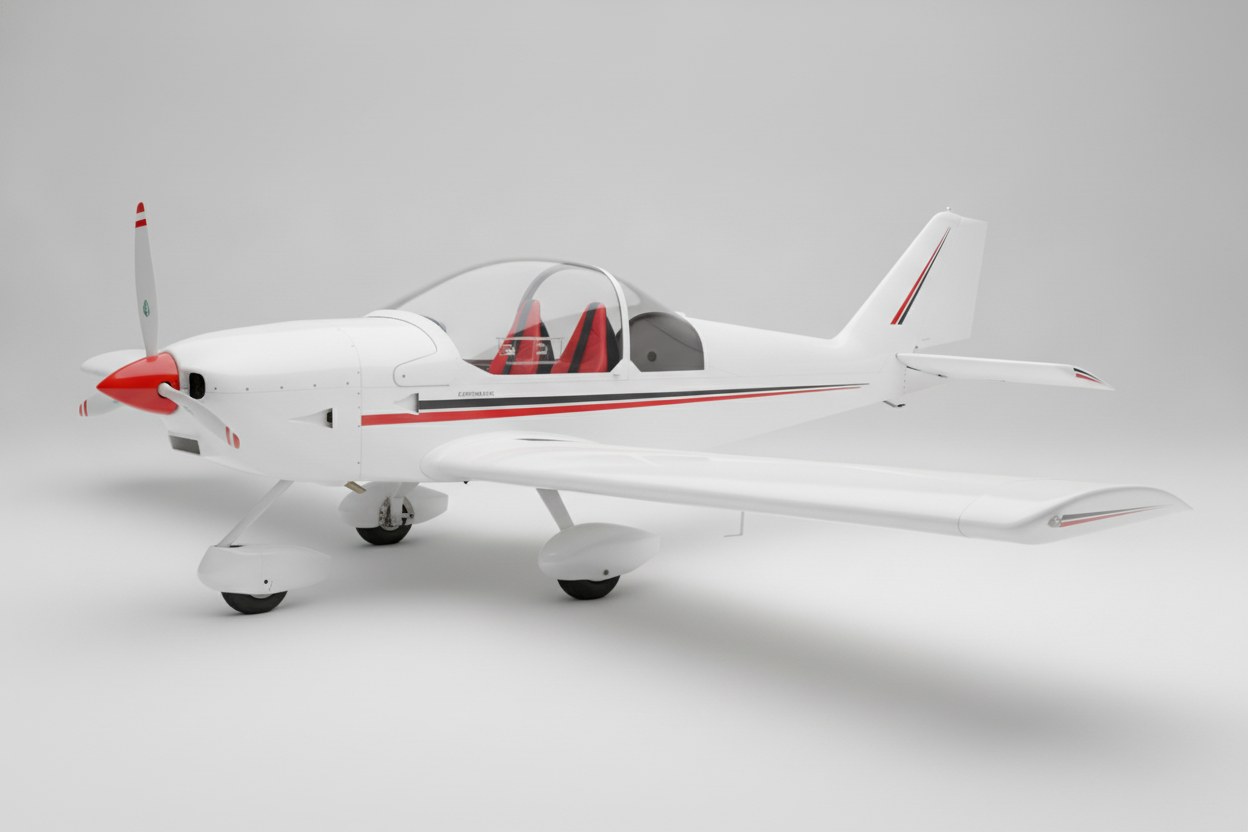
The P-220 Koala emerged from Avions Pottier's expertise in designing metal homebuilt aircraft, evolving directly from their single-seat P-210S Coati taildragger. The French manufacturer recognized the growing demand among amateur builders for a two-seat trainer and touring aircraft that maintained the structural simplicity of metal construction while offering modern tricycle gear convenience. The design incorporated a swept-back fin and fully enclosed cabin, representing a significant advancement over the company's earlier tailwheel designs.
The Manufacturer's Legacy
Avions Pottier established itself as a specialist in light metal monoplanes for the homebuilding community, focusing on designs that amateur constructors could successfully complete. The company's approach emphasized practical engineering solutions that balanced performance with buildability, making their aircraft accessible to recreational pilots seeking alternatives to traditional tube-and-fabric designs. While Avions Pottier's current operational status remains unclear, their influence extended far beyond France through licensing agreements that brought their designs to international markets.
Engine and Performance Characteristics
The standard P-220S utilized the 75-horsepower VW/Limbach powerplant, a conversion of the Volkswagen automotive engine specifically modified for aviation use by Limbach. This engine choice reflected the homebuilding community's preference for affordable, reliable power sources with readily available parts and service support. The combination delivered a maximum speed of 155 mph and cruise speed of 118 mph, with a stall speed of just 56 mph that made the aircraft forgiving for training operations.
The Koala's performance envelope included a service ceiling capability and rate of climb of 689 feet per minute, respectable figures for its power class. With a range of 435 miles, the aircraft provided adequate cross-country capability for recreational flying while maintaining fuel economy. The design's structural strength rating of +5.7 g demonstrated robust construction suitable for moderate aerobatic training.
Production and International Expansion
By early 1996, Avions Pottier had delivered at least 20 kits with six aircraft flying, representing the initial production phase of what would become an extended manufacturing run. The company's business model focused on kit sales rather than completed aircraft, allowing builders to construct their own aircraft while maintaining amateur-built status for regulatory purposes.
The design's success led to licensed production arrangements across Europe. Evektor and Aertotechnik established manufacturing rights in the Czech Republic, while SG Aviation brought production to Italy. This international expansion demonstrated the design's appeal beyond its French origins and established the foundation for the broader Pottier aircraft family.
The Koala Family Evolution
The P-220's basic design spawned an entire family of variants that addressed different market segments. The P-230S Panda increased power to 100 horsepower with a Continental O-200 engine, while the P-240S Saiga featured a 180-horsepower Lycoming powerplant for enhanced performance. The P-270S Amster incorporated a 150-horsepower Lycoming engine, and the P-250S Xerus rounded out the family with its own specifications.
This systematic approach to variant development allowed Pottier to serve markets ranging from basic training to high-performance touring, all while maintaining the fundamental design characteristics that made the original Koala successful. Each variant retained the low-wing configuration and side-by-side seating that defined the family's identity.
Operational Service and Legacy
The P-220 found homes with private owners across Europe, including France, Germany, Italy, Czech Republic, and Russia. Its primary roles encompassed recreational flying and basic training, serving pilots who valued the aircraft's predictable handling characteristics and economical operation. The design's metal construction provided durability advantages over fabric-covered alternatives while maintaining reasonable empty weight of 606 pounds.
Accident records indicate continued operation into 2024, with at least 10 recorded incidents between 1999 and 2024 resulting in six fatalities. This safety record, while concerning in absolute terms, reflects the challenges inherent in homebuilt aircraft operations rather than fundamental design flaws.
The AT-3 Connection
The Koala's most significant legacy lies in its evolution into the Aero AT-3, which first flew in 1997 and entered service in 2002. This certified development of the basic Pottier design achieved both EASA CS-VLA and FAA certification by 2010, with over 16 units sold in the United Kingdom alone and similar numbers in France. The AT-3's continued production demonstrates the enduring validity of the original Koala's design philosophy, translating amateur-built concepts into certified aircraft standards.
Today, the exact number of flying P-220 Koalas remains unknown, though evidence suggests continued operation across Europe and Russia. The design's influence extends beyond its immediate production numbers through its role in establishing the template for modern European homebuilt aircraft and its direct contribution to certified aircraft development.