
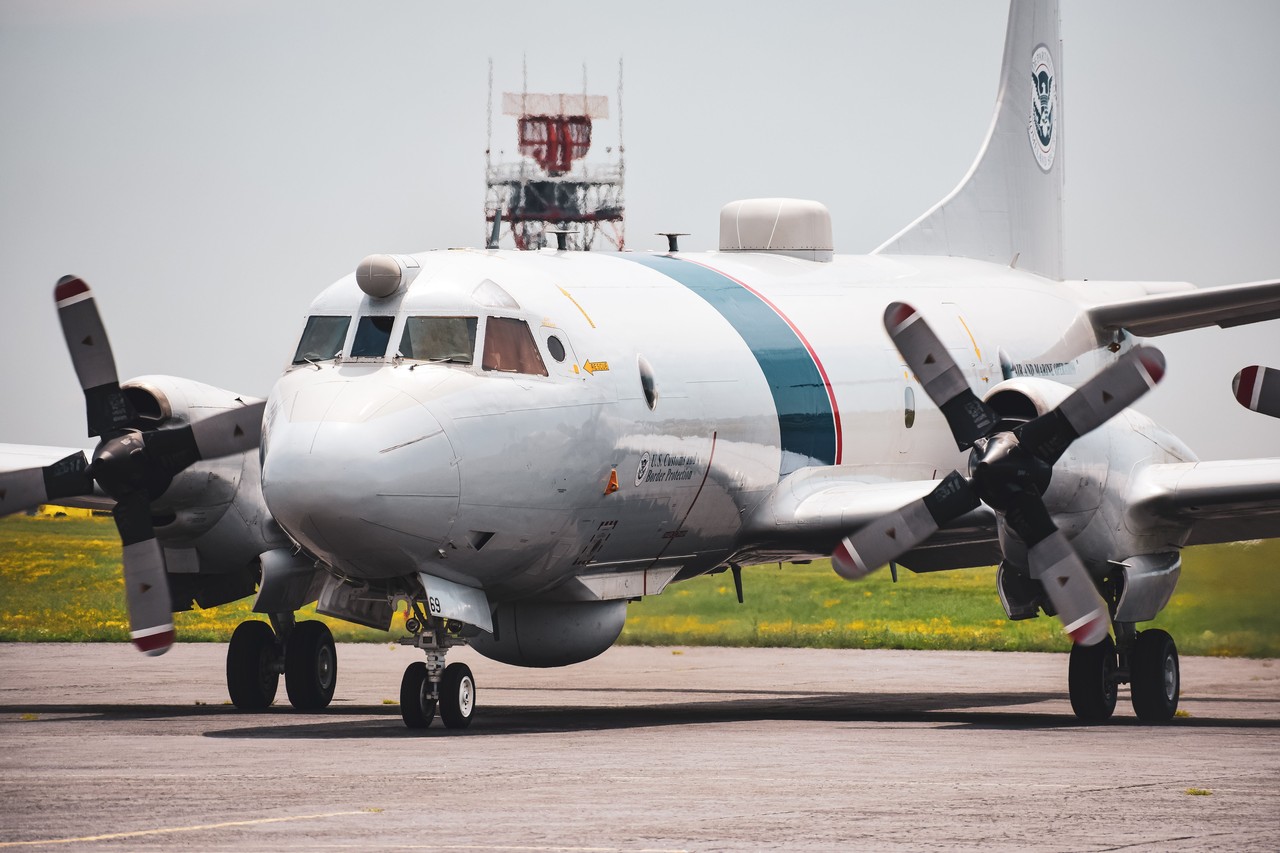
Dominating Maritime Patrol Operations
From its introduction in 1962, the P-3 Orion achieved unparalleled dominance in maritime patrol and anti-submarine warfare roles. The U.S. Navy operated the world's largest fleet, with 435 aircraft serving across 21 operators in 16 countries as of 2013. This remarkable international adoption reflected the aircraft's superior capabilities in tracking Soviet submarines during the Cold War, a mission that required both exceptional endurance and advanced sensor systems.
Combat and Operational Service
The P-3 entered U.S. Navy service on August 13, 1962, with squadrons VP-8 and VP-44 at NAS Patuxent River. While designed primarily for maritime operations, the Orion proved adaptable to land-based missions during Operation Desert Storm in 1991, conducting surveillance of Iraqi ground forces. The aircraft's bomb bay could accommodate torpedoes and depth charges, while 10 wing hardpoints carried missiles and mines for anti-surface warfare missions.
Three primary variants defined the production run: the P-3A (157 built) introduced mine-laying capabilities, the P-3B incorporated improved T56-A-14 engines from 1965, and the P-3C (266 built for the U.S.) featured advanced IBM Proteus systems beginning with the Update III configuration in 1984.
Lockheed's Naval Aviation Legacy
The Lockheed Corporation, founded by brothers Allan and Malcolm Lockheed in 1913, established itself as a premier military aircraft manufacturer through projects like the P-3. Following company tradition of naming aircraft after mythological figures, "Orion" was adopted in late 1960. The company merged with Martin Marietta in 1995 to form Lockheed Martin, which continues operations today. The P-3 represented one of Lockheed's most successful military programs, second only to the C-130 Hercules among the company's turboprop aircraft.
Engineering Excellence
Lockheed's California Company design team transformed the civilian L-188 Electra into a specialized military platform after winning a U.S. Navy contract on October 7, 1958. The prototype YP3V-1 (serial 148276) first flew on November 25, 1959, from Burbank, California, followed by the first production aircraft on April 15, 1961. Key innovations included a magnetic anomaly detection (MAD) boom extending from the tail stinger, enabling submarine detection through magnetic field disturbances.
Four Allison T56 turboprop engines provided the reliability and fuel efficiency essential for extended maritime patrols. These powerplants eliminated the water-methanol injection systems required on earlier patrol aircraft while delivering sufficient power for dash speeds up to 466 mph when pursuing targets.
International Production Success
Production spanned 39 years from 1961 to 2000, yielding 757 total aircraft. Lockheed manufactured 650 units across three facilities: initial production occurred in Burbank, California, shifted to Palmdale in 1983-1984, then moved to Marietta, Georgia in the early 1990s. Kawasaki Heavy Industries produced an additional 107 aircraft under license from 1979 onward, serving the Japan Maritime Self-Defense Force and export customers.
Notable international operators included Norway, Canada, South Korea (which received 8 P-3C-III+ aircraft in 1995), and the Royal Australian Air Force. Each operator adapted the basic design to specific national requirements while maintaining commonality with U.S. Navy systems.
Pilot and Crew Perspective
Multi-crew operations typically included pilots, co-pilot, and specialized sensor operators managing the complex array of detection equipment. The aircraft's 16-hour mission endurance capability demanded exceptional crew coordination and fatigue management procedures. Pilots appreciated the robust T56 engines' reliability during extended overwater flights, while the Electra-derived airframe provided predictable handling characteristics adapted from proven airline service.
Production Costs and Modern Legacy
By 1987, individual P-3C aircraft cost $36 million, reflecting the sophisticated avionics and mission systems integration. As maritime threats evolved, the U.S. Navy began transitioning to the Boeing P-8 Poseidon, though many international operators continue P-3 operations through extensive upgrade programs. Lockheed produced 31 Mid-Life Upgrade wing kits at the Marietta facility to extend service life for continuing operators.
The Hickory Aviation Museum preserves a P-3C Orion among other notable display locations, ensuring public access to this significant maritime patrol aircraft. After more than six decades of service, the P-3 Orion's combination of endurance, sensor capability, and operational flexibility established the template for modern maritime patrol operations worldwide.