
Development and Design
Luigi "Gino" Pascale, earning the nickname "il Professore" from his engineering team, led the design of the P.57 Fachiro while his brother Giovanni "Nino" Pascale managed production operations. The brothers founded Partenavia Costruzioni Aeronautiche SpA in 1949, establishing their manufacturing facility in Arzano near Naples Capodichino Airport. Their design objective centered on creating an affordable four-seat touring aircraft specifically for Italian flying clubs, filling a gap in the domestic light aircraft market.
The prototype, registered I-VIVA with serial number 2, completed its maiden flight on an early July day in 1958 at Capodichino Airport. During initial testing, engineers discovered flutter issues with the ailerons, which they resolved through mass-balancing modifications following a concerning test flight incident later that year.
Production Variants
Partenavia produced the Fachiro in three distinct variants between 1957 and the early 1960s. The initial Fachiro I, powered by a 150-horsepower Lycoming O-320 engine, remained a single prototype. Three examples of the Fachiro II followed, equipped with the more powerful 168-horsepower Lycoming O-360-B2A engine. The production focused primarily on the Fachiro IIF variant, with 33 to 37 aircraft completed using the 180-horsepower Lycoming O-320-A2A engine, bringing total production to approximately 37 aircraft.
Service History
Italian flying clubs became the primary operators of the Fachiro, with the Bari Aero Club receiving the original prototype I-VIVA, while the Aero Club di Brindisi operated I-PENN. These organizations used the aircraft for flight training and touring flights, with typical routes including Naples to Genoa. The Fachiro's ability to carry four occupants at 200 km/h cruise speed made it attractive for club operations and private touring in an era when such capabilities were novel in Italian aviation.
The aircraft also participated in air racing competitions, contributing to Partenavia's growing reputation in Italian aviation circles. However, the type experienced at least one notable accident when five occupants died in a crash near Cattolica on September 3, 1961.
Technical Specifications
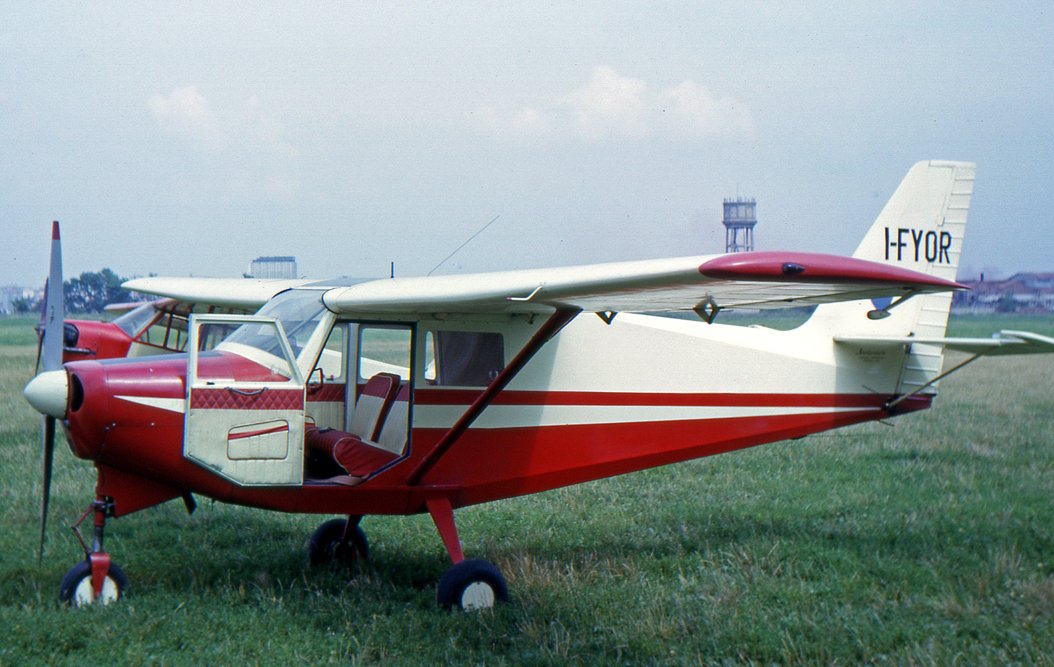
The Fachiro featured a high-wing configuration with three front-hinged doors, including two positioned on the aircraft's right side. The main production variant's 180-horsepower Lycoming O-320-A2A engine provided strong climb performance and enabled the aircraft to maintain its 200 km/h cruise speed even at maximum capacity. Lycoming Engines, operating as a division of Avco Corporation (later acquired by Textron), manufactured these reliable air-cooled flat-four engines that became workhorses throughout general aviation.
The Manufacturer's Evolution
Partenavia reorganized as a limited company in 1959, during the height of Fachiro production. The company continued operations until facing bankruptcy in the 1980s or early 1990s. The Pascale brothers demonstrated remarkable resilience by restarting aircraft production under a new company name: Costruzioni Aeronautiche Tecnam SpA, commonly known as Tecnam.
This successor company achieved considerable success, particularly with the P92 ultralight, producing over 2,600 examples since 1993. Tecnam continues operations today, maintaining the Pascale family legacy in Italian light aircraft manufacturing that began with the pioneering Fachiro.
Legacy and Survivors
The P.57 Fachiro established Partenavia as a legitimate aircraft manufacturer and paved the way for subsequent designs including the P.64 Oscar, of which 64 examples were built. As Italy's first production four-seat light aircraft, the Fachiro holds historical significance in the nation's aviation development during the post-war reconstruction period.
At least one Fachiro IIF survives today: aircraft I-FYOR, construction number 15, built in 1960 and documented in recent photographs. The exact number of airworthy examples remains unknown, though the type's limited production run and age suggest few remain in flying condition. The Fachiro's primary legacy lies in demonstrating Italian capability in light aircraft design and establishing the foundation for Tecnam's current success in the global ultralight and light sport aircraft markets.