
Soviet Workhorse
While the United States Army Air Forces rejected the P-63 Kingcobra for combat service, the aircraft found its true calling with the Soviet Air Force, which operated 2,397 of the 3,303 aircraft produced—representing nearly 73 percent of total production. The massive Lend-Lease transfer made the Kingcobra one of the most important Western fighters in Soviet service, with aircraft delivered via the treacherous Alaska-Siberia Route and through Iran between 1943 and 1945.
Soviet pilots valued the P-63's effectiveness in low-altitude ground attack missions and tank-busting operations along the Eastern Front. The aircraft's potent armament of one 37mm M4 cannon firing through the propeller hub, complemented by four .50-caliber machine guns and up to 1,500 pounds of bombs, proved devastatingly effective against German armor and infantry positions. Unlike American pilots who found the aircraft inferior to the P-51 Mustang and P-47 Thunderbolt, Soviet aviators appreciated the Kingcobra's superior low-level performance compared to its predecessor, the P-39 Airacobra.
Engineering Evolution
Bell Aircraft's engineering team designed the P-63 as a direct response to combat feedback from P-39 operations, addressing critical shortcomings in power and performance. The first prototype, serial number 41-19511, took flight on December 7, 1942, though it was destroyed just weeks later on January 28, 1943, due to landing gear failure. The second prototype followed on February 5, 1943, but was also lost to engine failure, highlighting the challenging development process.
The Kingcobra incorporated significant improvements over the P-39, including a larger airframe, four-bladed propeller, taller tail fin, and repositioned wing for enhanced handling characteristics. Bell's innovative tricycle landing gear configuration and the unusual mid-engine placement—with the Allison V-1710 mounted behind the pilot—distinguished the aircraft from conventional fighter designs of the era.
Bell Aircraft Corporation
Founded in 1935 by Lawrence Dale "Larry" Bell, Bell Aircraft Corporation operated as an independent manufacturer until 1957 when Textron Inc. acquired the company. During its wartime peak, Bell rapidly expanded production, manufacturing over 15,000 P-39 Airacobras alongside the P-63 series. The company also achieved aviation immortality by producing the X-1 rocket plane, which became the first aircraft to break the sound barrier in 1947.
Following the Textron acquisition, Bell transitioned from fixed-wing aircraft to rotorcraft, eventually becoming Bell Textron Inc. and specializing in helicopters and tiltrotor aircraft. The company's Niagara Falls and Buffalo, New York facilities produced all P-63 variants between 1942 and 1945, with Soviet engineers Andrey G. Kochetkov and Fyodor P. Suprun directly assisting in P-63A development during February 1944.
Power and Performance
The Allison V-1710 liquid-cooled inline engine powered all P-63 variants, though with significant improvements between early and late production aircraft. The P-63A utilized the V-1710-47 engine producing 1,325 horsepower at takeoff, while the later P-63C featured the uprated V-1710-117 generating 1,500 horsepower at sea level and 1,800 horsepower with water injection. Manufactured by the Allison Engine Company from approximately 1932 to 1948, the V-1710 series saw over 70,000 units produced and powered numerous American fighters including the P-38 Lightning and P-40 Warhawk.
While reliable at low altitudes and offering an excellent power-to-weight ratio, the V-1710's supercharger system proved less effective at high altitudes compared to competing engines. This limitation contributed to American rejection of the P-63 for high-altitude combat roles, though it perfectly suited Soviet requirements for low-level operations.
Production Variants
Bell manufactured 3,303 P-63 Kingcobras across multiple variants, with the P-63A comprising the largest production run at 1,725 aircraft built between October 1943 and December 1944. The improved P-63C accounted for 1,227 aircraft, featuring the more powerful engine and a wingspan reduced by 10 inches for enhanced roll rate. Only 13 P-63E aircraft were completed, along with a single P-63D prototype and various experimental configurations.
A unique chapter in P-63 history involved the conversion of over 200 aircraft into RP-63 "Pinball" target drones, later redesignated QF-63 in 1948. These heavily modified aircraft featured reinforced structures and special lighting systems to indicate hits from frangible ammunition during aerial gunnery training, with lights alerting pilots when struck by practice rounds.
Surviving Legacy
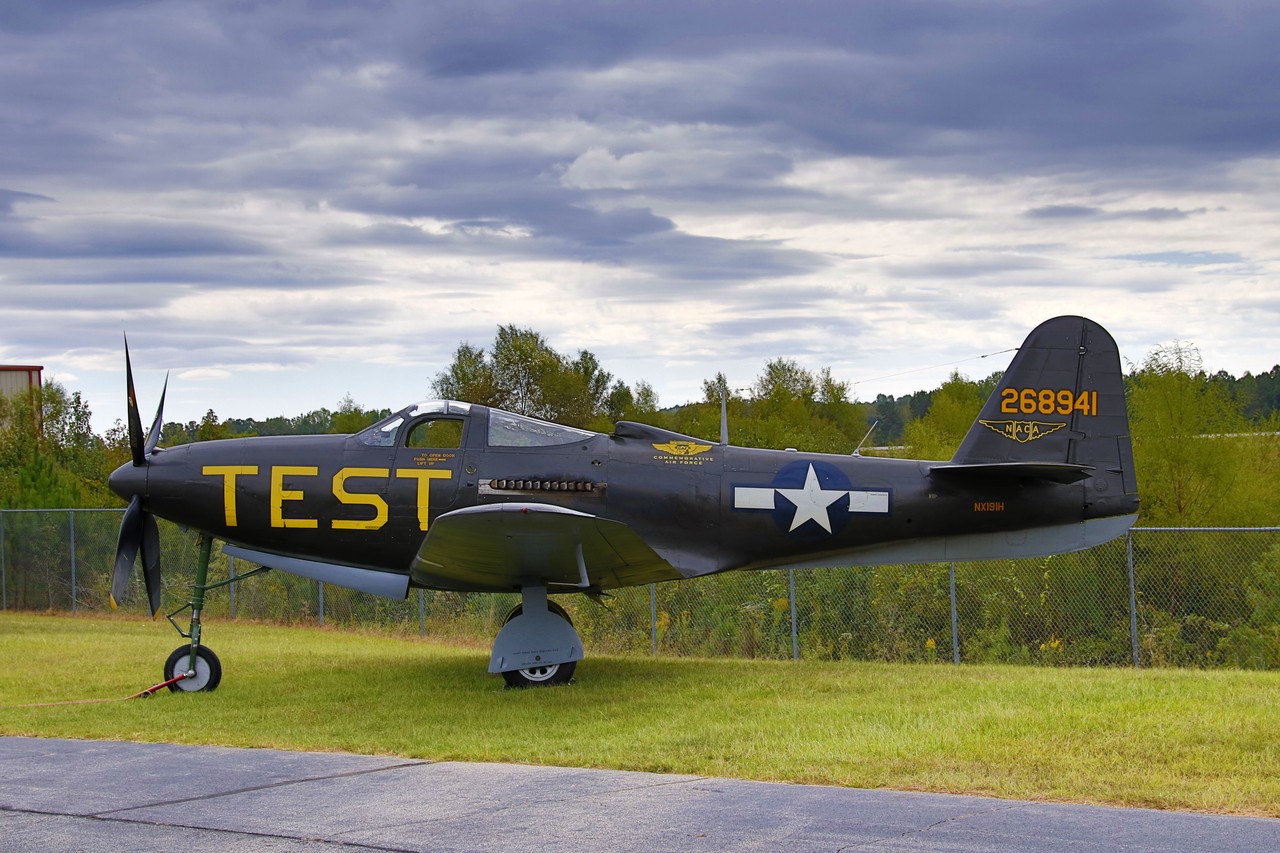
Today, only three airworthy P-63 Kingcobras remain in the United States. The Commemorative Air Force Airbase Georgia operates P-63A serial number 42-68941, built on February 24, 1944, while the Military Aviation Museum in Virginia Beach maintains another flying P-63A-10. Several static examples survive in museums, including P-63E aircraft at the Pima Air & Space Museum in Tucson, Arizona, and the National Museum of the United States Air Force in Dayton, Ohio.
The Kingcobra represents a fascinating chapter in Lend-Lease cooperation and highlights how aircraft rejected by their country of origin can find success with allied operators. While American pilots may have preferred other fighters, the P-63's contribution to Soviet victory on the Eastern Front secured its place in aviation history as one of the most important American fighters most Americans never knew existed.