
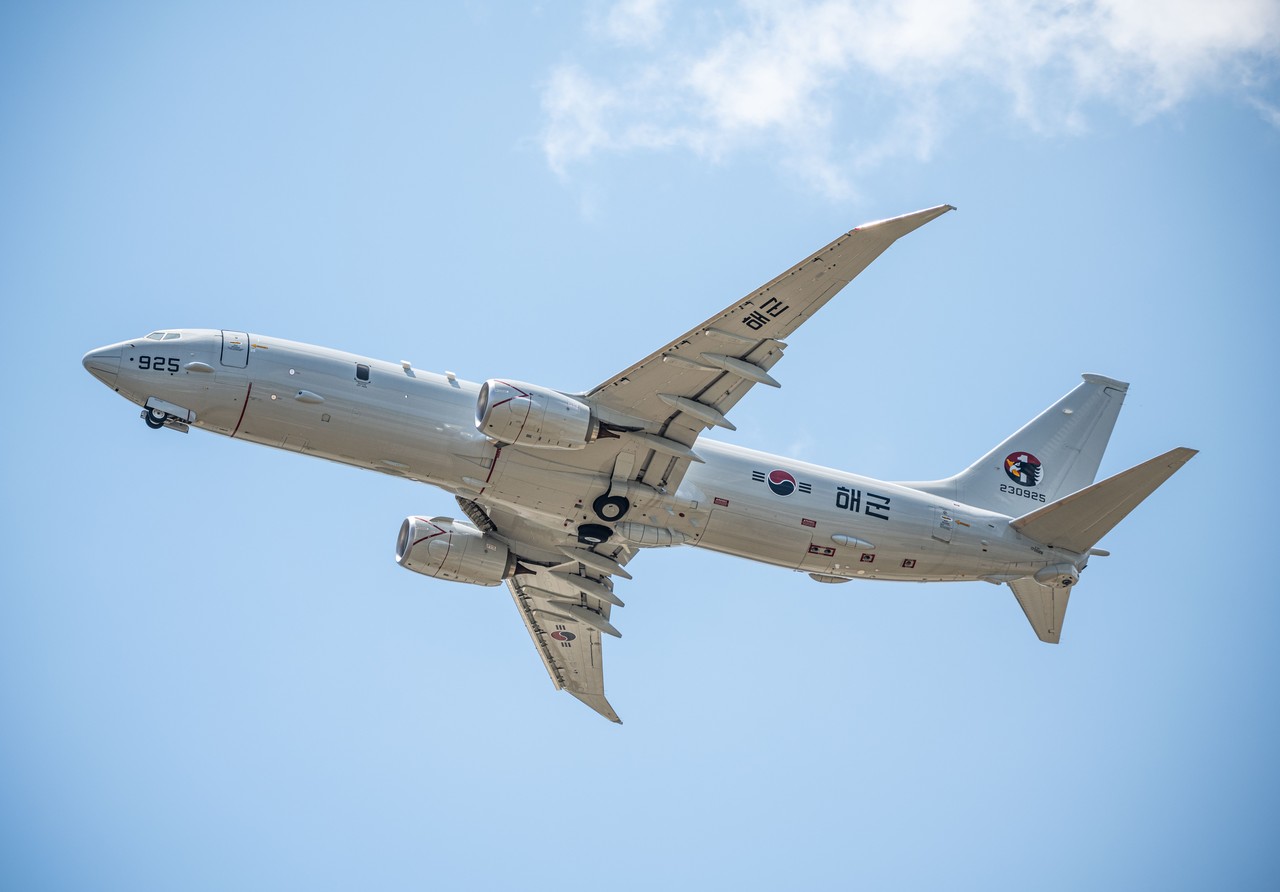
Operational Dominance
The P-8 Poseidon has fundamentally transformed maritime patrol operations for allied navies worldwide. More than 170 aircraft have been delivered since 2012, with the United States Navy operating 144 P-8As as its primary anti-submarine warfare platform. The aircraft replaced the venerable P-3C Orion, which had served since the 1960s but lacked the speed, altitude capability, and advanced sensor integration of modern jet-powered platforms. By 2018, P-8s had conducted thousands of patrol hours across critical maritime regions, from the South China Sea to the North Atlantic.
Military Service and Variants
Eight nations currently operate P-8 variants, demonstrating the aircraft's strategic importance in contemporary naval operations. The Royal Australian Air Force acquired 14 aircraft between 2016 and 2020, while the Royal Air Force operates nine P-8A Poseidon MRA.1 aircraft delivered through 2022. India's Navy flies the specialized P-8I "Neptune" variant, with eight aircraft delivered by 2019 and potential orders reaching 30 units. Norway and South Korea have integrated P-8s into their maritime patrol fleets, with Norway receiving five aircraft through a $2.5 billion Foreign Military Sale in 2019.
The aircraft achieved Initial Operational Capability with the U.S. Navy in November 2013, just eight years after the first prototype flight. Full-Rate Production approval came in January 2014, enabling Boeing to maintain production rates of 18 aircraft annually until demand reductions in 2022 lowered output to 12 units per year.
The Boeing Legacy
Boeing Company, established in 1916, leveraged decades of commercial aviation expertise to create the P-8 program. The manufacturer won the $3.89 billion System Development and Demonstration contract on June 14, 2004, competing against Lockheed Martin's turboprop-based proposal. Boeing's innovative approach utilized the proven 737-800 platform, reducing development risks while providing superior speed and altitude performance compared to traditional maritime patrol aircraft.
The company assembled an industry team including CFM International, Northrop Grumman, Raytheon, Spirit AeroSystems, BAE Systems, and GE Aviation. This collaboration enabled Boeing to integrate complex military systems into a commercial airframe while maintaining the reliability and cost-effectiveness of established production lines.
Advanced Propulsion and Technical Innovation
Two CFM56-7BE turbofan engines power each P-8, manufactured by CFM International, a joint venture between General Electric and Safran Aircraft Engines. These engines incorporate high- and low-pressure turbine modifications that reduce fuel consumption and maintenance costs compared to earlier CFM56 variants. The engine configuration became standard across all Next-Generation 737 production following P-8 development.
Boeing employed a revolutionary in-line production process, with Spirit AeroSystems delivering 737-800 ERX fuselages to the Renton facility for basic assembly. Aircraft then transfer to Boeing Field in Seattle, where specialized teams install classified mission systems in secure environments. This two-stage approach maintains commercial production efficiency while accommodating military requirements.
Mission Capabilities and Performance
The P-8 operates at maximum speeds of 500 mph at altitude and 250 mph during low-level patrol missions, representing a significant performance increase over the P-3C's 400 mph maximum speed. This speed advantage enables rapid transit to patrol areas and quick response to emerging threats. The aircraft's service ceiling exceeds 30,000 feet, allowing operations above most weather systems and providing extended radar horizon coverage.
Mission systems include advanced sonobuoy deployment capabilities, magnetic anomaly detection, and integrated weapons systems for anti-submarine and anti-surface warfare. The aircraft carries torpedoes, depth charges, and air-to-surface missiles, though specific armament details remain classified.
Production Success and Global Impact
Boeing's P-8 program represents one of the most successful military aircraft developments of the 21st century. The FY2022 unit cost of $173 million reflects the sophisticated mission systems integrated into each aircraft, while production numbers approaching 200 units demonstrate sustained international demand.
The final U.S. Navy P-8A delivery is scheduled for early 2025, completing the service's planned acquisition of 128 aircraft. However, international orders continue, with several nations considering P-8 acquisitions to modernize their maritime patrol capabilities.
Current Operations and Future Prospects
P-8 Poseidons currently patrol critical maritime regions worldwide, from Arctic waters to tropical seas. The aircraft's advanced sensor capabilities enable detection of increasingly sophisticated submarine threats while providing intelligence, surveillance, and reconnaissance support to fleet operations.
As of 2026, Boeing continues P-8 production at reduced rates, with remaining orders extending production through the decade. The aircraft's proven operational record and adaptability to evolving mission requirements position it as the dominant maritime patrol platform for allied nations well into the 2040s.