
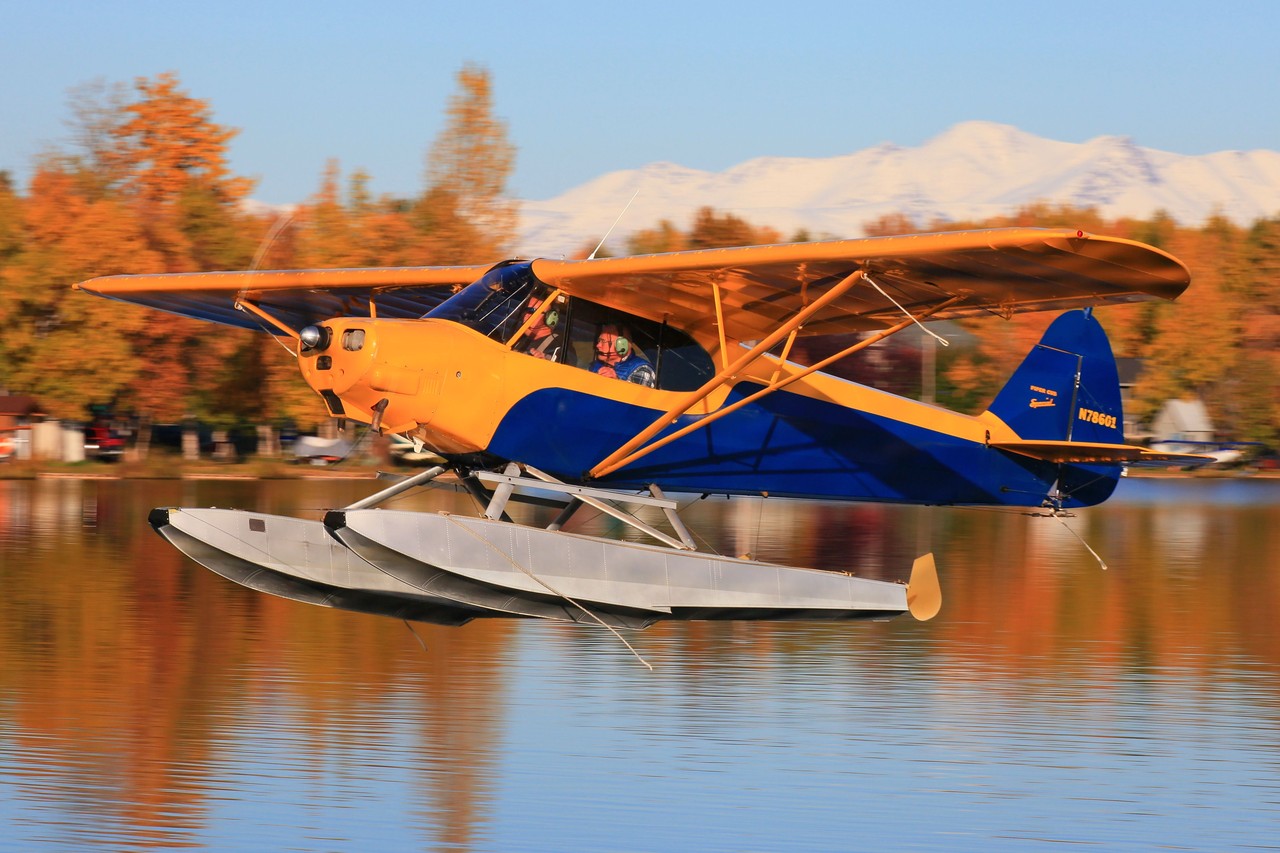
Development and Design Evolution
The PA-11 Cub Special emerged from Piper Aircraft Company's need to compete against the flood of surplus military aircraft saturating the post-war market. In 1947, Piper strategically priced the PA-11 only slightly above ex-military aircraft to attract civilian buyers seeking modern features in a proven design. The aircraft incorporated substantial improvements over the J-3 Cub, including a fully enclosed pressure cowl, more steeply sloped windscreen, and streamlined wing struts that enhanced both performance and aesthetics.
Engineering refinements addressed practical operational concerns that had limited the J-3's appeal. Piper relocated the fuel system from the fuselage to the left wing tank and shifted the seats slightly aft, allowing solo pilots to operate from the front seat rather than the rear position required in the J-3. The downward-tilted engine mount and wider boot cowl improved ground visibility and engine cooling, while the elimination of the fuselage fuel tank enhanced safety and cabin space utilization.
Engine Variants and Performance
Three Continental engine options powered different PA-11 configurations. The standard model utilized the Continental A65-8 producing 65 horsepower, while the PA-11 and PA-11S variants featured the more powerful Continental C90-8 generating 90 horsepower. The specialized PA-11X military variant employed the Continental C85-8FJ rated at 85 horsepower, though this version failed to secure the anticipated U.S. Army contract, losing to the competing Aeronca 7BC Champ.
The 90-horsepower Continental C-90-8 variant delivered the PA-11's best performance figures, achieving a maximum cruise speed of 97 knots and service ceiling of 16,000 feet. The aircraft demonstrated a respectable rate of climb at 514 feet per minute, while maintaining the Cub series' renowned short-field capabilities with takeoff and landing distances of 351 feet and 289 feet respectively. Maximum range extended to 300 nautical miles with the 12-gallon fuel capacity.
Military Applications and Export Success
While the PA-11 itself remained primarily a civilian aircraft, Piper developed military variants that found international success. The most significant military application involved 105 L-18B aircraft built with 95-horsepower Continental C90-8F engines for service in Turkey under the European Recovery Program. These aircraft featured extended cabin glazing and represented Piper's successful penetration of foreign military markets during the early Cold War period.
The L-16 designation applied to military versions of the PA-11X, though domestic U.S. Army procurement remained limited. Despite losing the primary Army contract to Aeronca, the PA-11's military derivatives demonstrated the design's versatility and international appeal during a period of significant geopolitical reconstruction.
Civilian Operations and Commercial Success
Australian operators discovered the PA-11's exceptional utility for specialized civilian roles, particularly fish-spotting operations along the continent's extensive coastline. Aircraft VH-AKD, constructed on January 14, 1949, exemplified this application after arriving in Sydney on September 24, 1950, following export through Fiji. Operating from bases at Merimbula, New South Wales, and Port Lincoln, South Australia, this PA-11 supported commercial fishing fleets until larger twin-engine aircraft eventually assumed the fish-spotting role.
The aircraft also served recreational aviation through joy-riding operations along New South Wales' south coast during the 1950s. These civilian applications demonstrated the PA-11's reliability and economic efficiency in roles requiring consistent low-altitude operations over extended periods.
Production Legacy and Current Status
Piper's decision to limit PA-11 production to just three years reflected the rapidly evolving post-war aviation market and the company's strategic focus on developing the more advanced PA-18 Super Cub. The brief 1947-1949 production window resulted in approximately 1,323 civil aircraft, making the PA-11 one of the rarer members of the Cub family despite its technical significance.
Remarkably, nearly 550 PA-11 aircraft remain on the FAA registry, indicating exceptional longevity and continued airworthiness among surviving examples. Modern restorations often incorporate contemporary avionics and reinforced airframes while maintaining the original tube-and-fabric construction that defined the Cub series. The PA-11's position as the evolutionary bridge between two aviation legends ensures its continued recognition among vintage aircraft enthusiasts and historians studying general aviation's post-war development.