
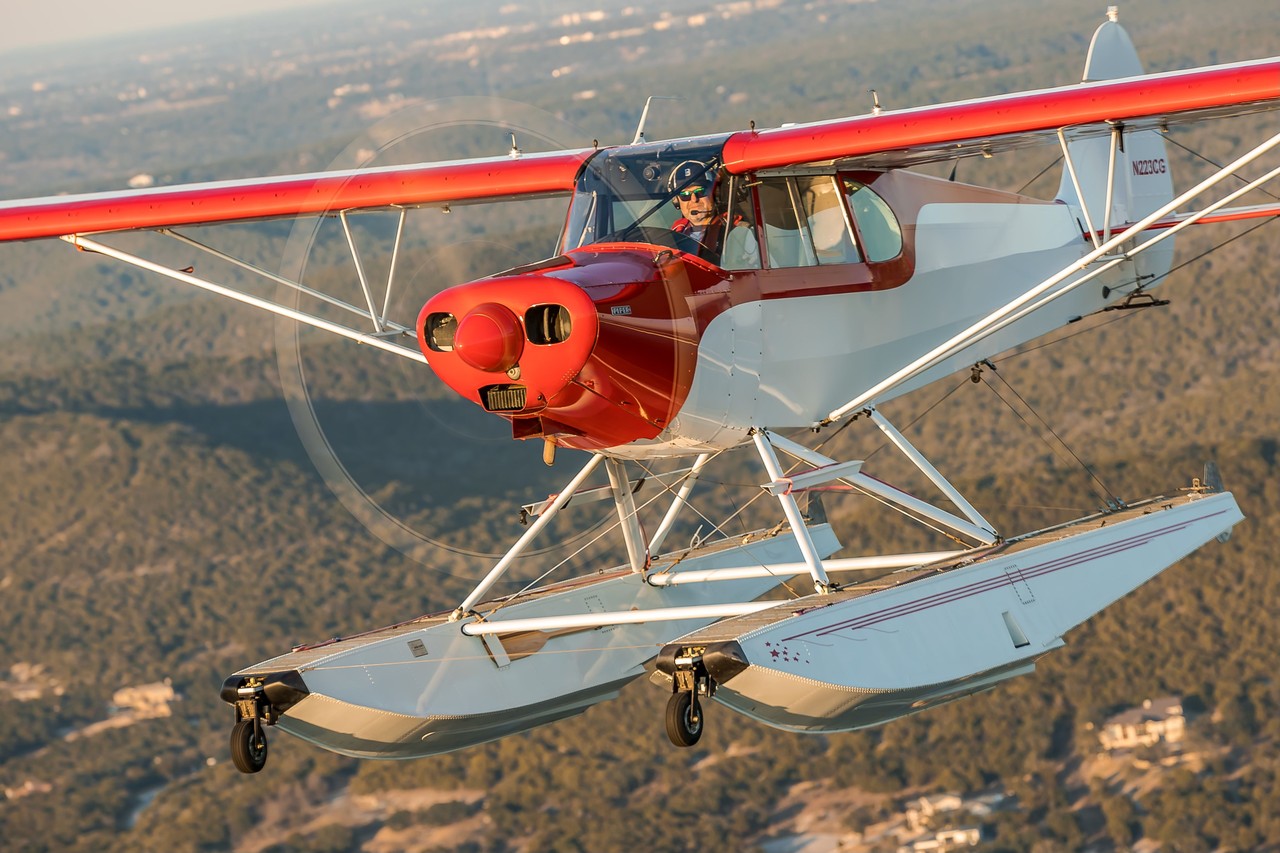
Production and Development
Piper Aircraft Company launched PA-12 production in February 1946, more than a year before the aircraft received official FAA certification in March 1947. This unusual timeline reflected the post-war aviation boom's urgency, though it would prove problematic when the market collapsed in mid-1947, leaving Piper with substantial unsold inventory.
Production occurred at two facilities: the primary factory in Lock Haven, Pennsylvania, and a secondary plant in Ponca City, Oklahoma. The Oklahoma facility produced 234 aircraft in 1947 and early 1948 before closing, contributing to the total production run of approximately 3,760 to 4,000 Super Cruisers manufactured through May 1948.
Design Innovation
The PA-12 represented a significant advancement over Piper's previous designs, featuring metal spar wing construction rather than the traditional wood spars of earlier Cubs. The three-seat configuration placed the pilot in the front seat with two passengers seated side-by-side in the rear, maximizing utility for personal transportation.
Piper equipped the Super Cruiser with standard features that competitors offered only as options, including an electrical system with starter, navigation lights, landing light, and later, radio equipment. This approach made the PA-12 more capable out of the factory while maintaining competitive pricing.
Engine Specifications
Early production PA-12s utilized the Lycoming O-235-C four-cylinder engine producing 100 horsepower, while late-production variants featured the upgraded O-235-C1. The later engine generated 108 horsepower continuously, with 115 horsepower available for one minute at 2,800 RPM, providing improved performance for takeoff and climb.
The steel tube fuselage with fabric covering maintained the traditional Cub construction philosophy while accommodating the more powerful engine and electrical systems. The conventional tailwheel landing gear configuration preserved the rugged field capabilities that made Piper aircraft popular with bush pilots and recreational flyers.
Historic Achievement
The PA-12's most significant accomplishment occurred in 1947 when two Super Cruisers completed the first around-the-world flight by light personal aircraft. From August 9 to December 10, 1947, pilots Clifford Evans in the "City of Washington" and George Truman in the "City of the Angels" circled the globe, covering 35,897 kilometers in 55 flights.
The circumnavigation required exceptional planning and execution, with only one minor incident—a damaged tailwheel on landing—marring an otherwise flawless journey. This achievement demonstrated the PA-12's reliability and range capabilities while generating significant publicity for Piper Aircraft Company.
Performance Characteristics
The Super Cruiser delivered respectable performance for its era, achieving a maximum cruise speed of 115 mph and a range of 521 nautical miles. The approach speed of 42 knots made it accessible to pilots transitioning from training aircraft, while the high-wing configuration provided excellent visibility and stable flight characteristics.
Bush pilots particularly appreciated the fabric covering's light weight and ease of field repair, though many owners later modified their aircraft with wing flaps to reduce stalling speed and metal covering for reduced maintenance.
The Manufacturer
Piper Aircraft Company evolved from the earlier Taylor Aircraft Company, founded on designs by the Taylor brothers beginning with the Taylor Cub in 1930. William T. Piper's leadership transformed the company into a major general aviation manufacturer, with the PA-12 representing the transition from "J" model designations (like the J-3 Cub) to the "PA" numbering system still used today.
The PA-12's design success led directly to the PA-14 Family Cruiser, a four-seat variant that first flew in March 1947. However, only 238 PA-14s were built before production ceased in 1949, as the post-war aviation market contraction affected all light aircraft manufacturers.
Legacy and Preservation
Both aircraft that completed the 1947 circumnavigation survive in major American museums. Evans' "City of Washington" is displayed at the Smithsonian Institution's National Air and Space Museum, while Truman's "City of the Angels" resides at the Piper Aviation Museum in Lock Haven, Pennsylvania, serving as permanent reminders of this historic achievement.
Many surviving PA-12s continue flying today, often modified with modern avionics and engine upgrades while retaining their classic appearance. The Super Cruiser's combination of reliability, performance, and historic significance has made it a sought-after aircraft among vintage aviation enthusiasts and collectors worldwide.