
Service History
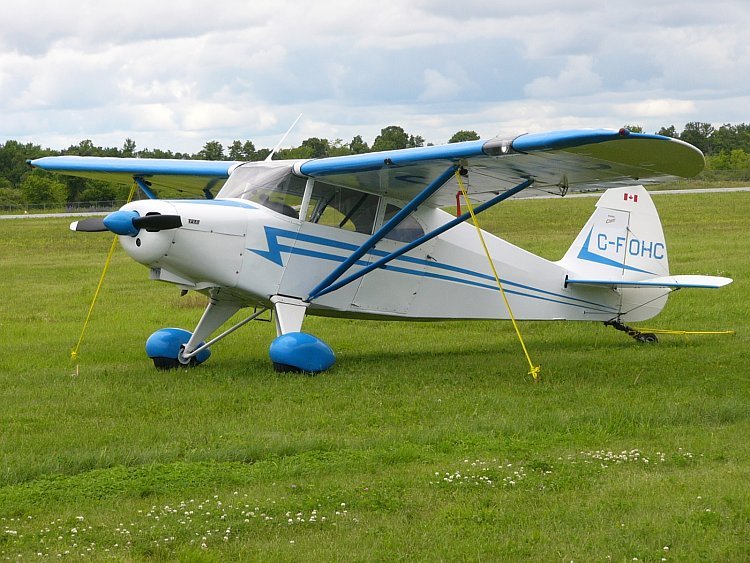
The PA-16 Clipper revolutionized the personal aviation market by offering four-seat capability at an unprecedented price point. While competing four-seat aircraft typically exceeded $5,000, the Clipper's $2,995 price tag made family flying accessible to a broader market. The aircraft could transport a family of four over 480 nautical miles at an operating cost of approximately one dollar per mile, establishing it as the most economical four-seat aircraft available in 1949. Pilots who previously accepted the limitations of two-seat tandem aircraft could now carry multiple passengers at speeds exceeding 100 mph.
The Manufacturer
Piper Aircraft Company developed the Clipper during a period of financial difficulty, requiring innovative solutions using existing components and tooling. Founded by William Piper, whose vision centered on making personal aviation affordable, the company had established its reputation with the successful J-3 Cub, which first flew in 1937. The Lock Haven, Pennsylvania factory produced all 736 Clippers during 1949, with the first aircraft emerging in spring of that year. Piper Aircraft continues operations today as Piper Aircraft, Inc., maintaining its position as a leading general aviation manufacturer.
Engine & Technical Details
The Clipper utilized the Lycoming O-235-C1 engine, a four-cylinder, air-cooled, horizontally-opposed powerplant generating 115 horsepower. Manufactured by Lycoming Engines, a division of Avco Corporation, this same engine would later power the Cessna 152, demonstrating its reliability and economic operation. The aircraft featured conventional fixed landing gear and fabric construction over a steel tube fuselage, utilizing shortened wings that allowed Piper to use fabric remnants from Cub production. Control sticks, characteristic of the Cub family, provided pilot interface, though no avionics were originally installed.
Design Innovation
The PA-16 represented brilliant engineering economics, stretching the PA-15 Vagabond fuselage by just two feet, one-and-a-quarter inches to accommodate four seats instead of two. Both aircraft were designed in 1947 as Piper sought to maximize existing tooling and components while meeting post-war demand for increased passenger capacity. This approach created a transition aircraft bridging Piper's two-seat Cub designs with later models like the PA-22 Colt and Tri-Pacer. The design demonstrated how airframe stretching could economically expand an aircraft's market appeal.
Pilot Perspective
Pilots appreciated the Clipper's straightforward handling characteristics inherited from the Cub lineage. The aircraft delivered a cruise speed of 102 knots with a top speed of 125 mph, while maintaining a service ceiling of 11,000 feet. Rate of climb reached 580 feet per minute, though some sources report nearly 900 feet per minute performance. The useful load of 798 pounds provided genuine four-person capability, though experienced Clipper pilots often describe realistic passenger accommodation as "two-and-a-half to three" occupants for comfort during longer flights.
Production Challenges and Legacy
The Clipper's single-year production run resulted from external pressure rather than market failure. Pan American Airways objected to Piper's use of the "Clipper" name, which the airline had traditionally applied to its luxury flying boats and airliners. This controversy prompted Piper to redesign the aircraft with wing flaps, additional fuel capacity, control yokes replacing sticks, and a more powerful Lycoming O-290 125-horsepower engine. The enhanced model became the PA-20 Pacer in 1950, ending the original Clipper's brief production life.
Current Status
Despite its abbreviated manufacturing period, the PA-16 Clipper maintains remarkable longevity. Federal Aviation Administration records from April 2018 documented 303 examples remaining in service within the United States, representing over 40 percent of original production still airworthy after seven decades. The steel tube and fabric construction enables extensive rebuilding capabilities, allowing even severely damaged aircraft to return to service. The Short Wing Piper Club supports owners and maintains the community of enthusiasts dedicated to preserving these aircraft, ensuring the Clipper's continued presence in vintage aviation circles.