
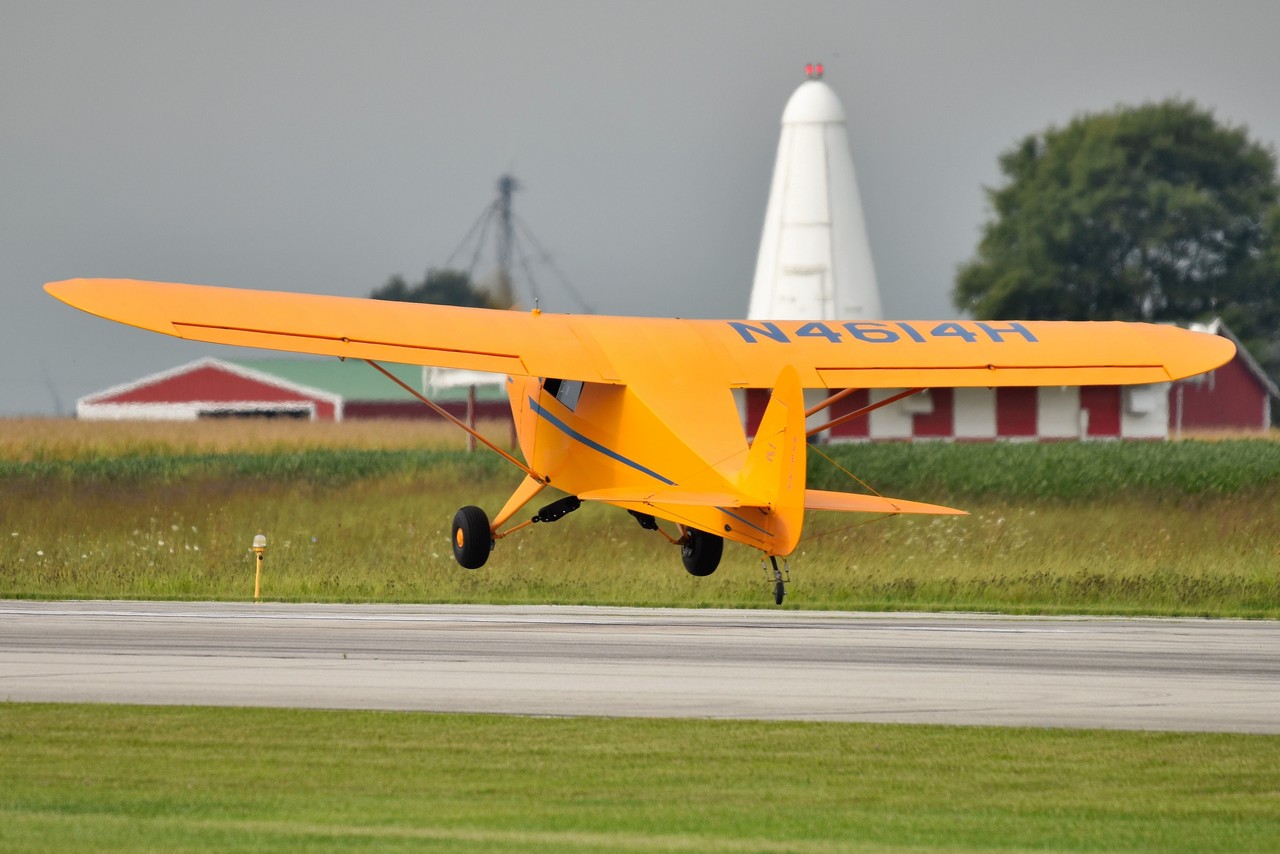
Service History
The PA-17 Vagabond emerged during a critical period for general aviation when flight training demand surged following World War II. Unlike its predecessor PA-15, the PA-17 incorporated dual flight controls specifically for primary flight instruction, making it particularly valuable to flying schools and private instructors. The aircraft's side-by-side seating configuration proved superior to tandem arrangements for communication between instructor and student, contributing to more effective training operations.
By March 2018, 101 PA-17 aircraft remained registered in the United States with an additional 12 registered in Canada, representing nearly half of the original production run still maintaining airworthiness after seven decades of operation.
The Manufacturer
Piper Aircraft developed the Vagabond series specifically to prevent corporate bankruptcy following severe post-war financial difficulties. Company management issued a directive in 1947 to engineering teams: create "the cheapest, two-place general-use airplane they could" using exclusively existing materials and tooling. This cost-conscious approach utilized structural components and production equipment from the famous Piper Cub, dramatically reducing development expenses.
The strategy proved successful, as demand for the Vagabond variants generated sufficient revenue to save the Pennsylvania-based manufacturer from collapse. Piper Aircraft continues operating today as a general aviation manufacturer, though under different ownership than the original company that produced the Vagabond.
Engine & Technical Details
The PA-17's powerplant consisted of a 65-horsepower Continental A-65-8 engine, a four-cylinder air-cooled horizontally-opposed configuration that provided reliable operation for training missions. This engine selection differed from the PA-15's Lycoming O-145, offering improved reliability characteristics valued by flight schools.
The aircraft's wing design incorporated one fewer bay than the Piper Cub, reducing wingspan from 36 feet to 29 feet 3 inches while maintaining 147.5 square feet of wing area. This modification improved ground handling in confined training environments while preserving gentle flight characteristics essential for primary instruction.
Fuel capacity totaled 12 U.S. gallons, providing 250-mile range capability sufficient for typical training flights and short cross-country missions. The aircraft's 1,100-pound gross weight allowed for 470 pounds of useful load when considering the 630-pound empty weight.
Pilot Perspective
Pilots appreciated the PA-17's forgiving handling characteristics and predictable performance envelope. Maximum speed reached 100 miles per hour with cruise speeds of 90 mph, while stall speed remained a gentle 45 mph. Initial climb performance of 530 feet per minute provided adequate safety margins for training operations, though many operators later installed 75 or 85-horsepower engines to improve climb capability.
The aircraft's service ceiling of 10,500 feet enabled operation in most continental U.S. training environments, while takeoff distances of 800 feet and landing rolls of just 300 feet made it suitable for smaller airports commonly used by flight schools.
Production & Legacy
Total PA-17 production reached exactly 214 aircraft during its brief manufacturing run, following the 387 PA-15s produced between January and July 1948. The combined 601 Vagabond variants represented a crucial financial lifeline for Piper during the challenging post-war transition period.
The Vagabond design philosophy influenced an entire family of Piper aircraft collectively known as "Short Wing Pipers." The PA-16 Clipper essentially stretched the Vagabond fuselage to accommodate four occupants, while later designs including the Pacer, Tri-Pacer, and Colt all traced their lineage to the original Vagabond configuration.
One notable PA-17 example underwent complete restoration by Charles Taylor Master-Mechanic Award recipient Ken Cassens and now operates at Old Rhinebeck Aerodrome, where it demonstrates the aircraft's continued viability for recreational flying. This preservation effort exemplifies the type's enduring appeal among vintage aircraft enthusiasts who value its straightforward design and reliable operation.
The Vagabond's historical significance extends beyond its role as a trainer aircraft - it represents successful crisis management in aircraft manufacturing, proving that innovative engineering solutions using existing resources could generate market success even during financially constrained periods.