
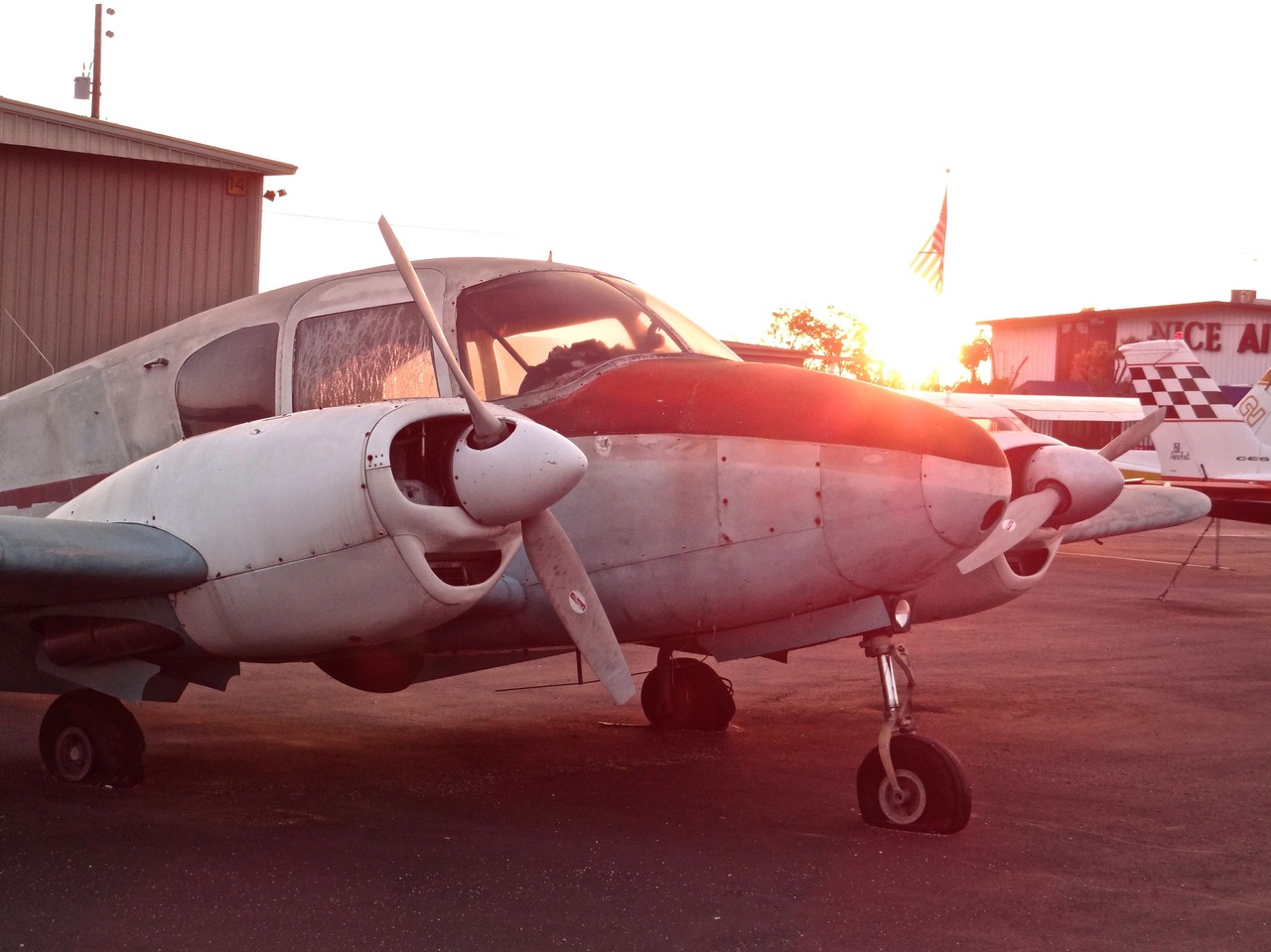
Breaking New Ground in General Aviation
The Apache's significance lay not in revolutionary technology, but in democratizing twin-engine flight. When production began in 1954, the aircraft carried a price tag of just $32,000, making it the most affordable light twin on the American market. This pricing strategy opened twin-engine aviation to a completely new class of operators who previously could only afford single-engine aircraft but desired the safety and prestige of twin-engine flight.
Design Evolution and Development
Piper Aircraft Corporation acquired the basic design concept from Stinson Aircraft Company's "Twin Stinson" project in late 1948, following Stinson's absorption into Consolidated Vultee Aircraft Corporation. The original prototype that first flew in March 1952 featured twin vertical tails and was powered by two 125-horsepower Lycoming O-290-D engines, but extensive testing revealed the need for significant modifications.
Engineers redesigned the aircraft with a single swept vertical tail for improved directional stability and upgraded the powerplant to twin 150-horsepower Lycoming O-320-A engines. The all-metal construction marked a significant departure for Piper, a company built on fabric-covered designs like the legendary J-3 Cub. This transition signaled Piper's ambitious entry into the executive aircraft market with what would become known as their "Indian" series of aircraft names.
The Manufacturer's Journey
Piper Aircraft Corporation, founded by William T. Piper in 1927, had established itself as a leader in training and personal aircraft before venturing into twin-engine territory. The company operated primarily from Lock Haven, Pennsylvania, where all 2,047 Apache units were manufactured between 1954 and 1965. The Apache represented Piper's first serious attempt to compete in the business aircraft market against established manufacturers like Beechcraft and Cessna.
The company faced significant challenges over the decades, including bankruptcy in 1991, but survived through acquisition by New Piper Aircraft Inc. Today, the company continues operations as Piper Aircraft, headquartered in Vero Beach, Florida, maintaining the legacy established by the Apache's success in the twin-engine market.
Engine and Performance Characteristics
The heart of the PA-23-150 Apache consisted of two Lycoming O-320-A flat-four piston engines, each producing 150 horsepower. These air-cooled, opposed-cylinder engines were manufactured by Lycoming Engines, a division of Avco Corporation that later became part of Textron. The O-320 series proved exceptionally reliable, with over 50,000 engines of this type produced across all variants.
The aircraft typically accommodated a single pilot and three to five passengers, depending on configuration and weight considerations. Maximum speed reached approximately 185 miles per hour, with a service ceiling of around 19,000 feet and a range extending to nearly 1,000 miles under optimal conditions. The climb rate of approximately 1,100 feet per minute provided adequate performance for most general aviation applications.
Operational Impact and Service Record
The Apache found its primary niche among private business operators, flying clubs, and charter services rather than scheduled airlines. Its four-to-six seat capacity made it ideal for small business teams or affluent private owners who needed to travel efficiently between smaller airports that larger aircraft couldn't access. The retractable landing gear configuration provided the clean lines necessary for respectable cruise speeds while maintaining the rugged construction Piper customers expected.
Limited military service occurred with the United States Navy and several foreign air forces, though these applications remained primarily in utility and training roles rather than combat operations. The aircraft's design priorities emphasized economy and ease of operation over military-specific requirements, making it better suited to civilian applications.
Production Legacy and Continuing Influence
Production concluded in 1965 after 2,047 units rolled off the assembly line, as Piper shifted focus to the more powerful Aztec series. The Apache's success validated Piper's strategy of offering affordable alternatives to more expensive competitors, establishing a market position the company maintained for decades.
The Apache launched Piper's entire PA-23 family, which eventually included over 7,000 aircraft when combining all variants through the Aztec series. This success transformed Piper from primarily a trainer and personal aircraft manufacturer into a serious competitor in the business aviation market.
Museum Preservation and Current Status
Today, hundreds of Apache aircraft remain airworthy in private hands worldwide, testament to their robust construction and continued utility. Notable preserved examples include aircraft at the National Air and Space Museum in Washington, D.C., the Mid America Flight Museum in Mount Pleasant, Iowa, and Ailes Anciennes Toulouse in France.
The Apache's influence extended far beyond its production numbers, establishing design principles and market strategies that influenced general aviation twin-engine aircraft development well into the 1980s. Its legacy lives on in modern Piper twin-engine aircraft, which still reflect the fundamental philosophy of providing reliable, affordable twin-engine performance that the Apache first brought to market over seventy years ago.