
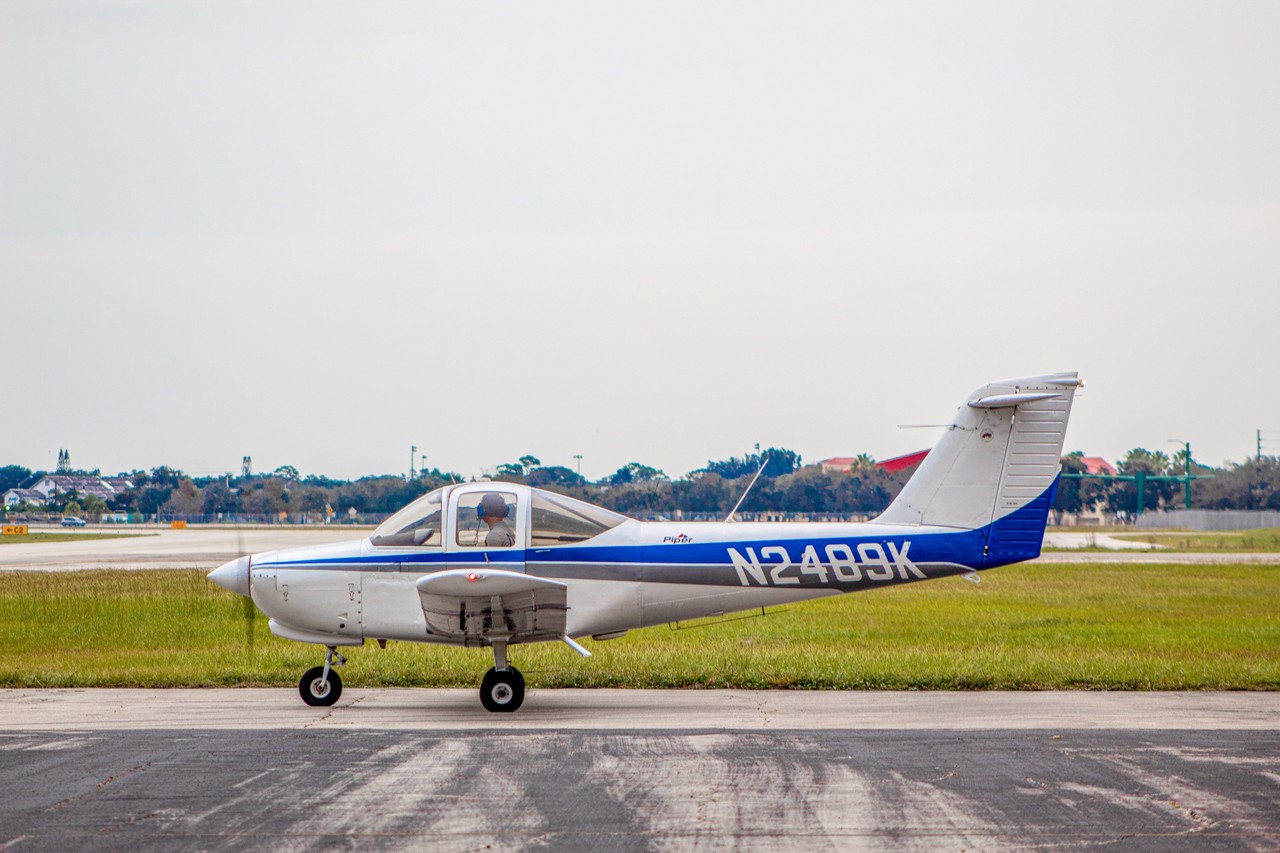
Training Market Competition
The Tomahawk entered a fiercely competitive training aircraft market, directly challenging the established Cessna 152 and Grumman AA-1. All three aircraft shared the same Lycoming O-235 powerplant and offered comparable performance specifications, making price and handling characteristics the primary differentiators. Piper positioned the Tomahawk as one of their most affordable offerings, targeting flight schools and individual instructors seeking cost-effective training solutions.
During its peak production years of 1978 and 1979, the aircraft found modest success in the training market. However, rising interest rates and economic downturn severely impacted sales, with annual production dropping below 200 units from 1980 through 1982. The challenging economic climate for general aviation ultimately contributed to the program's suspension.
The Piper Aircraft Legacy
Piper Aircraft's heritage extends back to 1927 when brothers Clarence and Gordon Taylor established the Taylor Brothers Aircraft Manufacturing Company in Rochester, New York. Following Gordon's tragic death in a flying accident, the company relocated to Bradford, Pennsylvania in 1928. The enterprise transformed dramatically in 1937 when William T. Piper acquired the company, earning himself the title "Henry Ford of Aviation" for his mass-production approach to aircraft manufacturing.
Under Piper's leadership, the company achieved remarkable success with iconic designs including the Depression-era E-2 Cub and the legendary J-3 Cub, which served both civilian and military roles during World War II. By the time the Tomahawk entered production, Piper had already contributed 160 certified aircraft models to aviation, with nearly 150,000 aircraft delivered to customers worldwide.
Engine and Technical Specifications
The Tomahawk utilized the Avco Lycoming O-235-L2C engine, a four-cylinder carbureted powerplant producing 112 horsepower from 233.3 cubic inches of displacement. This reliable engine featured a fixed-pitch propeller configuration, keeping maintenance requirements and operating costs minimal for training operations. The aircraft's low-wing design provided improved ground handling characteristics compared to high-wing competitors, though it required different landing techniques for student pilots.
Piper's design team prioritized accessibility and simplicity in the Tomahawk's systems. The fuel system was engineered for straightforward operation, while the cabin offered expanded space compared to earlier trainers. Enhanced visibility was achieved through strategically positioned windows, giving instructors and students better awareness during pattern work and ground reference maneuvers.
Airworthiness Challenges
The Tomahawk's operational history was significantly impacted by stall and spin characteristics that prompted extensive regulatory scrutiny. More than 36 airworthiness directives were issued for the type, primarily addressing structural concerns and flight behavior issues. The National Transportation Safety Board discovered that certification testing had been incomplete, with no documentation of turning flight stalls with flaps extended or accelerated stall scenarios.
In 1979, following a fatal training accident during stall and spin instruction in Sweden, Piper modified the wing design by adding two additional stall strips to the existing pair. This modification, formalized as Airworthiness Directive 83-14-08, aimed to improve stall progression and recovery characteristics. The aircraft's challenging stall behavior earned it the unofficial nickname "Traumahawk" among some pilots and instructors.
The Tomahawk II Solution
Recognizing the need for comprehensive improvements, Piper introduced the Tomahawk II for the 1981 and 1982 model years. This enhanced variant addressed all outstanding airworthiness directives and incorporated significant improvements including zinc-chromate anti-corrosion treatment for extended airframe life, enhanced cabin heating and windshield defrosting systems, and improved elevator trim mechanisms.
The Tomahawk II featured larger 6-inch wheels and tires, providing increased propeller ground clearance and better performance on unpaved runways. Enhanced cockpit soundproofing reduced noise levels, while all previously identified safety issues were resolved at the factory level. These improvements made the Tomahawk II the preferred variant among buyers, though only a few hundred were produced before production ended.
Production Legacy
Total Tomahawk production reached 2,497 aircraft over the five-year manufacturing run, with the vast majority being original variants rather than the improved Tomahawk II models. Production officially ceased at the end of 1982, though Piper initially hoped to resume manufacturing in 1984 as economic conditions improved.
The Tomahawk's legacy reflects both the challenges and opportunities of the late 1970s training aircraft market. While it never achieved the market dominance of competitors like the Cessna 152, it provided an alternative for budget-conscious flight schools and individual owners. Today, remaining examples continue serving in training roles and as affordable entry-level aircraft for new pilots, representing an accessible path into aircraft ownership despite their complex regulatory history.