
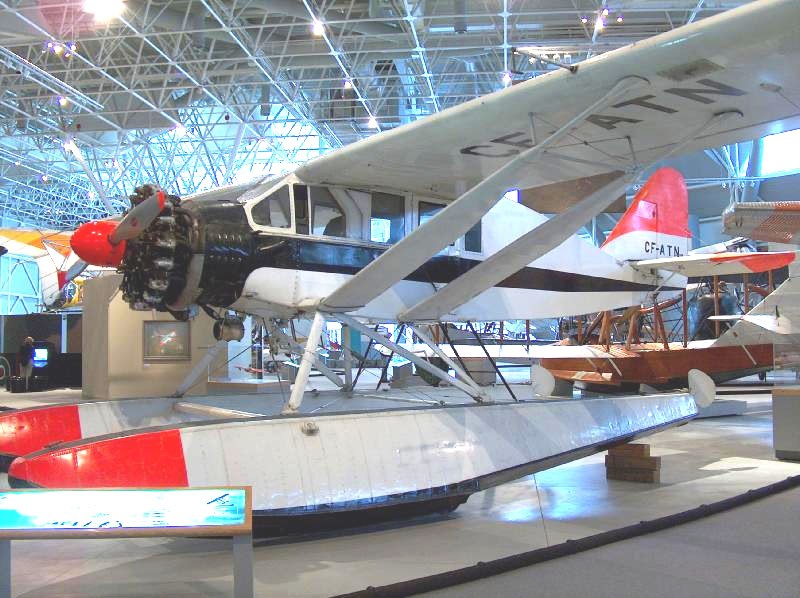
Service History
The Bellanca CH-300 Pacemaker carved out its reputation primarily in the harsh conditions of Canadian bush flying and Alaskan wilderness operations. Between 1928 and 1936, approximately 155 to 185 Bellanca aircraft were manufactured across all variants, making it a relatively rare but highly valued aircraft among bush pilots. The Royal Canadian Air Force became the largest military operator, purchasing 13 Pacemakers specifically for aerial photography missions. Six of these were built under license by Canadian Vickers Limited in Montreal, representing one of the early examples of international aviation manufacturing cooperation.
Operational History
The Pacemaker achieved several notable aviation firsts. In February 1929, Bellanca chief test pilot George William Haldeman and mechanic James F. Hayden completed the first nonstop flight between Canada and Cuba, departing from Walkersville, Ontario on February 23. One of the Canadian Vickers-built CH-300s made history as the first aircraft in Canada equipped with an experimental autopilot system designed by the Royal Aircraft Establishment in the United Kingdom. The type also introduced commercial air service to the Hawaiian islands, establishing its role in pioneering new aviation routes.
The Manufacturer
Giuseppe Mario Bellanca, an Italian-American aeronautical engineer, founded the Bellanca Aircraft Corporation after joining Wright Aeronautical Corporation in 1924 to design aircraft showcasing their new Whirlwind radial engine. This collaboration produced the Wright Bellanca WB-1 in 1925 and the WB-2 in 1926, which served as direct predecessors to the CH-300. The WB-2 gained fame as "Columbia," flying from New York to Germany just two weeks after Charles Lindbergh's transatlantic flight. Lindbergh himself had originally sought to purchase this aircraft before commissioning the Spirit of St. Louis. The company continued operations through the 1940s, with Northwest Industries acquiring production licenses in 1946, though only 13 additional aircraft were completed before declining demand ended production.
Engine & Technical Details
The CH-300 was powered by the reliable 300-horsepower Wright Whirlwind nine-cylinder radial engine, though variants used different powerplants including the 420-horsepower Wright Whirlwind in the Model 400 and the 550-horsepower Pratt & Whitney Wasp in the Skyrocket variant. The aircraft's most distinctive design feature was its airfoil-shaped wing struts, which contributed additional lift and became a signature element of all Bellanca designs. Many aircraft were later retrofitted with more powerful engines, including Pratt & Whitney R-985 Wasp Jr. engines rated at 450 horsepower.
Pilot Perspective
Bush pilots valued the Pacemaker for its exceptional load-carrying capability and reliability in remote operations. The aircraft demonstrated remarkable longevity, with many examples operating for decades. One museum example flew almost continuously from 1929 to 1964, spending twenty-eight years in Alaskan bush service. The combination of its high-wing configuration, robust construction with wooden wings and fabric covering, and powerful radial engine made it ideal for operations from improvised airstrips and challenging weather conditions. Its cruising range of 850 miles and service ceiling of 18,000 feet provided the performance needed for long-distance wilderness flights.
Production & Legacy
Production of the basic CH-300 design continued until 1936, with variants extending the family's manufacturing life. The aircraft's design proved so successful that Bellanca monoplanes set numerous long-distance records, including an 84-hour, 33-minute unrefueled endurance record achieved by a diesel-powered variant in 1931. Today, only two CH-300 Pacemakers survive worldwide, with one displayed at the Canada Aviation and Space Museum in Ottawa as part of their Northern and Bush Flight Exhibition. The museum's example, registered as CF-ATN and built in 1929, represents the aircraft that helped establish the foundation of Canadian bush aviation and demonstrated the potential for reliable aircraft operations in the world's most challenging environments.