
Development and Market Context
The T-1040 emerged during a critical period when America's commuter airline industry was experiencing rapid expansion. In May 1981, Piper Aircraft established its dedicated T1000 Airliner Division at Lakeland, Florida, specifically to develop aircraft optimized for regional carriers. The timing seemed promising—deregulation had opened new opportunities for smaller airlines to serve secondary markets that major carriers were abandoning.
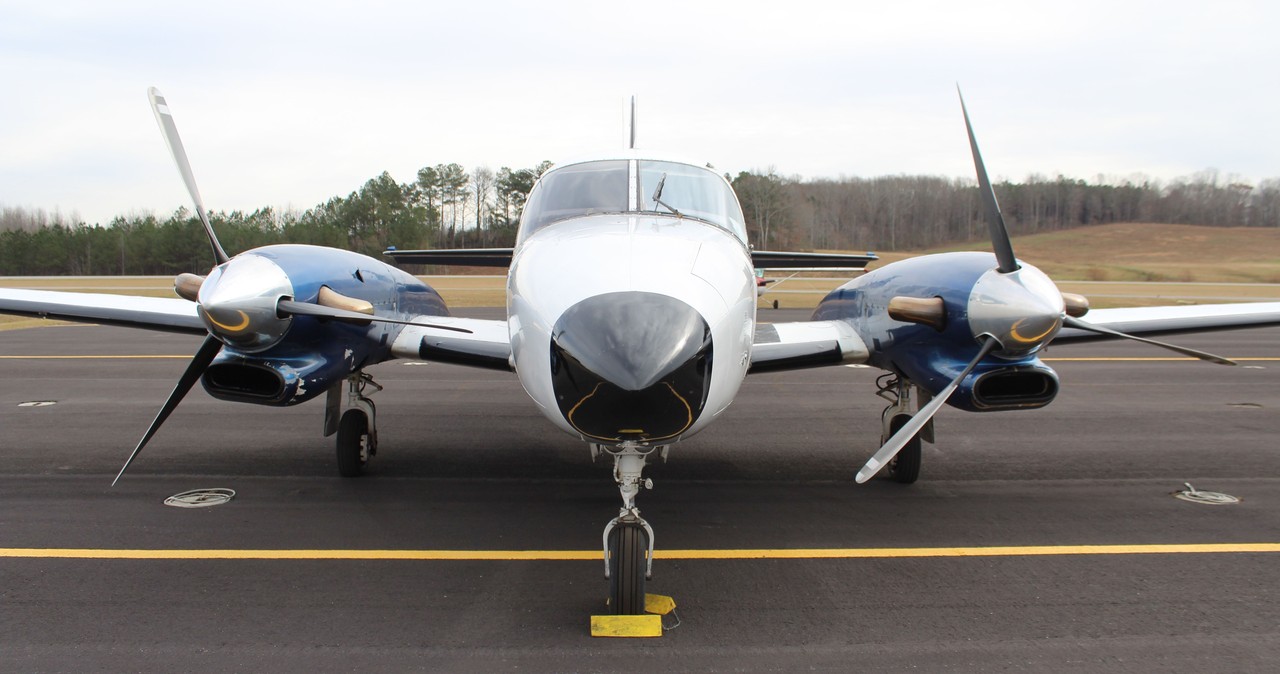
Piper's engineering team took an innovative approach to reduce development costs and accelerate certification. Rather than designing an entirely new aircraft, they created what was essentially a hybrid design, combining the fuselage of the PA-31-350T1020 Chieftain variant with the wings, empennage, and powerplant configuration from the proven PA-31T Cheyenne. This modular strategy allowed Piper to leverage existing certification data and manufacturing tooling while creating a purpose-built commuter transport.
Technical Configuration
The T-1040 was powered by two Pratt & Whitney Canada PT6A-11 turboprop engines, mounted on a low wing configuration inherited from the Cheyenne lineage. The PT6A series had already established itself as the gold standard for turboprop reliability, with thousands of engines accumulating millions of flight hours across diverse aviation applications. The aircraft retained the Cheyenne's pressurized cabin capability, a significant advantage for commuter operations that frequently required flights above 10,000 feet.
The passenger cabin was configured for 11 travelers in a typical commuter airline layout, with two pilots required for commercial operations. This capacity positioned the T-1040 in direct competition with other regional aircraft of the era, including the Beechcraft Model 99 and various Cessna twins that dominated the commuter market.
Production Reality
Despite Piper's investment in the dedicated Airliner Division, the T-1040 program faced immediate headwinds. Between 1981 and 1984, only 24 examples rolled off the Lakeland production line—a stark indication that the aircraft failed to resonate with its intended market. The commuter airline industry, while growing, proved to be increasingly cost-conscious and risk-averse when selecting aircraft types.
Several factors contributed to the T-1040's commercial struggles. The early 1980s witnessed a severe downturn in general aviation manufacturing, driven by rising product liability costs, economic recession, and fundamental shifts in the aviation market. Established competitors like Beechcraft had already secured relationships with major commuter carriers, making market penetration difficult for newcomers.
The Piper Aircraft Legacy
Piper Aircraft Corporation had built its reputation on successful general aviation designs, from the iconic J-3 Cub trainer to the PA-28 Cherokee family that dominated flight training. Founded by William T. Piper, the company operated primarily from Lock Haven, Pennsylvania, before expanding manufacturing to multiple facilities including Lakeland.
The T-1040 program represented Piper's most ambitious attempt to break into the commercial transport market. However, the company's expertise lay in smaller general aviation aircraft rather than the complex certification and support requirements of commercial operators. Unlike established airliner manufacturers such as Beechcraft or later Embraer, Piper lacked the specialized experience in airline customer support and fleet management that commuter carriers demanded.
Operational Challenges
Commuter airlines of the early 1980s required more than just aircraft—they needed comprehensive support packages including parts availability, maintenance training, and financing arrangements. The T-1040's limited production numbers created a self-reinforcing problem: airlines were reluctant to operate orphan aircraft types with uncertain parts supply and resale values.
Furthermore, the hybrid design approach that had seemed advantageous during development may have created certification and maintenance complexities. Combining components from different aircraft families potentially required operators to maintain familiarity with multiple parts catalogs and service procedures.
End of Production
By 1984, Piper discontinued T-1040 production after manufacturing just 24 aircraft over approximately three years. The T1000 Airliner Division experiment was quietly abandoned as the company refocused on its core general aviation markets. The timing coincided with broader industry consolidation that saw several manufacturers exit or dramatically reduce their product lines.
Current Status and Legacy
With such limited production numbers, the T-1040 remains one of aviation's more obscure footnotes. Few examples are believed to remain in active service today, and the type never achieved the widespread recognition of Piper's more successful designs. The aircraft serves primarily as a case study in the challenges facing manufacturers attempting to enter established market segments during economically turbulent periods.
The T-1040's brief production run highlighted the difficulties inherent in transitioning from general aviation to commercial transport manufacturing. While Piper's engineering team successfully created a technically competent aircraft, the company ultimately lacked the market positioning and customer relationships necessary to compete effectively in the demanding commuter airline sector.