
Development and Design Innovation
The PA-42-720 Cheyenne IIIA emerged from Piper Aircraft's ambitious effort to challenge Beechcraft's dominance in the twin-turboprop business aircraft market. Unveiled in 1977, the Cheyenne III series represented a significant departure from Piper's earlier PA-31 Cheyenne II design. The first production Cheyenne III took flight on May 18, 1979, with Federal Aviation Administration certification following in early 1980 and initial deliveries beginning on June 30, 1980.
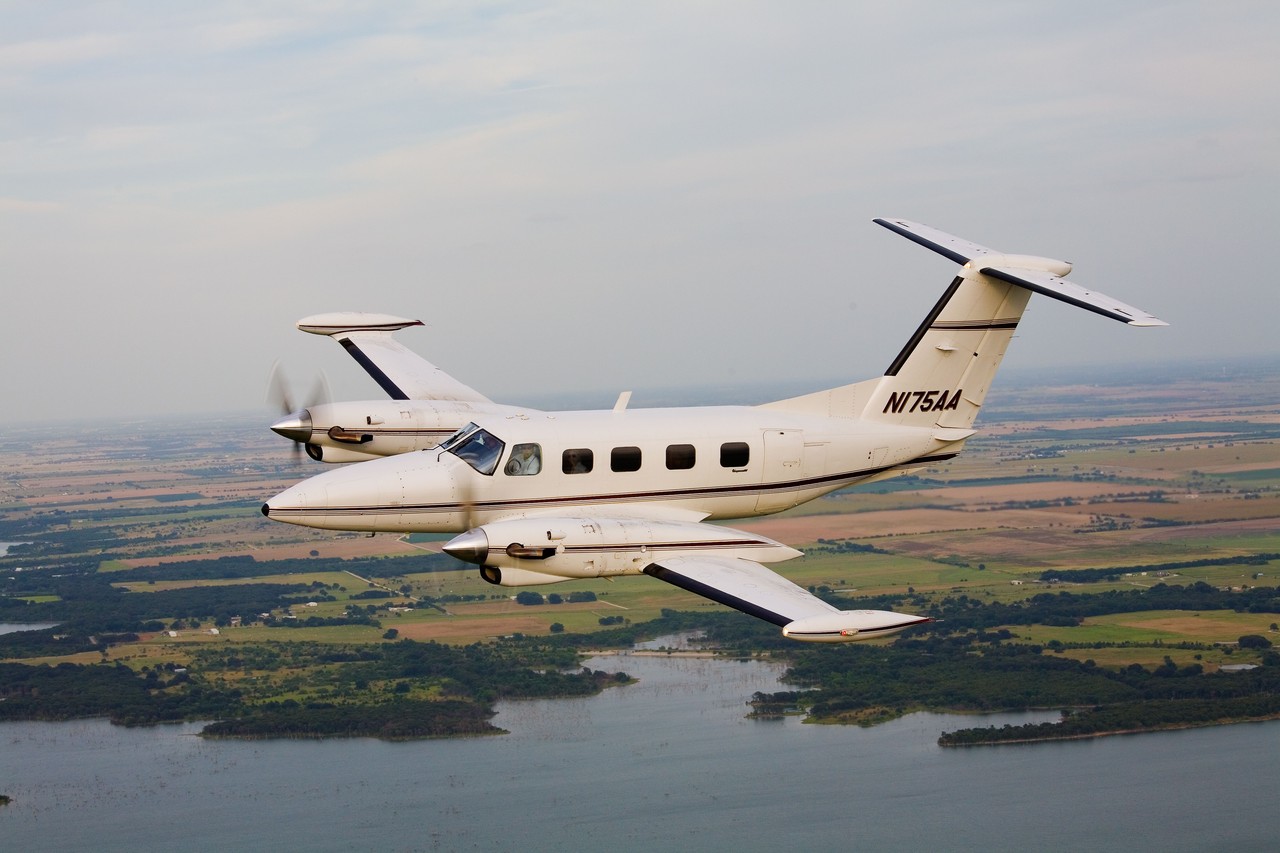
The aircraft incorporated several revolutionary design elements that distinguished it from its predecessors. Most notably, Piper adopted a T-tail configuration, the most visually distinctive feature separating it from earlier Cheyenne models. The fuselage stretched approximately three feet beyond the Cheyenne II, while production aircraft received an additional five feet of length over the original prototype. Engineers increased the wingspan through a wider center-section design that positioned the engines farther from the passenger cabin, significantly reducing interior noise levels while improving undercarriage track stability.
The final production design featured substantially increased tail height and introduced Hartzell Q-tip propellers, marking their first application on a production aircraft. These modifications enabled flexible seating arrangements, with high-density configurations accommodating up to 11 passengers including the pilot in certain variants.
Powerplant and Performance
Powering the PA-42-720 variant were two Pratt & Whitney Canada PT6A-61 turboprop engines, each generating 720 shaft horsepower. These reliable powerplants featured inspection intervals of 3,600 hours, contributing to the aircraft's reputation for operational efficiency in business aviation.
The Cheyenne IIIA delivered impressive performance specifications that positioned it competitively against the King Air 200. With a maximum cruise speed of 288 knots indicated airspeed, the aircraft achieved a service ceiling of 35,840 feet and maintained respectable single-engine performance with a 23,200-foot ceiling when operating on one engine. Initial climb rate reached 2,380 feet per minute, degrading to 625 feet per minute on single-engine operations.
Operational characteristics favored business aviation requirements, with takeoff distances of just 1,465 feet and landing distances of 1,914 feet enabling access to shorter airfields. The aircraft's 11,200-pound gross weight and 6,837-pound empty weight provided a useful load suitable for executive missions, while 578 gallons of fuel capacity delivered a maximum range of 1,722 nautical miles at a fuel consumption rate of 81.9 gallons per hour.
International Operations and Market Presence
The Cheyenne IIIA found markets beyond North America, with notable success in Australia during the 1980s. The first Cheyenne III delivered to Australia arrived in October 1981 bearing registration N4099U, followed by the first Australian-registered example VH-KGW in December 1981. This aircraft, constructor number 78-00002, operated with a Brisbane-based company until November 1983.
Additional Australian operators included aircraft registered as VH-BUW, VH-WCE, VH-NMA, and VH-PFQ, demonstrating the type's appeal in international business aviation markets. These examples typically served corporate and charter operators seeking King Air 200 alternatives with competitive performance and potentially favorable acquisition costs.
Production Legacy
Piper manufactured approximately 60 PA-42-720 Cheyenne IIIA aircraft during the model's production run from 1984 to 1992. This represented a fraction of the broader PA-42 Cheyenne series, which totaled approximately 185 aircraft across all variants. Most aircraft were constructed to special order, reflecting their positioning as premium business aircraft requiring customization for specific operator requirements.
The Cheyenne IIIA's limited production numbers reflected both market conditions and intense competition from established manufacturers. While Beechcraft's King Air 200 maintained market leadership, the Cheyenne offered competitive performance specifications and Piper's reputation for robust construction. However, the relatively small production run indicated the challenges facing Piper in penetrating a market segment dominated by Beechcraft's well-established product line.
Manufacturer Background
Piper Aircraft Corporation developed the Cheyenne series during a period of expansion into turboprop aircraft markets. The company's historical significance in general aviation stemmed from decades of successful piston-engine aircraft production, but the Cheyenne represented their most ambitious entry into the business turboprop segment.
The PA-42 series marked Piper's attempt to establish a foothold in the lucrative twin-turboprop market, competing against not only Beechcraft but also manufacturers like Cessna with their Conquest series. While the Cheyenne achieved modest commercial success, it failed to significantly erode Beechcraft's market dominance in the twin-turboprop business aviation segment.
Operational Assessment
The Cheyenne IIIA's crew of two operated from a separate flight deck, providing professional flight operations capability essential for business aviation missions. Standard passenger configurations accommodated six to nine passengers, though the PA-42-720 variant could carry up to 10 passengers plus one pilot in high-density arrangements.
The aircraft's T-tail configuration and turboprop powerplants delivered handling characteristics suitable for business aviation operations, though specific pilot perspectives on flight characteristics remain limited in available documentation. The type's ability to operate from shorter airfields while maintaining competitive cruise speeds and range made it attractive for operators requiring access to smaller airports while maintaining schedule reliability.