
Development and Design
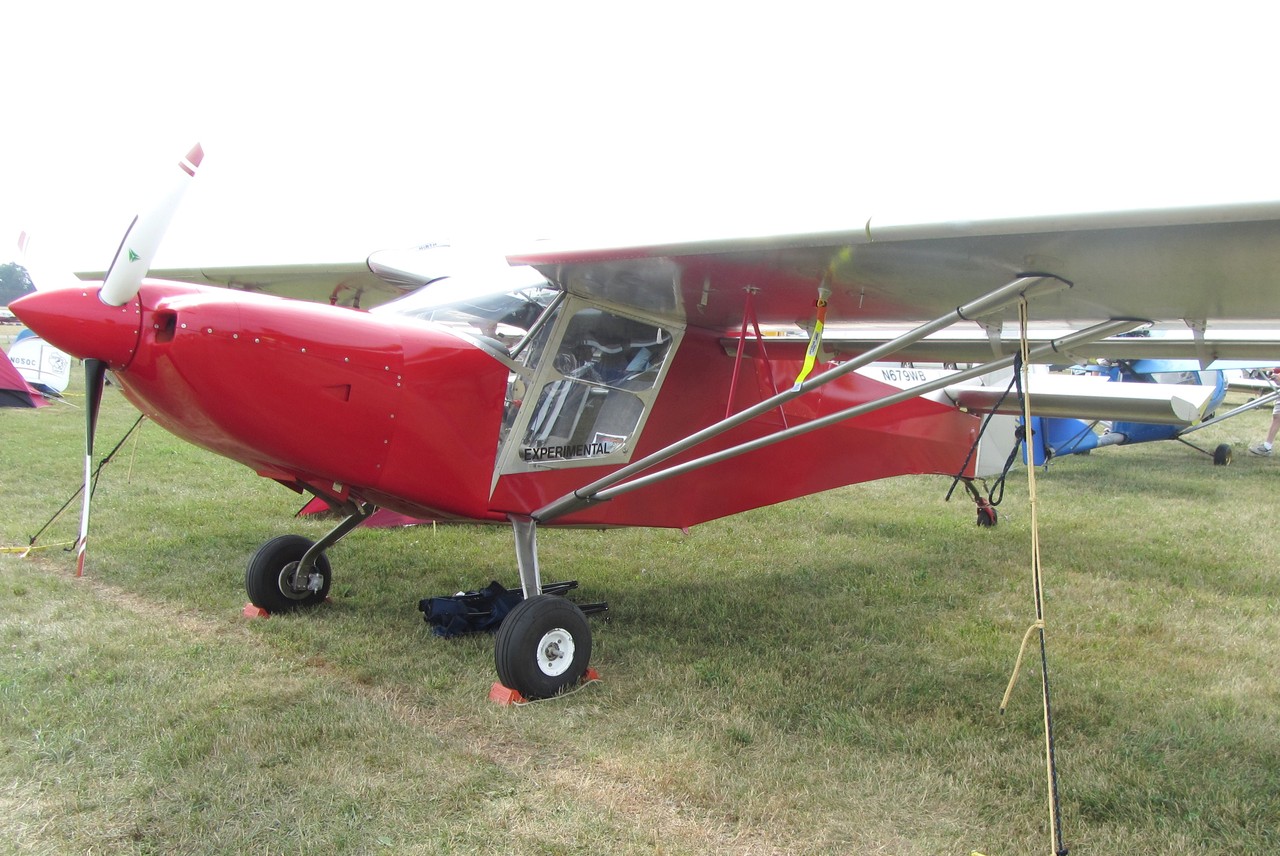
The Pegazair-100 emerged from the workshop of designer Serg Dufour in Mont-Saint-Michel, Quebec, beginning development in 1985. Initially conceived as modified wing improvements for the Zenair CH 701 STOL aircraft, the project evolved into a completely original two-seat design focused on maximizing short-field performance and low-speed safety characteristics.
Dufour's primary innovation centered on the aircraft's automatic deploying leading-edge slats, which replaced the fixed slots found on earlier STOL designs. Combined with full-span flaperons and a slotted tailplane, this configuration enables the Pegazair to achieve a stall speed of just 45 kilometers per hour (24 knots) – a critical safety margin for backcountry operations where pilots face challenging terrain and unprepared landing strips.
Construction and Variants
The Pegazair features a welded steel tube fuselage framework covered with aluminum skin, while the wings utilize aluminum construction with fabric covering. The NACA 2415 airfoil section provides excellent low-speed lift characteristics, complementing the innovative slat system. The conventional landing gear configuration and strut-braced high-wing layout emphasize simplicity and ruggedness over speed.
Three primary variants emerged during production, each distinguished by powerplant selection. The original prototype utilized a 65-horsepower Continental A-65 engine, proving the basic design concept. The Pegazair P80 variant incorporated the popular 80-horsepower Rotax 912UL engine, favored for its reliability in ultralight and light sport aircraft applications. The most capable variant, the P100, accepts either a 100-horsepower Continental O-200 or 115-horsepower Rotax 914 engine.
Custom builders have pushed performance boundaries further, with some installations featuring 160-horsepower Superior IO-360 engines or even 180-horsepower Superior powerplants. These higher-powered versions achieve cruise speeds up to 120 knots while maintaining the aircraft's legendary short-field capabilities.
Performance and Specifications
The standard Pegazair P100 variant measures 6.83 meters in length with an 8.8-meter wingspan and wing area of 14 square meters. Empty weight of 374 kilograms allows a maximum gross weight of 658 kilograms, providing useful load capacity for two occupants and 134 liters of fuel.
Performance figures reflect the aircraft's STOL design priorities. Cruise speed reaches 169 kilometers per hour (105 mph), while the never-exceed speed is limited to 201 kilometers per hour (125 mph). The impressive range of 1,010 kilometers (630 miles) makes cross-country flights practical despite the modest cruise speed. Wing loading of just 47 kilograms per square meter contributes to the exceptional low-speed handling characteristics.
The aircraft's structural design accommodates positive 6g and negative 3.3g load factors, reflecting its certification for normal category aerobatic maneuvers and rough-field operations typical of backcountry flying.
Manufacturer and Production
Tapanee Aviation, Inc. of Mont-Saint-Michel, Quebec, has marketed the Pegazair as plans and kit packages since the mid-1980s. Unlike traditional aircraft manufacturers, Tapanee operates as a specialized homebuilt aircraft supplier, providing detailed construction drawings and supporting components for amateur builders.
Exact production numbers remain unknown due to the kit aircraft's homebuilt nature, but current estimates indicate approximately 45 examples flying in Canada and 6 in the United States. Recent completions, including Jeff Mullin's Pegazair SP-100 finished in 2021, demonstrate ongoing builder interest in the design.
Operational Experience
Real-world operators have validated the Pegazair's design objectives through demanding backcountry missions. Doug Wilson's 1999-built example proved its utility during Alaskan hunting expeditions, successfully hauling moose, caribou, and black bear over three separate trips. Such operations demonstrate the aircraft's practical load-carrying capability and short-field performance in challenging environments.
Pilots consistently praise the aircraft's gentle stall characteristics and forgiving handling qualities. The automatic slat deployment provides natural stall warning and recovery, while the low stall speed offers significant safety margins during approach and landing phases.
Legacy and Current Status
While never achieving the production numbers of mainstream general aviation aircraft, the Pegazair represents successful innovation in the specialized STOL homebuilt market. Its automatic slat system and exceptional short-field performance capabilities continue to attract builders seeking maximum safety margins for backcountry operations.
Tapanee Aviation remains active, supporting existing builders and new construction projects through parts supply and technical assistance. The company maintains contact information (819-586-2059) for builder inquiries, ensuring continued support for the small but dedicated community of Pegazair operators and constructors.