
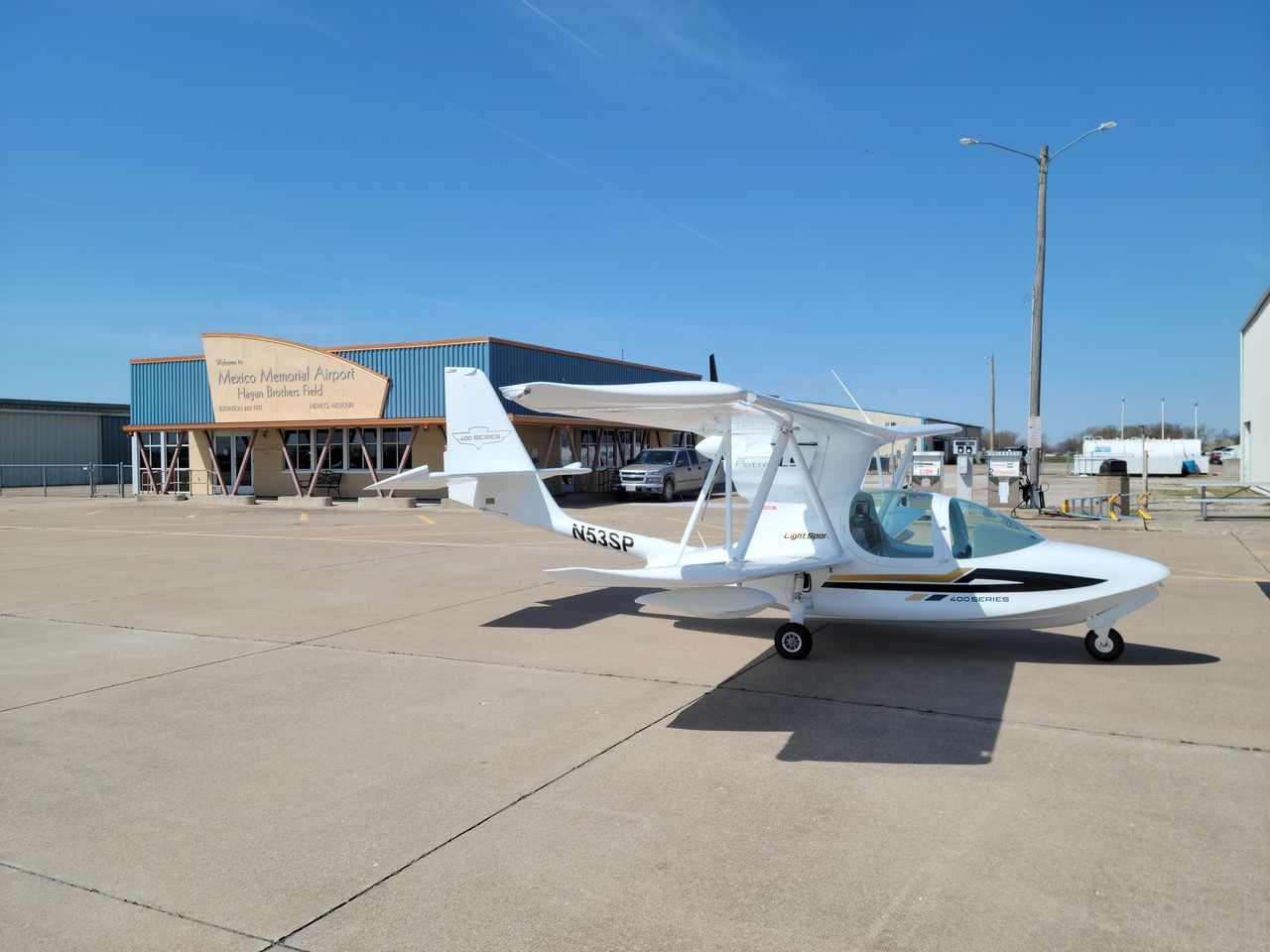
Development and Design Philosophy
The Super Petrel represents a complete departure from earlier Petrel designs, despite sharing the same name. In 2001, Brazilian aeronautical engineer Rodrigo Scoda embarked on designing an entirely new amphibious aircraft from scratch, using only the "Petrel" designation as a nod to Claude Tisserand's original 1983 French amphibian concept. Scoda's design objectives centered on creating a modern light sport aircraft that would meet emerging FAA certification standards while providing reliable amphibious capability for recreational pilots.
The resulting aircraft first took flight in August 2002, featuring a pusher-propeller configuration, retractable landing gear, and composite construction using carbon fiber and epoxy resin materials. This marked a significant technological advancement over earlier wood-and-fabric amphibians, positioning the Super Petrel as a contemporary alternative in the growing light sport aircraft market.
Manufacturing Evolution
EDRA Aeronautica, founded by Rodrigo Scoda in 1997, established its manufacturing facility in Ipeúna, São Paulo, Brazil. The company had previously gained experience building nearly 100 original Petrel ultralight aircraft between 1990 and 1996 before acquiring the intellectual property rights and developing the intermediate Paturi model in 1997.
Super Petrel production commenced in 2002, with the company initially focusing on the Brazilian domestic market before expanding internationally. In 2008, EDRA introduced the Super Petrel LS variant, specifically engineered to comply with FAA Light Sport Aircraft regulations and ASTM standards. This certification milestone opened the crucial American recreational aviation market.
By 2015, the manufacturer rebranded as Scoda Aeronautica due to confusion with numerous other Brazilian companies using the "EDRA" name. The company established a strategic sales and assembly facility in Ormond Beach, Florida, to better serve North American customers and potentially manufacture aircraft domestically.
Technical Specifications and Performance
The Super Petrel LS utilizes the proven Rotax 912 four-cylinder, air-cooled inline piston engine, which became the industry standard powerplant for light sport aircraft worldwide. This Austrian-manufactured engine provides reliable performance while meeting the LSA requirement of maximum 120-knot top speed and 1,320-pound maximum gross weight.
The aircraft's biplane configuration provides excellent low-speed handling characteristics essential for water operations, while the pusher propeller arrangement protects the engine and propeller from water spray during taxi and takeoff operations. The retractable landing gear system allows for both land and water operations, significantly expanding operational flexibility compared to dedicated seaplanes.
Composite construction using carbon fiber and fiberglass materials provides superior strength-to-weight ratios compared to traditional aluminum or wood construction, while also offering better corrosion resistance in the marine environment where amphibious aircraft typically operate.
Market Position and Competition
The Super Petrel entered a specialized market segment competing directly with aircraft like the ICON A5, Progressive Aerodyne Searey, and other amphibious light sport aircraft. However, American market penetration proved challenging, with only modest registration numbers recorded—four aircraft registered in 2016 and one in 2017, compared to ICON's 22 registrations in 2016.
Scoda Aeronautica promoted the aircraft at major aviation events including EAA AirVenture and SUN 'n FUN, targeting recreational pilots seeking amphibious capability. The company's Florida facility handled aircraft shipped from Brazil, performing final assembly and FAA Designated Aircraft Representative inspections before customer delivery.
Production Legacy
Over 400 Super Petrel LS aircraft were manufactured during the model's production run, with approximately 350 aircraft documented as flying by the program's conclusion. U.S. registrations tracked serial numbers from S0001 through S0360 and beyond, indicating steady if modest production throughout the program.
In November 2022, Scoda Aeronautica announced the Super Petrel XP as the LS replacement, featuring the upgraded Rotax 915is turbocharged engine. Production of the LS variant officially ended in 2023, marking the conclusion of a 21-year manufacturing program.
The Super Petrel LS established itself as a modern interpretation of amphibious aviation, leveraging contemporary materials and proven powerplants to serve the recreational flying market. While never achieving the market dominance of land-based light sport aircraft, it successfully carved out a niche among pilots seeking versatile water and land operation capability.