
Development and Design
The PIK-11 project began in 1948 under the technical leadership of Professor Arvo Ylinen, with design responsibilities shared between Kai Mellen and Ilkka Lounanmaa. The team's primary objective centered on creating an affordable, easy-to-fly aircraft specifically for aviation club operations. The design philosophy emphasized simplicity and cost-effectiveness rather than performance extremes, reflecting the practical needs of Finnish flying clubs in the post-war era.
The name "Tumppu," meaning "Mitten" in Finnish, reflected the aircraft's compact, practical design approach. The engineering team selected a conventional configuration to minimize development risks and manufacturing complexity, incorporating proven design elements that would ensure reliable operation under Finnish flying conditions.
Technical Configuration
The PIK-11 featured a low-wing cantilever monoplane design with clean aerodynamic lines typical of early 1950s light aircraft. The single Continental A65-8 four-cylinder horizontally-opposed engine produced 48 kilowatts (65 horsepower), providing adequate power for the aircraft's 822-pound gross weight. This power-to-weight ratio enabled respectable performance figures including a 5.5 meter per second initial rate of climb and the ability to reach 5,000 meters altitude in 31 minutes.
The aircraft's compact dimensions reflected its role as a club trainer and recreational aircraft. At 5.5 meters long with an 8-meter wingspan, the Tumppu occupied minimal hangar space while providing a 700-kilometer range at its 170 km/h cruising speed. The fixed tailwheel landing gear configuration simplified maintenance requirements and reduced manufacturing costs, though it required a 300-meter takeoff run to clear a 15-meter obstacle.
Manufacturing and Production
Polyteknikkojen Ilmailukerho's transition from glider production to powered aircraft represented a significant expansion of Finnish aviation manufacturing capabilities. The organization, established as the Finnish Polytechnics Aviation Club, had built substantial expertise in aircraft design and construction through glider programs dating to the 1930s. The PIK-11 project leveraged this accumulated knowledge while introducing new challenges associated with engine installation, fuel systems, and powered aircraft certification requirements.
Production remained deliberately limited, with exactly four aircraft completed during the program's three-year manufacturing period from 1953 to approximately 1956. This small production run reflected the aircraft's specialized role within Finnish aviation circles rather than any technical shortcomings. Each aircraft was essentially hand-built, allowing for individual attention to construction quality while maintaining the cost-effective design philosophy.
Performance and Flight Characteristics
The PIK-11's performance envelope suited its intended training and recreational roles effectively. The maximum speed of 220 km/h at sea level provided adequate capability for cross-country flying, while the gentle 80 km/h landing speed made the aircraft accessible to relatively inexperienced pilots. The structural design incorporated positive and negative G-limits of +5.5 and -1.5 respectively, permitting basic aerobatic maneuvers while maintaining appropriate safety margins.
The never-exceed speed limitation of 280 km/h reflected conservative design practices appropriate for club operations. Pilots found the aircraft's handling characteristics predictable and forgiving, essential qualities for an aircraft intended to introduce new pilots to powered flight operations after glider training.
Operational Service
Unlike contemporary aircraft designed for commercial or military applications, the PIK-11 served exclusively within Finnish aviation clubs and private ownership. The aircraft fulfilled its design mission of providing affordable powered flight experience, operating from small airfields throughout Finland during the 1950s and 1960s. Maintenance requirements remained modest thanks to the proven Continental engine and straightforward structural design.
The limited production run meant that PIK-11 operations remained concentrated within Finland, with little international exposure. However, the aircraft's successful operation validated Polyteknikkojen Ilmailukerho's engineering capabilities and established the foundation for subsequent powered aircraft projects.
Legacy and Preservation
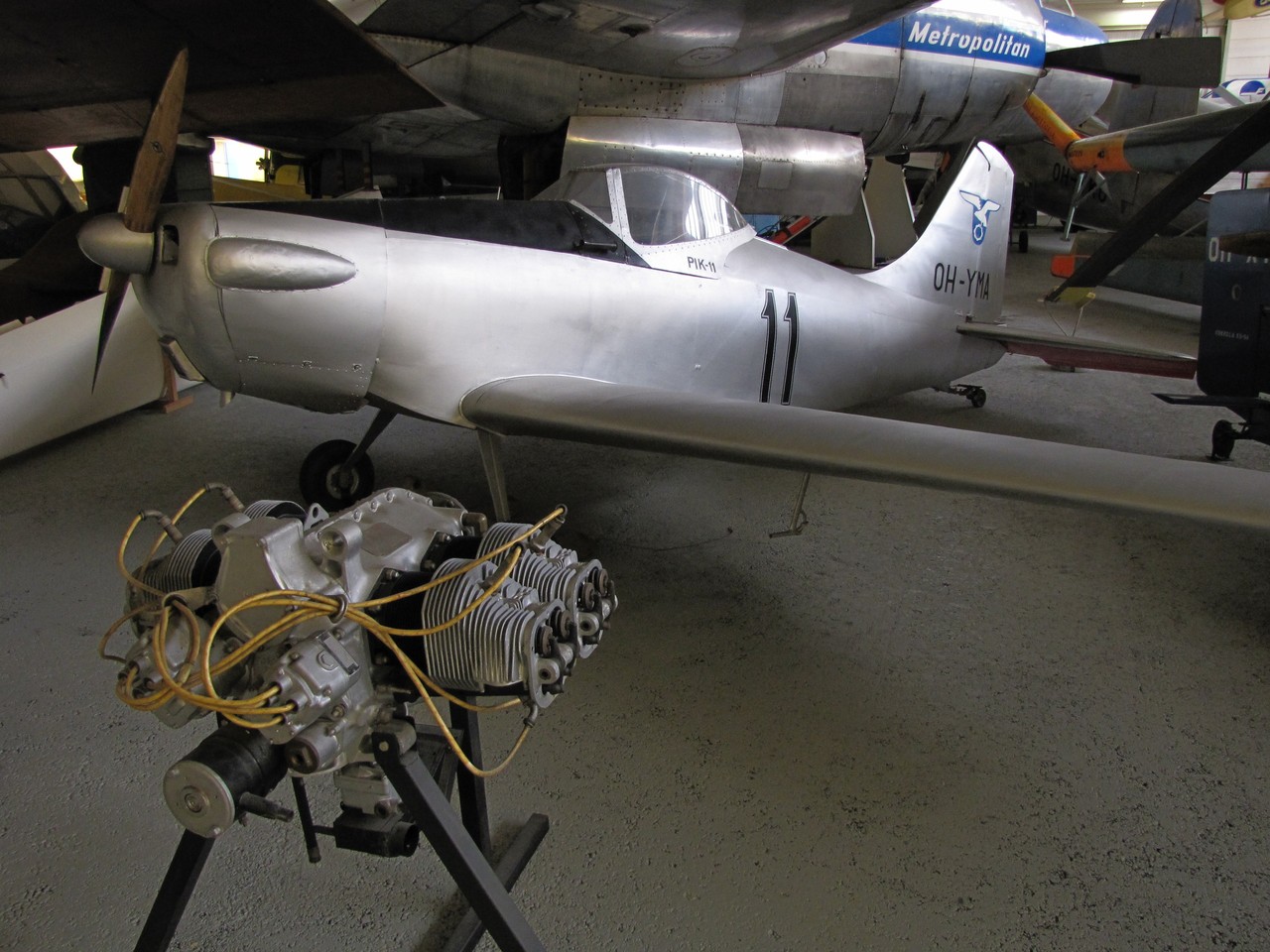
One original PIK-11 found permanent preservation at the Finnish Aviation Museum, ensuring that future generations can examine this important milestone in Finnish aviation development. A second example remained on the Finnish Civil Aviation Authority registry as of 2008, testament to the aircraft's durable construction and continued airworthiness after more than five decades.
The early 21st century witnessed renewed interest in the PIK-11 design, with construction of a flying replica powered by a modern Rotax 912 engine. This project demonstrated the enduring appeal of the Tumppu's clean design and highlighted advances in general aviation powerplants since the 1950s. The replica effort also preserved valuable construction techniques and design knowledge that might otherwise have been lost as original builders and engineers aged.
The PIK-11's significance extends beyond its modest production numbers, representing Finnish aviation's successful transition from wartime restrictions to independent aircraft development. Polyteknikkojen Ilmailukerho continued aircraft design activities through the following decades, producing numerous gliders, motorgliders, and powered aircraft designs that traced their lineage to lessons learned during the Tumppu program.