
Development and Design Philosophy
The PIK-19 Muhinu emerged from the Finnish aviation community's need for a dedicated glider-towing aircraft that could improve upon existing designs. Polyteknikkojen Ilmailukerho developed the aircraft as an enhanced version of their earlier PIK-15 Hinu, incorporating lessons learned from that aircraft's operational experience. The design team increased engine power from the PIK-15's 150-horsepower Lycoming O-320-A2B to a 160-horsepower Lycoming O-320, providing better performance for the demanding task of glider towing.
Engine and Technical Specifications
The heart of the PIK-19 was its Lycoming O-320 engine, a four-cylinder, horizontally-opposed, air-cooled powerplant that had proven itself reliable in general aviation applications. This engine choice reflected the practical needs of glider towing operations, where consistent power delivery and reliability were paramount. The Lycoming O-320 series, manufactured by Lycoming Engines (a division of Avco Corporation), had become a standard in the industry for aircraft requiring moderate power output with exceptional dependability.
The aircraft's configuration was optimized for its specialized role, with design elements focused on providing the necessary power-to-weight ratio and handling characteristics essential for safe glider operations. The additional 10 horsepower over the PIK-15 may seem modest, but in glider towing operations, every increment of power translates directly to improved climb performance and operational flexibility.
Operational History
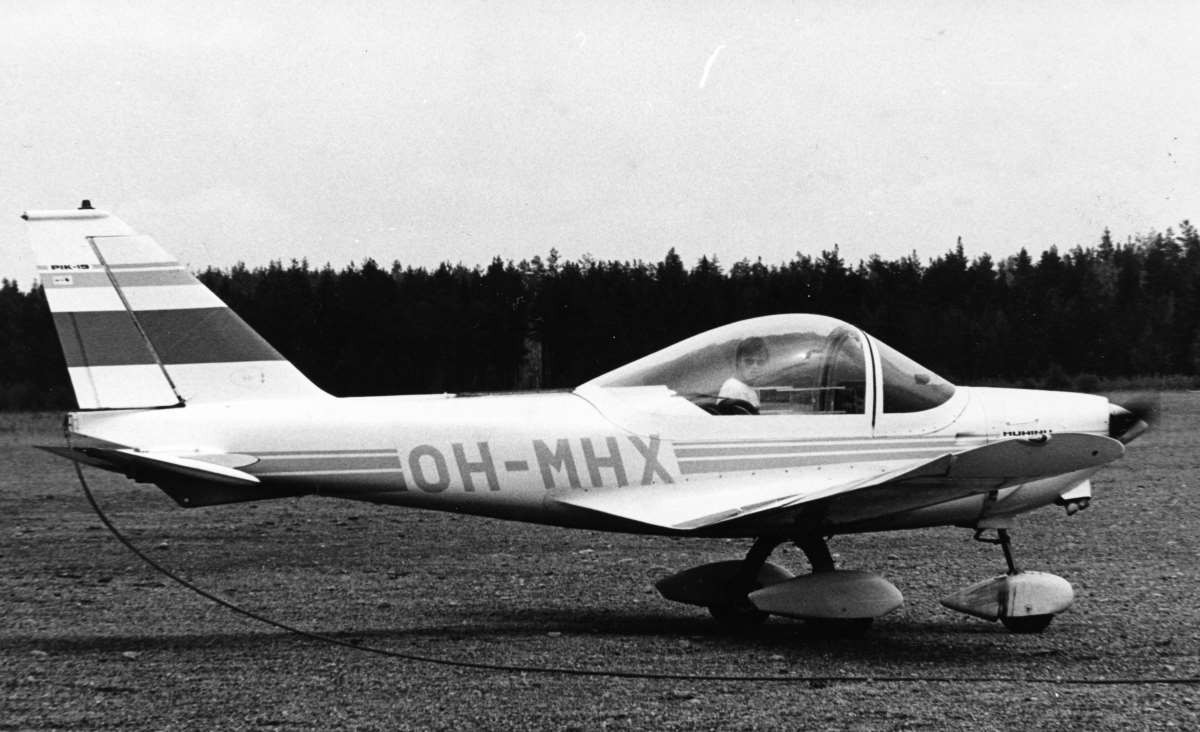
The prototype PIK-19, registered as OH-MHX, entered service in 1972 and immediately began demonstrating the effectiveness of the design. Over its 21-year operational career, the aircraft achieved remarkable utilization statistics that testified to both its reliability and the demand for its services. The 5,217 hours of flight time accumulated by 1993 represented intensive use, while the approximately 40,000 glider tows completed during this period established it as one of the most productive tug aircraft in Finnish aviation history.
This operational record translated to an average of nearly 2,000 glider tows per year, indicating that the PIK-19 was in nearly constant use during soaring seasons. Such intensive utilization required exceptional reliability and maintainability, characteristics that the aircraft clearly possessed given its long service life without major incidents until its final accident in 1993.
The PIK Organization
Polyteknikkojen Ilmailukerho represented a unique approach to aircraft development, combining the enthusiasm of aviation club members with serious engineering expertise. The organization had established its credentials in powered aircraft design with the PIK-11, which achieved first flight in 1953, marking their entry into the field of original aircraft development.
Throughout the 1960s and into the 1970s, PIK continued developing aircraft designs that addressed specific needs within the Finnish aviation community. Their focus on glider-towing aircraft with both the PIK-15 and PIK-19 reflected the strong soaring culture in Finland and the practical need for reliable tug aircraft to support gliding operations across the country.
Production Challenges and Commercial Reality
Despite the prototype's impressive operational record, the PIK-19 Muhinu never achieved the series production that PIK had originally envisioned. This outcome reflected the challenging economics of specialized aircraft production, particularly for the relatively small market of glider-towing aircraft. The financial requirements for establishing production facilities, obtaining necessary certifications, and developing a market network often exceeded the resources available to smaller aviation organizations like PIK.
The failure to reach production was not uncommon among aircraft designed by aviation clubs and smaller manufacturers during this era. Many promising designs remained as single prototypes or limited production runs due to the substantial capital requirements and regulatory hurdles involved in commercial aircraft manufacturing.
Legacy and Preservation
The PIK-19's story concludes with appropriate recognition of its contribution to Finnish aviation. Following the 1993 accident that ended the prototype's operational career, the aircraft found a permanent home in the Finnish Aviation Museum. This preservation ensures that future generations can study and appreciate the engineering solutions developed by PIK for the specialized requirements of glider towing.
The museum display represents more than just an aircraft; it embodies the innovative spirit of Finnish aviation and the practical approach to solving specific operational challenges. The PIK-19's 21-year service record and 40,000 glider tows stand as testimony to the effectiveness of the design, even though commercial success remained elusive.
The aircraft's legacy extends beyond its individual operational record to represent an important chapter in the development of specialized aviation equipment. Its story illustrates both the potential for innovative design solutions from smaller organizations and the practical challenges faced in bringing such designs to commercial fruition.