
Development and Design Innovation
The PIK-20E emerged from Helsinki University of Technology as part of an ambitious student project that would reshape competitive gliding. Designed by Pekka Tammi with advice from Ilkka Rantasalo and Raimo Nurminen, the base PIK-20 design began in 1971 with the goal of creating a high-performance Standard Class competition glider. The motorglider variant was developed by Jukka Tervamäki, whose prototype initially carried the designation JT-6 before becoming the PIK-20E.
The aircraft incorporated several revolutionary features for its era, including interconnected flaps and ailerons (flaperons) that complied with Standard Class regulations while maximizing performance. Carbon fiber wing spars provided exceptional strength-to-weight ratios, while Schempp-Hirth airbrakes offered precise speed control during approach and landing.
Production History and Manufacturing
Production began around 1978 under Eiri-Avion Oy, which had taken over the PIK-20 program from Molino Oy following a corporate transition between 1974-1975. Manufacturing faced significant challenges, including a factory fire in June 1977 that disrupted operations. Despite these setbacks, over 200 PIK-20 series aircraft had been sold by late 1977, demonstrating strong market demand.
Finland produced 103 PIK-20E motorgliders before Eiri-Avion Oy ceased aircraft manufacturing around 1980. Production rights and tooling were then transferred to Siren SA in France, which built an additional 17 examples designated PIK-20E II F, bringing total production to exactly 120 aircraft by 1985.
Technical Specifications and Performance
The PIK-20E's defining feature was its retractable Rotax 501 engine, producing 32 kW (43 horsepower) through a two-cylinder, two-stroke, air-cooled design. This Austrian-manufactured powerplant drove a Hoffmann two-blade wooden propeller via a 1:2 belt reduction system. The engine retracted manually into the fuselage using a hand crank system requiring 15 turns, transforming the aircraft from powered airplane to pure sailplane in flight.
A 30-liter fuel tank provided extended endurance limited primarily by pilot fatigue rather than fuel capacity. The aircraft maintained the Standard Class 15-meter wingspan while incorporating a fiberglass monocoque fuselage with swept-back wings and tailplane. Maximum gross weight reached 450 kilograms with water ballast, allowing pilots to optimize wing loading for varying conditions.
Competitive Success and Recognition
The PIK-20 series achieved remarkable competitive success that validated its advanced design. Ingo Renner piloted a PIK-20B to victory at the 1976 World Gliding Championships, with second and third places also claimed by PIK-20 variants. The series also dominated national competitions, winning the 1975 British, American, and Finnish National Championships.
This competition success translated directly into commercial appeal, as pilots sought aircraft proven capable of world-class performance. The PIK-20E offered these same aerodynamic advantages while adding the crucial capability of independent launch and retrieval.
Research Applications
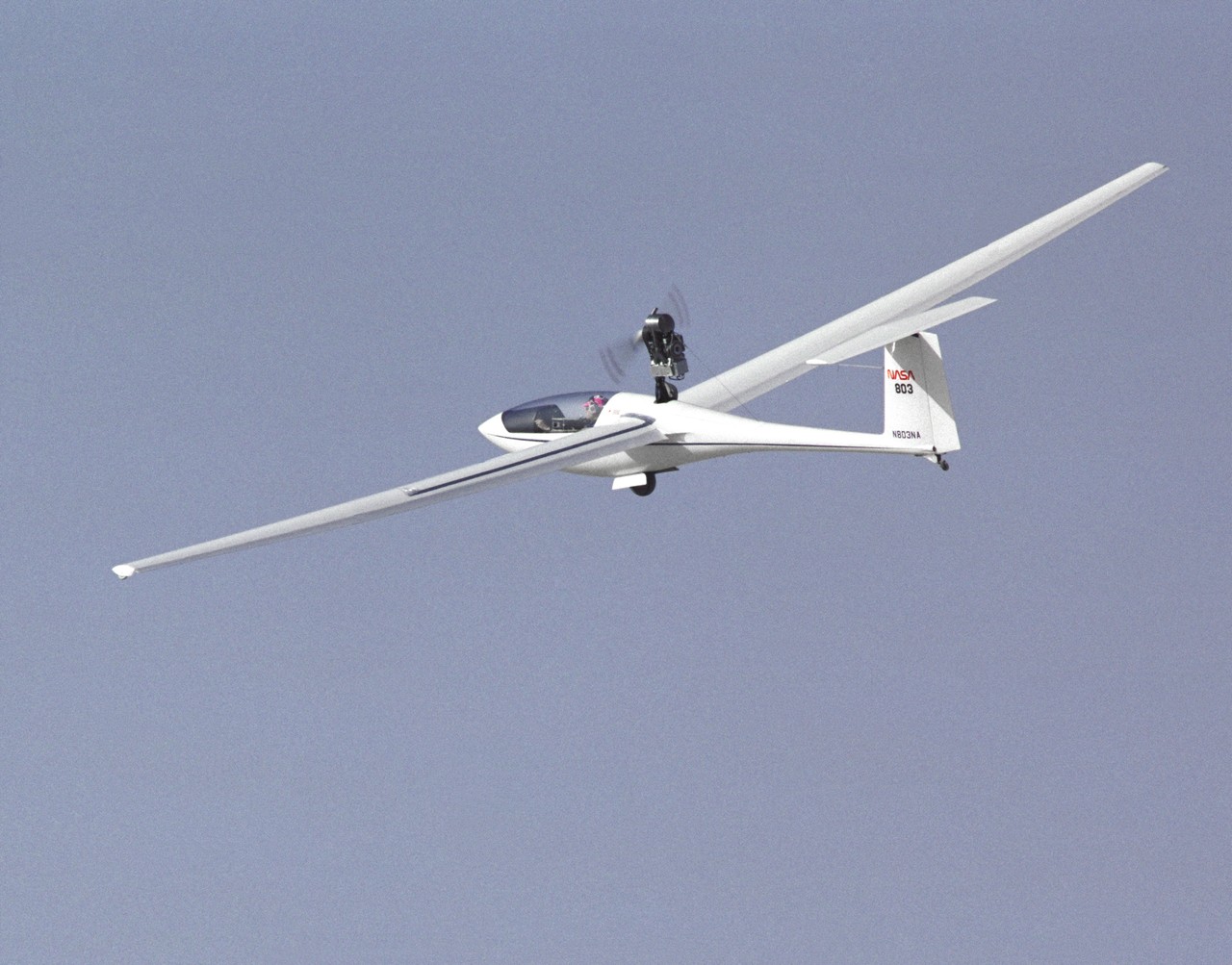
Beyond private and club use, the PIK-20E attracted attention from research organizations. NASA operated aircraft number 803, built by Eiri-Avion, for research flights at Edwards Air Force Base as late as 1991. This government interest highlighted the aircraft's value as a research platform for soaring and atmospheric studies.
In 1983, a PIK-20E set an endurance record during a flight from Camden, New South Wales, demonstrating the aircraft's capability for extended autonomous operations that would have been impossible with conventional gliders requiring ground-based launch systems.
Legacy and Current Status
While production ended in 1985, surviving PIK-20E aircraft continue to operate worldwide. Examples remain active in Australia, with VH-MQN (construction number 20298) documented as late as 1983. The prototype PIK-20 (OH-425), which first flew on October 10, 1973, is preserved at the Helsinki-Vantaa Airport museum, recognizing the series' contribution to Finnish aviation.
The PIK-20E's influence extended far beyond its limited production numbers. It pioneered the concept of practical self-launching for high-performance sailplanes, inspiring subsequent motorglider developments worldwide. The design's combination of competition-level soaring performance with powered self-sufficiency established a template that continues to influence modern motorglider design philosophy.