
Design Innovation and Development
Italian engineer Luigi Pellarini conceived the PL-12's distinctive design in 1956, originally proposing it to a New Zealand aviation company that rejected the unconventional configuration. After emigrating to Australia in the early 1950s, Pellarini found renewed interest in his agricultural aircraft concept when Transavia Corporation, the aviation division of manufacturing giant Transfield, took over the project in 1965.
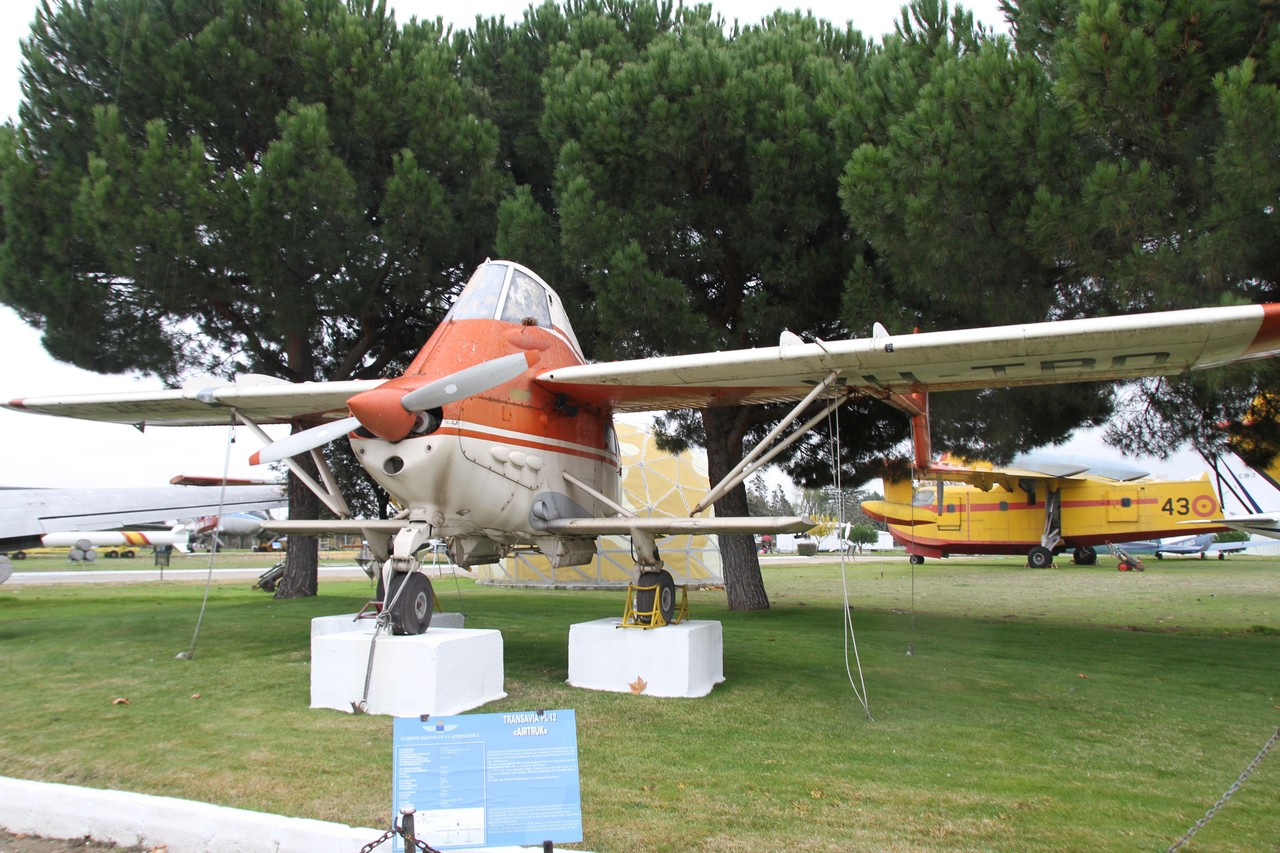
The prototype VH-TRN made its maiden flight on April 22, 1965, piloted by New Zealand aviator Neil Johnston. The aircraft's bizarre appearance masked ingenious engineering solutions for agricultural work: the twin tail boom configuration created a 11.5-foot gap allowing ground vehicles to drive underneath for chemical loading, while the elevated cockpit positioned above the hopper provided pilots with exceptional visibility during low-level spraying operations.
Production and Certification
Transavia received type certification on February 10, 1966, and began commercial deliveries in December of that year. The production aircraft featured significant improvements over the prototype, including a more powerful 300-horsepower Continental IO-520-D engine replacing the 285-horsepower IO-520-A. Manufacturing took place at Transavia's Blacktown facility, where workers assembled approximately 140 examples over the aircraft's 27-year production run.
The PL-12's fibreglass construction for the engine cowling and rear fuselage sections reduced weight while providing resistance to corrosive agricultural chemicals. The tricycle landing gear mounted on the lower sesquiplane wings offered excellent ground stability during loading operations.
Operational Versatility
While primarily designed for agricultural spraying with its one-tonne chemical capacity, the PL-12 proved remarkably versatile. The PL-12U utility variant, first flown in December 1970 and certified in February 1971, could carry four passengers or 1,300 pounds of freight over distances up to 400 miles. Several examples delivered to Thailand received stainless steel hoppers for spraying corrosive chemicals on oil palm plantations, while others were fitted with standard weapon mounts for counter-insurgency operations.
Indonesian operator Djajanti Group received approximately ten PL-12U aircraft in 1982 for passenger and freight operations based on Aru Island in West Irian. The aircraft's ability to operate from rough airstrips made it invaluable for reaching remote locations inaccessible by conventional aircraft.
International Success
The Airtruk found markets beyond Australia, with aircraft delivered to Denmark, Spain, Indonesia, Thailand, and New Zealand. Each market presented unique challenges that demonstrated the design's adaptability. Thai operators required chemical-resistant modifications, while Indonesian customers needed passenger configurations for island-hopping operations.
The aircraft's unconventional appearance often drew ridicule, but pilots praised its stability during low-level agricultural work and excellent visibility from the elevated cockpit position. The twin-boom design kept the tail surfaces clear of chemical spray patterns, a significant safety advantage over conventional agricultural aircraft.
Evolution and Variants
Transavia continued developing the basic design throughout the 1970s and 1980s. The T-300 Skyfarmer, first flown in July 1978, replaced the Continental engine with a Textron Lycoming IO-540, while the 1981 T-300A incorporated improved aerodynamics. The ultimate evolution came with the 1985 T-400, featuring an eight-cylinder engine and tail booms extended by 30 inches for better balance.
Despite these improvements, production remained limited, with the T-300 series ending in 1985 and the original PL-12 continuing until 1993 when Transavia ceased aircraft manufacturing.
Cultural Legacy
The PL-12 achieved unexpected fame appearing in the 1985 post-apocalyptic film "Mad Max Beyond Thunderdome," where its unusual appearance perfectly suited the dystopian setting. The prototype aircraft VH-TRN now resides in the Power House Museum in Sydney, preserving Australia's most successful indigenous aircraft design.
The Airtruk represented Luigi Pellarini's only commercial aviation success after numerous failed flying car experiments. Its 27-year production run validated the principle that unconventional designs could succeed when properly matched to specific operational requirements. Today, many examples continue operating in agricultural roles worldwide, testament to the soundness of Pellarini's radical approach to specialized aircraft design.