
International Military Adoption
The PL-2 achieved remarkable international success as a military trainer across Asian air forces during the 1970s. Taiwan initially committed to constructing 70 examples for their military flying school at Kangshan, establishing the aircraft's credentials as a serious training platform. Following Taiwan's adoption, Indonesia, Vietnam, Thailand, Korea, and Pakistan implemented pilot training programs utilizing Pazmany-designed aircraft, demonstrating the design's widespread appeal for military applications.
The most significant production program occurred in Sri Lanka, where the Air Force undertook complete domestic manufacturing beginning in 1977. Under the personal supervision of Wing Commander N. Gunarathnam, the Aircraft Engineering Wing achieved the maiden test flight on April 11, 1980, marking the first aircraft entirely constructed within Sri Lanka. This achievement represented a milestone in the nation's aviation manufacturing capability.
Design Innovation and Construction
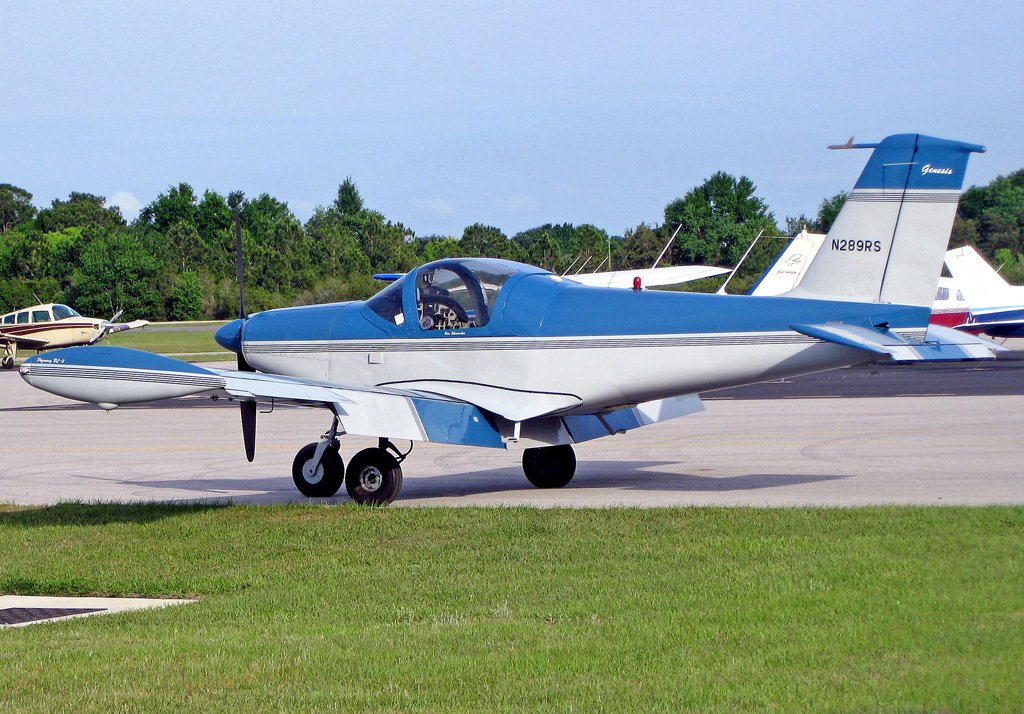
Ladislao Pazmany invested 7,000 man-hours developing the PL-2 as an improvement over his earlier PL-1 design. The redesigned aircraft incorporated a wider cockpit, enhanced canopy configuration, improved fuselage lines, and simplified dihedral compared to its predecessor. These modifications specifically addressed construction challenges faced by amateur builders while maintaining the structural integrity required for military training operations.
The aircraft's construction utilized aluminum 2024-T3 as the primary material, with landing gear and engine mount fabricated from 4130 steel tubing and plates. Engineers designed the wing with a 15-percent thickness laminar airfoil featuring a single spar positioned at maximum thickness, enabling removal within approximately two hours. The design deliberately avoided double curvature skins and minimized formed blocks, significantly simplifying fabrication for homebuilders.
Performance Characteristics
Powered typically by a 100-horsepower Lycoming engine, though accommodating powerplants from 90 to 150 horsepower, the PL-2 delivered impressive performance figures. The aircraft achieved a cruise speed of 119 mph with a top speed of 138 mph, while maintaining a gentle stall speed of 52 mph. Its climb rate of 1,280 feet per minute and takeoff run of just 700 feet made it ideal for training operations from shorter airfields.
With an empty weight of 875 pounds and gross weight of 1,416 pounds, the PL-2 offered a useful load of 541 pounds while carrying 25 gallons of fuel. This configuration provided a range of 492 miles, sufficient for extended training missions. The structure was stressed to withstand +6 g's limit loading, enabling aerobatic training while maintaining safety margins.
The Designer and Manufacturer
Ladislao Pazmany established himself as a world authority on landing gear design, light aircraft engineering, and flight efficiency optimization through more than half a century of flying experience. His methodical approach included continuous in-flight data collection and recording, with improvements disseminated to the homebuilding community through Engineering Change Notices and regular newsletters.
Pazmany Aircraft Corporation operated as a plans and kit supplier rather than a traditional manufacturer, providing detailed construction documentation and components to amateur builders worldwide. This business model enabled wider distribution while maintaining quality control through comprehensive builder support. Pazmany's contributions to homebuilt aviation earned him induction into the Experimental Aircraft Association Hall of Fame in 1997.
Technical Configuration
The PL-2's rectangular planform wing and tricycle landing gear configuration provided stable handling characteristics essential for training applications. The 19-foot 4-inch fuselage housed two occupants in side-by-side seating, facilitating instructor-student communication during training flights. The low-wing design contributed to the aircraft's clean aerodynamic profile while providing ground stability during taxi operations.
Engine flexibility represented a key design advantage, allowing operators to select powerplants based on availability, cost, or performance requirements. The original PL-1 utilized a 95-horsepower Continental C-90, but the PL-2's adaptable engine mount accommodated various manufacturers' engines within the specified power range.
Legacy and Impact
The Pazmany PL-2 demonstrated that well-engineered homebuilt designs could successfully meet both recreational and professional training requirements. Its adoption by multiple military organizations validated the concept of amateur-buildable aircraft serving serious operational roles. The design's influence extended beyond its immediate operators, contributing to broader acceptance of homebuilt aircraft in training applications.
The aircraft's success across diverse international markets, from Sri Lankan military production to Thai experimental programs, illustrated the universal appeal of Pazmany's engineering approach. Thailand operated at least one example designated as Experimental plane No. 1 (BChO-1), further demonstrating the design's versatility. The PL-2's dual-role capability established a template for future homebuilt designs seeking both amateur and professional markets.