
Service History
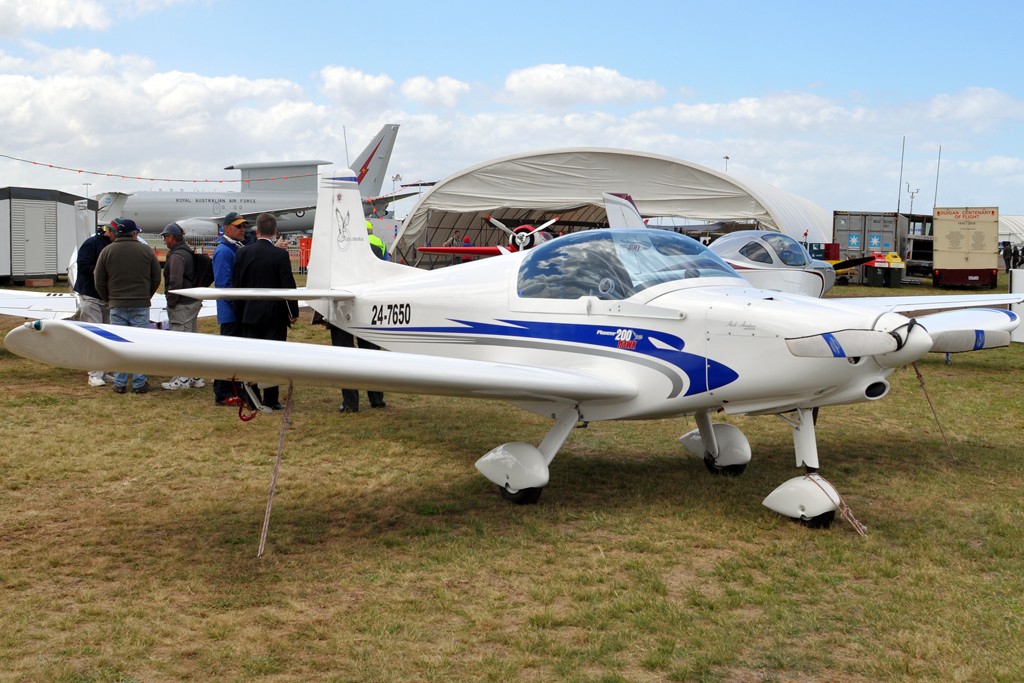
The Pioneer 200 carved its niche in the ultralight and light-sport aircraft market by offering flying clubs and private owners an affordable entry point into aviation. Organizations such as UTC Flugschule in Germany and Aéroclub de Saint-Junien in France adopted the aircraft for primary training, capitalizing on its forgiving flight characteristics and economical operating costs. The aircraft's global reach became evident early, with New Zealand receiving its first imports in late 2002 through Alpi Aviation Ltd of Onerahi. Registration records show ZK-LPI (construction number NZ100-1) was registered on August 13, 2002, marking the beginning of international operations.
The Manufacturer
Alpi Aviation S.r.l. emerged in 1999 from the foundation laid by the 1998 Pioneer 300 prototype, which drew inspiration from renowned Italian designer Stelio Frati's ASSO V design. The company established its primary manufacturing facility at La Comina airfield near Pordenone, Italy, strategically positioning itself in the heart of European general aviation. Rapid growth characterized Alpi's early years, achieving ISO 9001 certification in 2005 and expanding internationally with a second production facility in Croatia in 2006. The company diversified beyond traditional aircraft manufacturing in 2007 by entering the unmanned aerial vehicle market, followed by helicopter production with the Syton AH 130 in 2009. Today, Alpi Aviation continues operations under its original name, having delivered over 800 aircraft across all Pioneer variants to customers in 22 countries.
Engine & Technical Innovation
The Pioneer 200's powerplant centers on the Austrian-built Rotax 912UL, a sophisticated 80-horsepower four-cylinder engine combining air and liquid cooling systems. This four-stroke unit features dual carburettors and electronic dual ignition, paired with a fixed Tonini propeller for optimal efficiency in the ultralight category. BRP-Rotax GmbH & Co KG began producing the 912 series in the early 1990s, ultimately manufacturing over 100,000 units across all variants by 2020. Alternative installations included the Jabiru 2200, an 80-horsepower four-cylinder air-cooled engine manufactured in Australia and matched with a two-bladed composite propeller for operators preferring locally-sourced powerplants.
The aircraft's construction philosophy emphasized simplicity and amateur builder accessibility through traditional wood-frame construction covered in fabric. This approach contrasted with the composite materials trending in contemporary light aircraft, yet provided cost advantages and ease of repair that appealed to budget-conscious operators worldwide.
Performance Characteristics
Pilots appreciate the Pioneer 200's predictable handling characteristics and impressive climb performance, with rates reaching 1,200 feet per minute under optimal conditions. Maximum speeds range from 110 to 130 miles per hour depending on configuration, while cruise speeds settle between 100 and 110 miles per hour. The aircraft demonstrates excellent short-field capabilities with a stall speed of just 39 miles per hour, making it suitable for operations from grass strips and smaller airfields.
With a service ceiling of 13,000 feet and maximum range of 575 miles, the Pioneer 200 provides adequate performance for local training flights and modest cross-country adventures. The 53 to 54-liter fuel capacity supports extended training sessions while maintaining the weight restrictions crucial for ultralight certification. Wing loading of 46.23 kilograms per square meter contributes to the aircraft's gentle flight characteristics.
Production Legacy
While exact production figures for the Pioneer 200 variant remain proprietary, the aircraft continues in production alongside evolved versions including the Pioneer 200M and 200XL. Safety records from 2008 through 2025 document more than 20 aircraft remaining active in service, though the type has experienced typical ultralight accident rates with over 10 hull losses and 15 fatalities during this period, primarily involving private operations.
The Pioneer 200's significance in aviation history stems from its role in democratizing flight training across multiple continents. By maintaining wood and fabric construction techniques in an era increasingly dominated by composite materials, Alpi Aviation preserved traditional building skills while meeting modern certification requirements. The aircraft's export success to 22 countries demonstrates the continuing global appetite for affordable, maintainable training aircraft that bridge the gap between ultralight experimentation and commercial aviation careers.