
Training Revolution
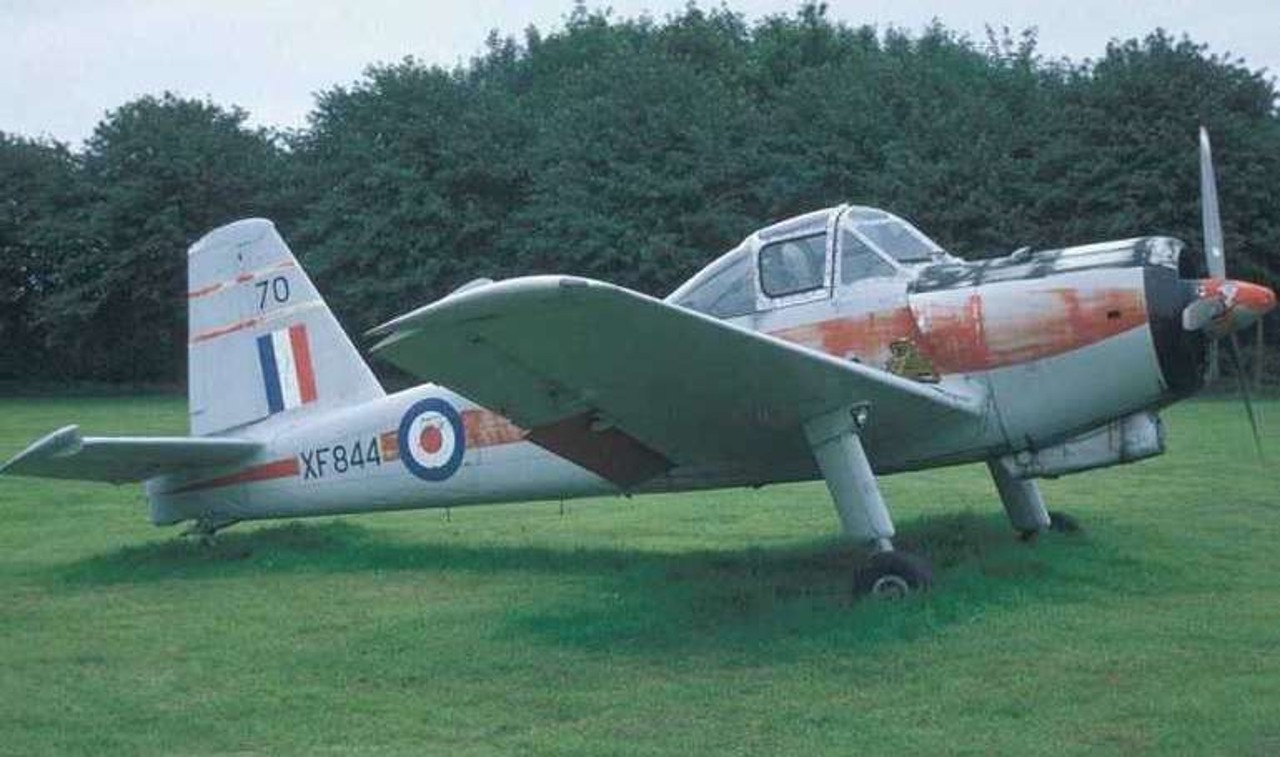
The Provost transformed RAF pilot training from 1953 to 1969, replacing the underpowered Percival Prentice at training schools across Britain. With double the horsepower of its predecessor, the 540-hp Alvis Leonides engine provided the performance necessary for comprehensive basic, instrument, and advanced training. The aircraft served at prestigious units including the Central Flying School at South Cerney, 1 Flying Training School at Linton-on-Ouse, and training facilities at Acklington, Finningley, Church Fenton, and Leeming.
Production Success
Following an initial RAF order for 200 aircraft placed in May 1951, production commenced with first deliveries in 1953. A total of 461 Provosts rolled off the production line through 1957, including 100 aircraft destined for export markets. The substantial production run reflected the aircraft's success in meeting Air Ministry Specification T.16/48, which called for a modern trainer capable of day and night operations.
The Percival Legacy
Percival Aircraft Company, founded by Edgar Percival in the 1930s, operated from Luton Airport during the Provost's development and early production. The company's expertise in training aircraft design, demonstrated previously with the Prentice, positioned them perfectly for the post-war training revolution. In 1954, Percival became part of the Hunting Group, operating as Hunting Percival before evolving into Hunting Aircraft in 1957. The company eventually merged into the British Aircraft Corporation and later became part of what is now BAE Systems.
Engineering Excellence
Designed by the Percival Aircraft team to meet demanding RAF requirements, the Provost featured robust all-metal construction and fixed conventional landing gear optimized for training operations. Chief test pilot Dick Wheldon flew the prototype, initially powered by a Cheetah engine, on its maiden flight. The production aircraft's Alvis Leonides 503/126 nine-cylinder radial engine delivered reliable performance throughout the training syllabus. Key innovations included comprehensive access panels for easier maintenance and enhanced stability characteristics, with later evaluations adding a forward tailfin to improve spinning behavior.
Global Export Success
Beyond RAF service, the Provost found customers in air forces across the Commonwealth and Middle East. Burma, Ireland, Iraq, Oman, Southern Rhodesia, Sudan, and South Arabia operated the type, with some nations modifying their aircraft for light attack and counter-insurgency roles. These export variants often featured underwing hardpoints capable of carrying rockets and bombs, transforming the peaceful trainer into a combat-capable platform for smaller air forces.
Pilot Experience
The side-by-side cockpit configuration proved ideal for instruction, allowing effective communication between student and instructor. At 3,350 pounds empty weight, the Provost provided forgiving handling characteristics essential for ab-initio training while offering sufficient performance to challenge advancing students. The aircraft's 200 mph maximum speed and reliable Leonides engine created confidence in both instructors and students throughout the training progression.
Cold War Training Platform
Throughout the Cold War, the Provost served as the foundation of RAF pilot training, preparing aviators for eventual transition to jet aircraft. While the piston-engine Provost concluded RAF service in 1969, its jet-powered successor continued the lineage, ultimately training nearly every RAF pilot through 1988. This training heritage established the Provost family as one of the most significant aircraft types in British aviation history.
Preservation and Legacy
Today, approximately 50 Provosts remain airworthy, primarily serving on the warbird circuit as representatives of the final piston-engine training era. The Shuttleworth Collection maintains Percival P.56 Provost T.1 G-KAPW as a notable museum example, preserving this important chapter in aviation training history. These surviving aircraft serve as flying monuments to an era when RAF pilots learned their trade behind radial engines before transitioning to the jet age.