
Service History
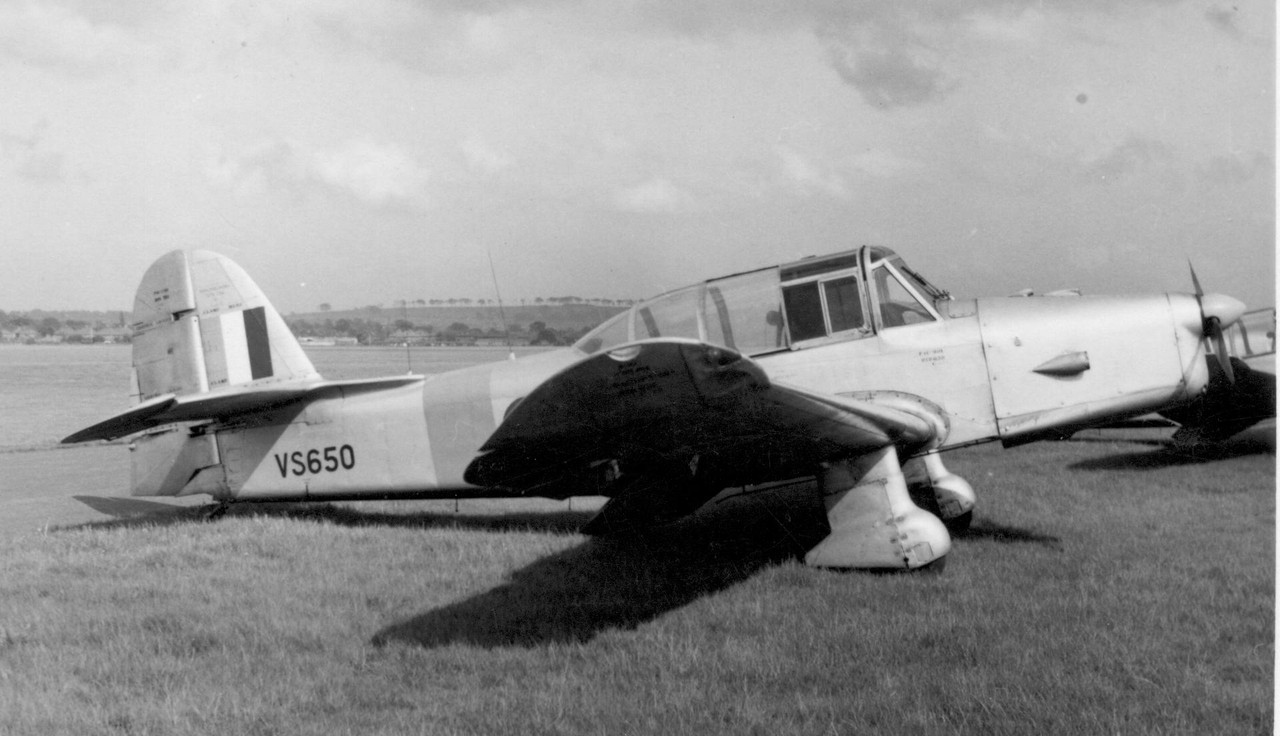
The Prentice entered RAF service in 1948, operating from Flying Training Schools including the prestigious RAF College Cranwell, Reserve Flying Schools, and specialized Air Signals Schools such as No. 1 ASS at RAF Swanton Morley. Despite initial orders for 550 aircraft, only 455 were delivered to the RAF due to budget cuts and the rapid adoption of newer trainers. The type's service life proved brief, being replaced by the de Havilland Chipmunk at Cranwell in 1952 and the Percival Provost elsewhere by 1953. The RAF retired its last Prentices in 1956, just eight years after introduction.
Export Success
While short-lived in British service, the Prentice found significant export markets. The Argentine Air Force acquired 100 T.1 variants beginning in September 1948, representing the largest single export order. The Indian Air Force operated both 20 UK-built T.3 variants and 42 additional aircraft license-manufactured by Hindustan Aeronautics Limited at their Indian facility. The Royal Canadian Air Force evaluated one aircraft in 1948 but declined to place production orders.
The Manufacturer
Percival Aircraft Company was founded in 1933 by Edgar Percival, an innovative designer known for creating elegant light aircraft including the Petal and Q.6. The company gained prominence during World War II with the successful Proctor trainer and communication aircraft. Operating from Luton, Bedfordshire, Percival maintained independence until 1954 when it was acquired by Hunting Aircraft, forming Hunting Percival. The company later merged into the British Aircraft Corporation in 1960, eventually becoming part of BAE Systems.
Design and Development
The Prentice emerged from Air Ministry Specification T.23/43, which called for a modern replacement for the venerable de Havilland Tiger Moth biplane trainer. Percival's design team created the company's first all-metal aircraft, featuring clean low-wing monoplane lines that represented a dramatic departure from traditional fabric-covered trainers. The prototype TV163 first flew from Luton Airport on March 31, 1946, with test pilot Leonard Carruthers at the controls.
Early flight testing revealed significant lateral instability and poor spin recovery characteristics that required extensive modification. Engineers redesigned the fin, rudder, and elevators while adding distinctive upturned wingtips that became the aircraft's most recognizable feature. These changes transformed the Prentice from a potentially dangerous trainer into a stable, predictable platform suitable for basic pilot instruction.
Engine and Performance
The production T.1 variant utilized the de Havilland Gipsy Queen 32, an air-cooled inline four-cylinder engine producing 186 kilowatts (250 horsepower). This powerplant provided adequate performance for training duties, delivering a maximum speed of 143 mph and a service ceiling of 18,000 feet. The aircraft's range of 396 miles and economical fuel consumption made it suitable for extended training sorties.
Later variants received more powerful engines, including the T.2 with a 296-horsepower Gipsy Queen 51 and the T.3 equipped with the 345-horsepower Gipsy Queen 70-2. However, only one T.2 was constructed, while 62 T.3 aircraft were built primarily for export customers requiring enhanced performance.
Production and Manufacturing
Primary production occurred at Percival's Luton factory, supplemented by 125 aircraft subcontracted to Blackburn Aircraft at their Brough facility. The license-production agreement with Hindustan Aeronautics Limited resulted in 42 additional aircraft assembled in India for the Indian Air Force, demonstrating early technology transfer to emerging aviation industries.
Total production reached approximately 620 aircraft across all variants, with the T.1 representing the majority at 463 examples. Manufacturing concluded in 1949 as military requirements shifted toward more advanced trainers and jet-age training concepts.
Civil Conversion Attempts
In 1956, Aviation Traders Limited, owned by entrepreneur Freddie Laker, purchased 252 surplus RAF Prentices, storing them at Stansted and Southend airports. The company converted 28 aircraft to civil configuration with revised seating for two pilots plus two passengers and modern four-channel radio equipment. Despite ambitious plans including a nine-seat variant, the conversion program failed to achieve commercial success. A parallel Australian conversion effort beginning in June 1956 similarly collapsed by 1959.
Legacy
The Prentice holds historical significance as the RAF's first all-metal basic trainer, bridging the gap between traditional fabric biplanes and the jet age. While its service career proved brief, the aircraft influenced trainer design concepts adopted by export customers and demonstrated British aviation industry capabilities in the immediate post-war period. Today, museum examples including VS623 at the Midland Air Museum in Coventry and VR249 at Newark Air Museum preserve the type's legacy, though no examples remain airworthy.