
The Pilot Maker Era
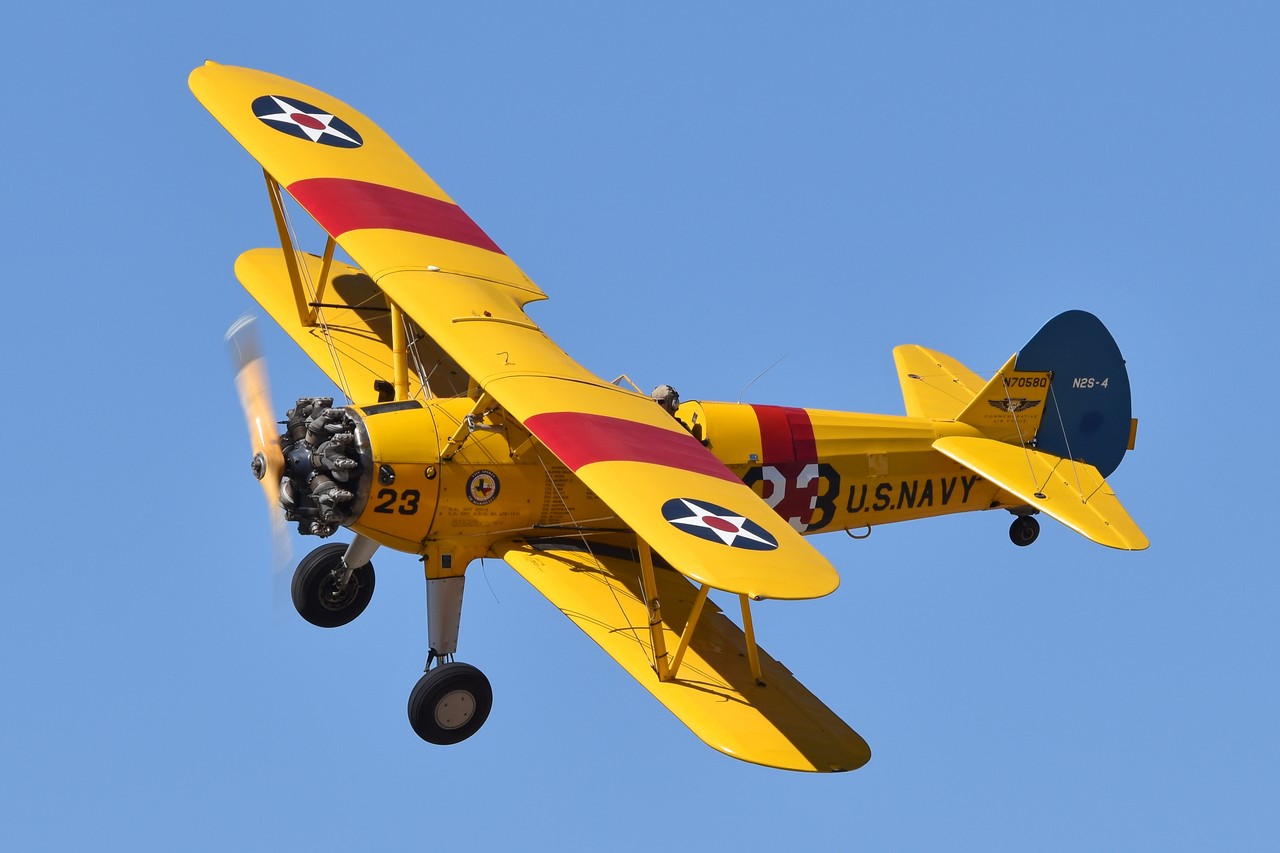
The PODESVA Stearman emerged from one of aviation's most successful training programs, dominating primary flight instruction throughout World War II. Between 1935 and 1945, Stearman Aircraft Corporation produced 8,428 Model 75 biplanes, with enough spare parts manufactured to assemble an additional 2,000 aircraft. This massive production effort made the Stearman the backbone of Allied pilot training, with the type serving in the U.S. Army Air Corps as the PT-13 series and in the U.S. Navy as the N2S series.
Manufacturing Legacy
Lloyd Stearman established the Stearman Aircraft Corporation on December 10, 1926, in Wichita, Kansas. The company's trajectory changed dramatically when it became part of United Aircraft and Transport Corporation in August 1929, then transferred to Boeing Aircraft Company ownership in September 1934. By April 1, 1938, Stearman operated as a formal Boeing subsidiary before becoming the Wichita Division of Boeing Aircraft Company in September 1941.
Wartime production demands transformed the modest Wichita facility into a major manufacturing center. Employment exploded from 250 workers in 1935 to over 5,000 by June 1941. Factory space expanded from 157,000 square feet to 300,000 square feet as production ramped up to five aircraft per day by September 1940. The company achieved remarkable milestones during this period, delivering its 1,000th trainer in March 1941, the 2,000th in August 1941, the 7,000th in April 1943, and the 10,000th in July 1944.
Engineering Excellence
The Stearman's design philosophy prioritized durability and forgiveness over performance. Its fabric-covered wooden wings attached to a welded steel fuselage, creating a structure capable of withstanding the rigors of primary flight training. The aircraft typically mounted either a Lycoming R-680 or Continental W-670-5 radial engine, both delivering reliable power for training operations. The single-leg landing gear configuration, while appearing fragile, proved remarkably robust in service.
This conservative design approach paid dividends in operational safety. The Stearman's gentle stall characteristics and predictable handling made it ideal for introducing novice pilots to powered flight. Instructors appreciated the aircraft's ability to recover from student errors that might prove catastrophic in less forgiving designs.
Global Military Service
Military variants served across multiple air forces during World War II. The U.S. Army Air Corps operated the PT-13, PT-13A, PT-13B, PT-13D, PT-17, PT-18, and PT-27 variants, while the U.S. Navy flew the N2S and N2S-5 designations. The Royal Canadian Air Force also adopted the type for its Commonwealth Air Training Plan.
One documented example, N2S-5 Bureau Number 43490, illustrates typical military service patterns. Accepted by the U.S. Navy on October 2, 1943, and delivered three days later to Naval Air Station Memphis, this aircraft spent its entire military career at a single base before being declared surplus on November 30, 1947.
Post-War Transformation
Following World War II's conclusion, thousands of surplus Stearmans entered civilian service. Agricultural operators discovered the aircraft's suitability for crop-dusting operations, while sport pilots embraced its classic biplane aesthetics and reliable flying characteristics. This transition from military trainer to civilian workhorse ensured the type's survival in significant numbers.
Technical Performance
The Stearman's operational envelope reflected its training mission requirements rather than maximum performance goals. Pilots found the aircraft responsive to control inputs while remaining stable enough for basic maneuvers instruction. The radial engine installation provided excellent visibility over the nose during taxi operations, crucial for ground handling instruction.
The tandem cockpit configuration allowed effective communication between instructor and student, with both positions offering adequate instrument panels for primary training requirements. Fabric covering kept weight minimal while providing sufficient strength for normal training operations and moderate aerobatics.
Enduring Legacy
Today, the PODESVA Stearman continues the type's tradition of introducing pilots to tailwheel flying and basic aerobatics. Restoration projects maintain hundreds of examples in airworthy condition, preserving this significant chapter in aviation training history. The aircraft's straightforward systems and robust construction make it an ideal introduction to vintage aircraft ownership, ensuring its continued presence at airshows and fly-ins worldwide.
The Stearman's influence extends beyond mere statistics. By successfully training the majority of World War II's Allied pilots, this humble biplane directly contributed to victory in history's largest conflict. Modern pilots who learn tailwheel techniques in restored Stearmans connect directly with this heritage, understanding firsthand why the "Pilot Maker" earned its enduring reputation.