
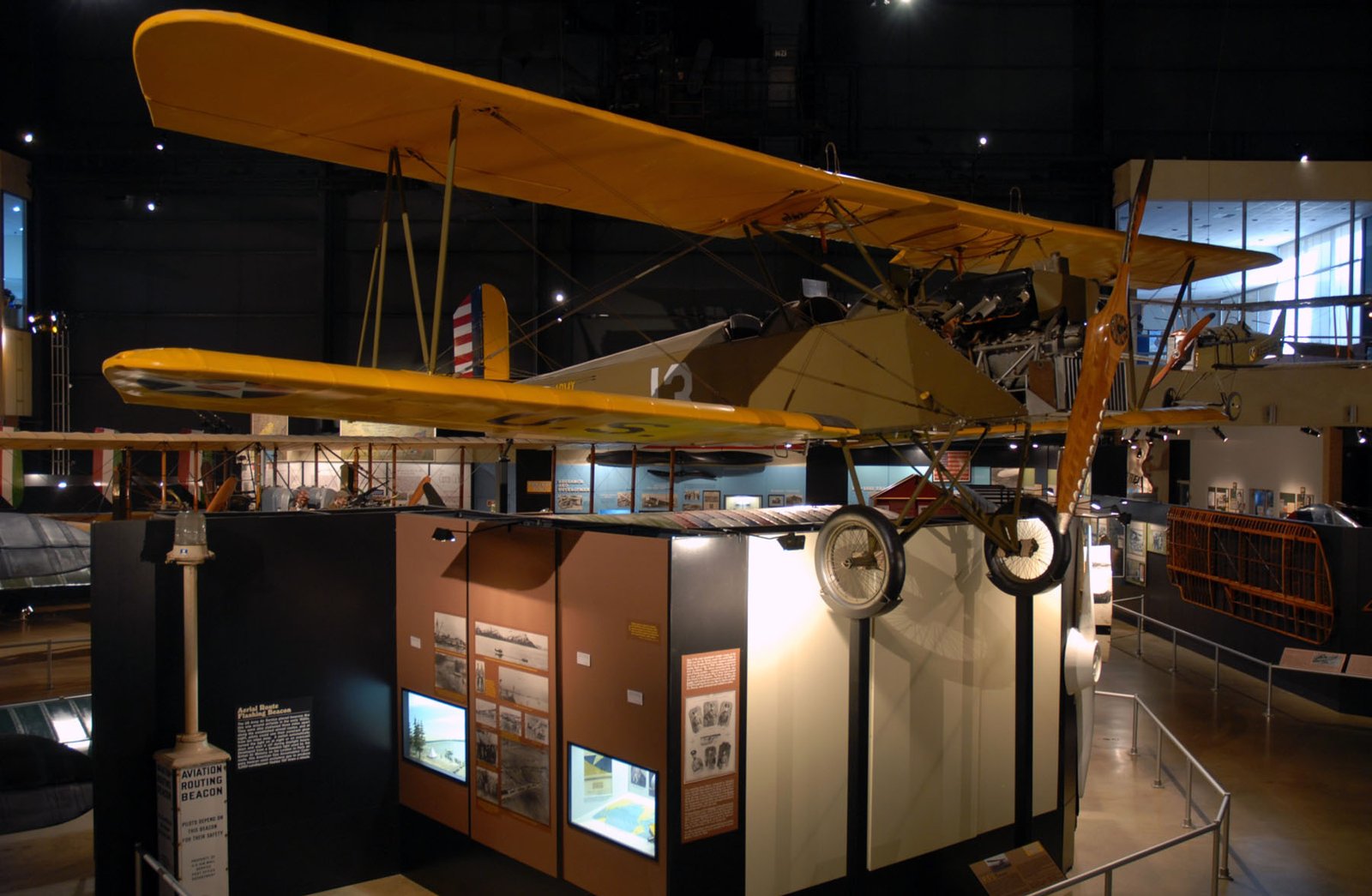
The Consolidated PT-1 Trusty served as a cornerstone of American military aviation training during the interwar years. Developed to replace the aging and often unsafe Curtiss Jenny fleet, the PT-1 introduced a more robust construction utilizing a combination of steel tubing and wood. This design shift led to a dramatic increase in training safety; records indicate that during its first year of operation, over 500 students flew the aircraft without sustaining serious injuries. The PT-1 is credited with establishing the fundamental design patterns used for primary trainers leading up to World War II.
Production of the PT-1 was handled by the Consolidated Aircraft Corporation in Buffalo, New York. The company had been established in 1923 by Major Reuben H. Fleet, who acquired the manufacturing and design rights to the Dayton-Wright TW-3, the aircraft upon which the PT-1 was based. While the aircraft was introduced in 1921, the United States Army Air Service (USAAS) officially adopted the type in 1924. Production totals vary by source, with some citing 221 units and others noting 230 aircraft for the Army and four for Siam, totaling 234 aircraft.
Technically, the PT-1 was powered by a single Wright-Hispano E V-8 water-cooled piston engine producing 180 hp (130 kW). This powerplant enabled a maximum sea-level speed of 92 mph (148 km/h) and a cruise speed of 79 mph (127 km/h). The aircraft featured a crew capacity of two and a length of 27 ft 9.25 in. Performance specifications included a range of 350 miles, a service ceiling of 13,450 ft, and a rate of climb of 690 ft/min.
In military service, the PT-1 was primarily operated by the USAAS and later the Army Air Corps, with extensive usage in California and Texas throughout the late 1920s and early 1930s. Beyond the U.S. Army, the United States Navy utilized one aircraft for trials, and Siam operated four units starting in 1928. The aircraft also supported National Guard flying programs before its retirement in the early 1930s. Today, the PT-1 is extremely rare, with only two complete examples known to exist. One of these is preserved at the San Diego Air & Space Museum, representing an aircraft that served the Army Air Corps from 1928 to 1932.